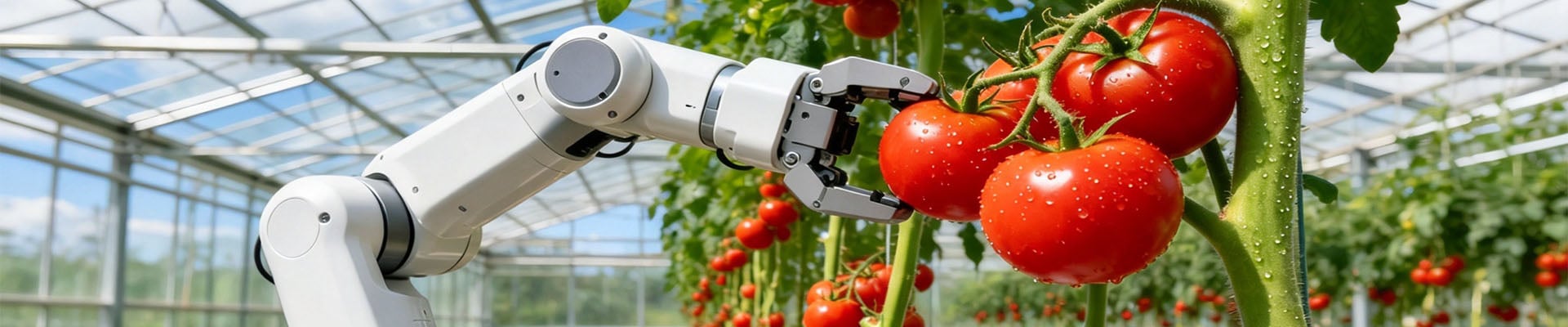
The way air behaves based on its density leads to thermal layering inside enclosed areas. Take a big greenhouse for instance warm air tends to rise up towards the ceiling area, whereas the colder, heavier air just hangs out closer to where the plants are growing. What this means is we end up with different temperature zones vertically stacked one on top of another. Sometimes the difference between the bottom and top can be quite significant, maybe even over 4 degrees Celsius if nobody does anything about it. These temperature fluctuations have real consequences for how plants perform. Photosynthesis rates drop off in the cooler sections, so crops there just don't grow at the same pace as their warmer counterparts nearby.
Scale intensifies climate unevenness. While small greenhouses achieve relative uniformity through natural convection, industrial-scale facilities face compounding challenges:
Studies show significant stratification in commercial greenhouses without active circulation. In unoptimized 5,000 m² facilities, vertical temperature gradients can reach 8°C during peak solar gain, when upper layers absorb 70% more thermal energy than ground-level foliage. This leads to yield variations exceeding 18% in crops like tomatoes.
| Height Level | Avg. Temp Deviation | Impact on Crops |
|---|---|---|
| Canopy (0.5m) | -3.5°C | Reduced transpiration |
| Mid-Level (2m) | Baseline | Optimal growth |
| Roof (4m) | +4.5°C | Heat stress symptoms |
Horizontal Air Flow (HAF) fans are critical for disrupting thermal stratification and ensuring uniform climate conditions. Proper implementation includes:
CFD modeling confirms that properly configured HAF systems reduce temperature differentials by 70% and increase air velocity by 111% compared to natural convection (Renewable Energy 2021).
Balanced air exchange is essential for thermal uniformity in large greenhouses. Extraction fans remove hot, humid air through ridge vents, while wall-mounted intake systems deliver cooled air at ground level. This integrated approach achieves:
Placing intake vents opposite exhaust points promotes laminar airflow, minimizing stagnant zones and improving climate consistency.
Getting good thermal balance across a space really comes down to how everything works together as a system. The roof vents let hot air escape naturally, which stops the temperature from stacking up too much vertically. This matters a lot in big greenhouses or warehouses where sometimes the difference between floor and ceiling temps can hit over 8 degrees Celsius. For plants specifically, bench level heating makes all the difference. We've seen growers use underground tubing or small heaters placed right where roots need it most to fight those cold spots near the ground. And then there are those radiant panels hanging from the ceiling. They shoot out infrared waves that actually warm objects and surfaces rather than just heating up the air. Most growers find these panels work wonders for keeping the plant canopy at stable temperatures without needing constant airflow adjustments.
When synchronized, these systems create spatial equilibrium: roof vents manage large-scale airflow, bench heaters address localized microclimates, and radiant systems ensure even thermal distribution. This integration minimizes energy waste and maintains ±1°C uniformity across the growing area.
Climate control in greenhouses today hinges on automated systems that can adapt quickly to changing conditions outside. Take the TempCube Pro for instance it works hand in hand with all sorts of equipment inside greenhouses including ventilation units, heaters, and even shade cloths, all thanks to sensors constantly feeding back information. If the temperature starts drifting away from what's ideal, these smart controllers jump into action almost instantly. They might kick on those powerful HAF fans we see so often or tweak the vent positions just right. The result? No more hot spots stressing out plants, consistent growth across the entire space, and growers spending way less time overseeing their setups. According to research published last year in Greenhouse Tech Journal, this kind of automation cuts down manual monitoring needs by around three quarters.
Getting good zonal control really depends on where sensors are placed throughout the space to catch all climate differences. Studies show when we put at least one sensor every 200 square meters across different heights like benches, under canopies, and up near the roof, we start seeing temperature changes of over 5 degrees Celsius in spots nobody noticed before. Monitoring from multiple heights matters quite a bit actually. Just putting sensors at ground level where plants sit misses all extra heat collecting up high near the ceiling, which can make a big difference for proper climate management in greenhouses or large indoor growing spaces.
| Sensor Placement Strategy | Coverage Area | Reduction in Temperature Variability |
|---|---|---|
| Single height | 500 m² | ≈12% |
| Multi-level + Density | 200 m² | 68% |
| Data reflects trials in 5,000 m² vegetable greenhouses (AgriTech Reports, 2023) |
Thermal stratification leads to different temperature zones which can affect photosynthesis rates, resulting in varied growth rates among plants.
Proper air circulation helps in reducing vertical temperature gradients and ensures uniform climate conditions, thereby promoting consistent plant growth.
Smart controllers enable real-time adjustments of climate conditions by responding to sensor data, thus helping maintain uniform temperatures and reducing manual oversight.
Copyright © 2026 by Hebei Fengzhiyuan Greenhouse Equipment Manufacturing Co., Ltd Privacy Policy
 EN
EN