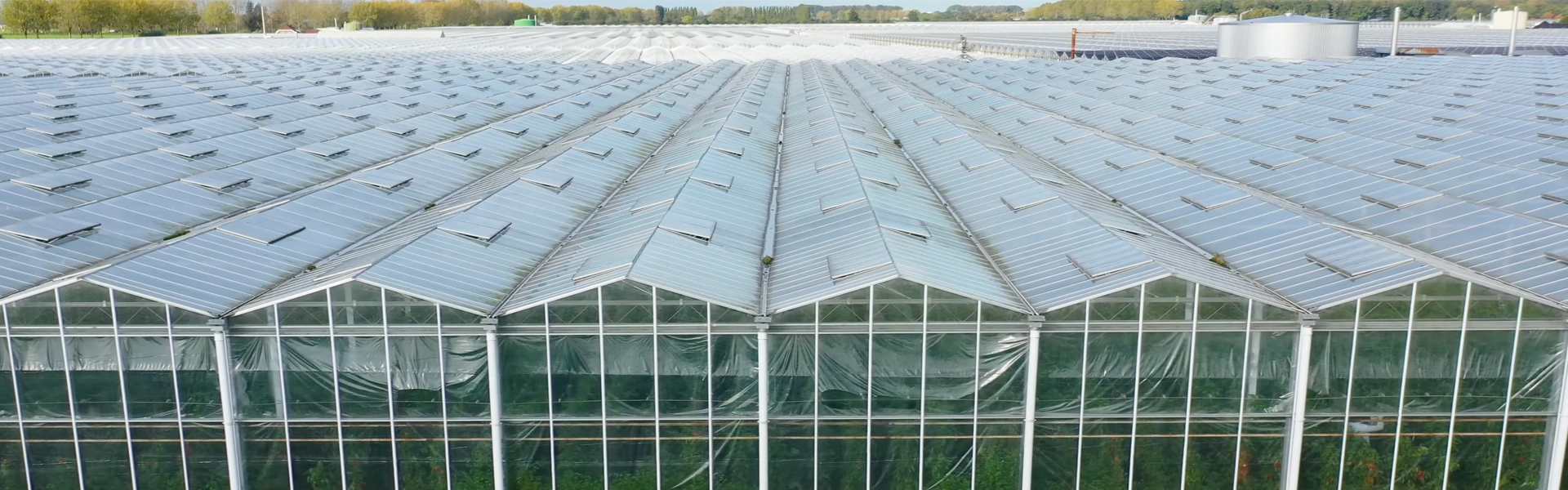
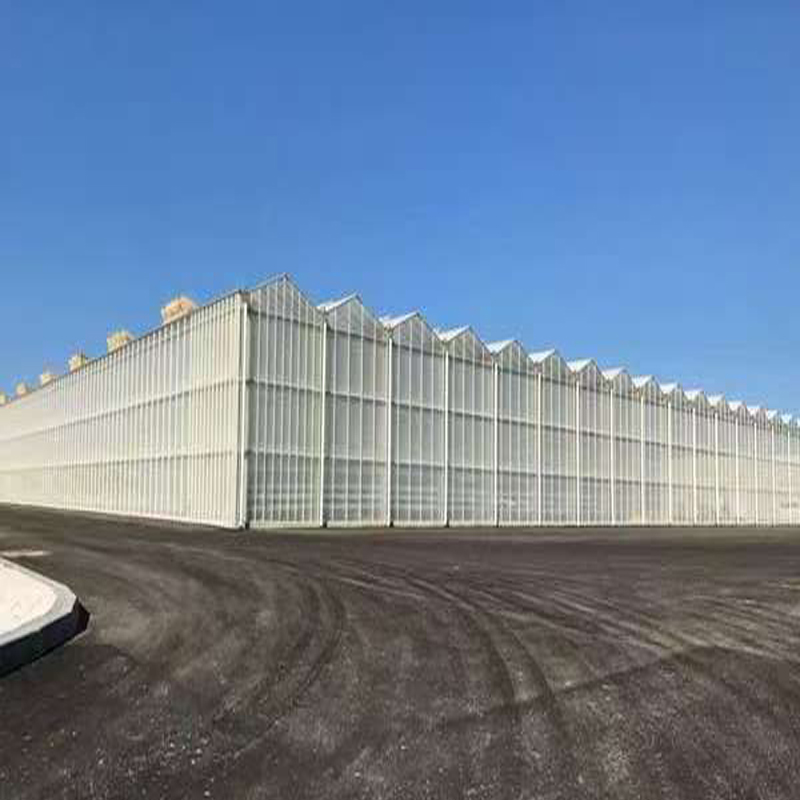
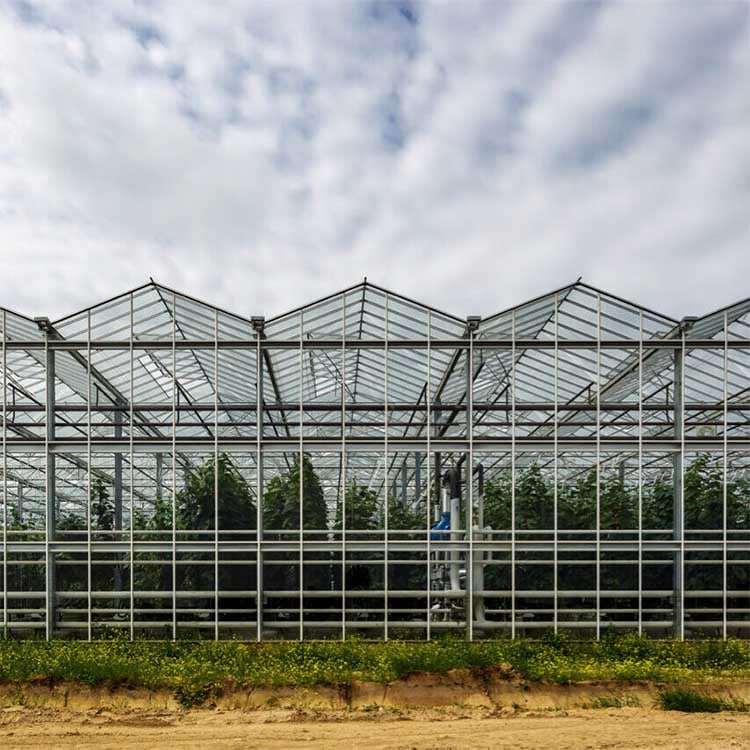
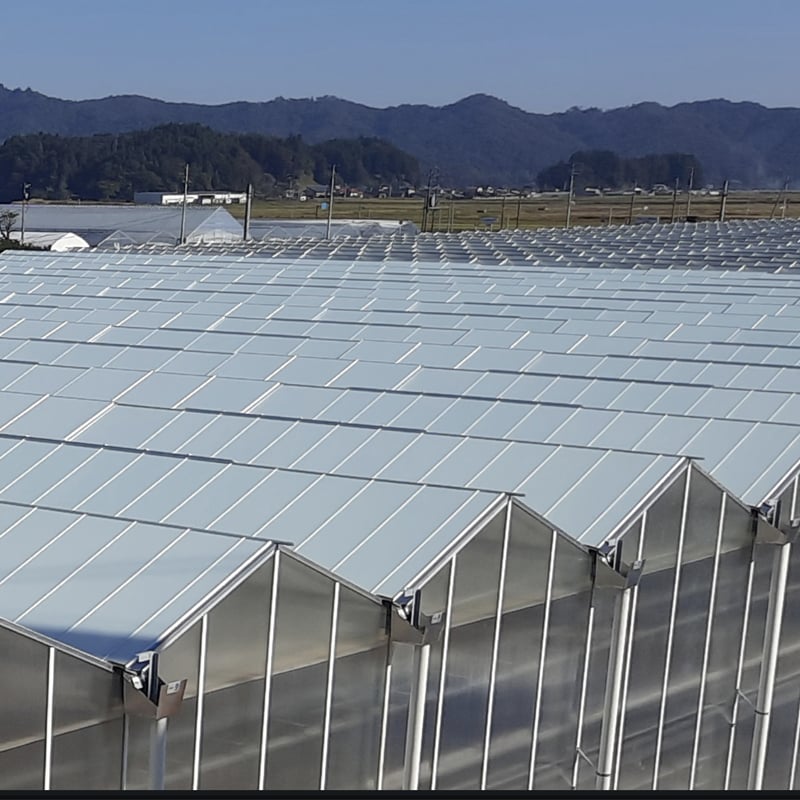
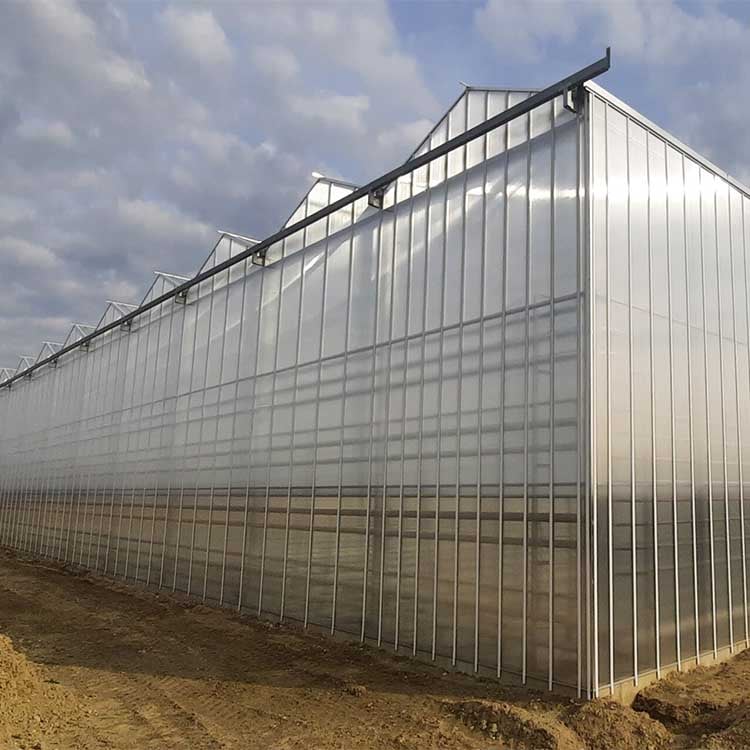
The Commercial Glass Greenhouse with Roof Ventilation is designed for growers who need a durable, bright, and adaptable environment for commercial crop production. Its connected glass structure provides a spacious growing area, while the roof ventilation system helps release hot air and improve natural air exchange inside the greenhouse.
The greenhouse can be configured for tomatoes, vegetables, peppers, lettuce, flowers, seedlings, nursery plants, and hydroponic production. Heating, cooling, irrigation, shading, and climate-control systems can be added according to the project location, crop requirements, and production goals.
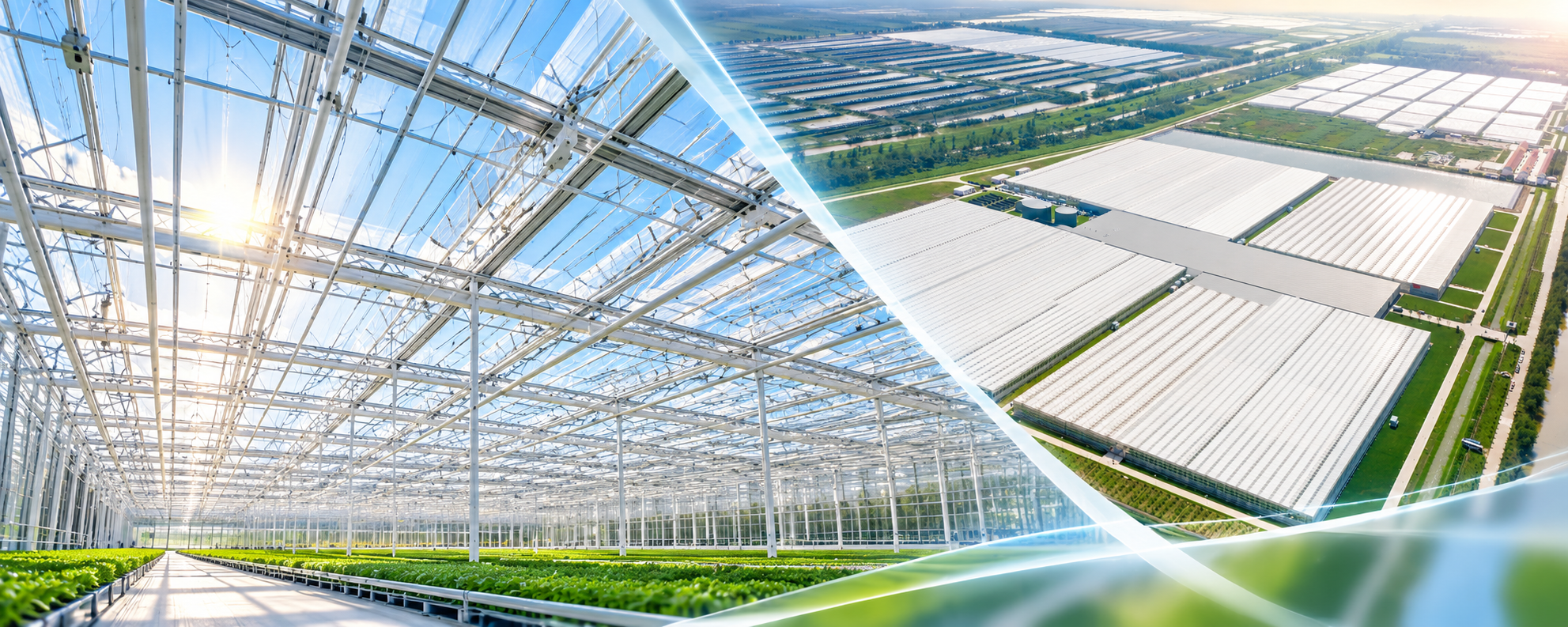
A Naturally Ventilated Glass Greenhouse for Commercial Crop Production
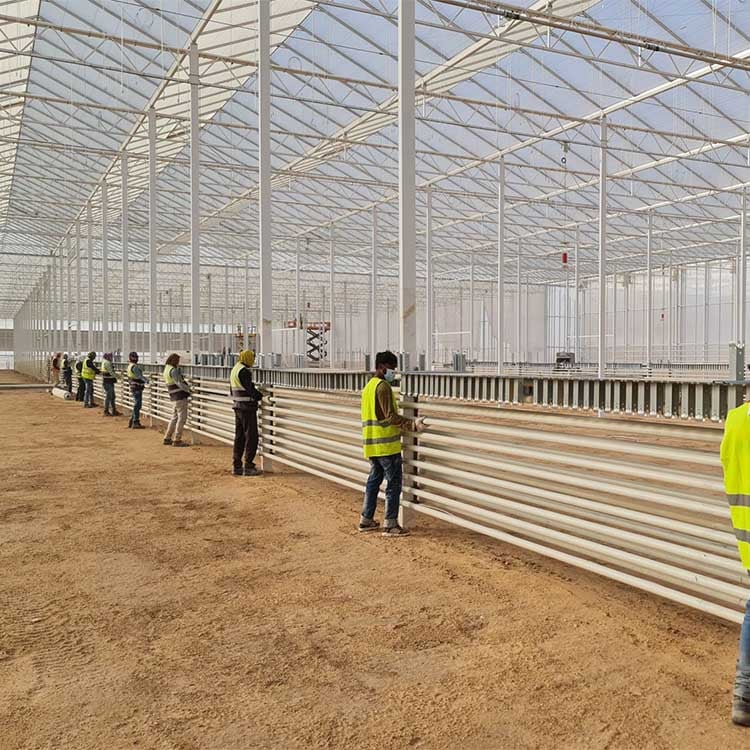
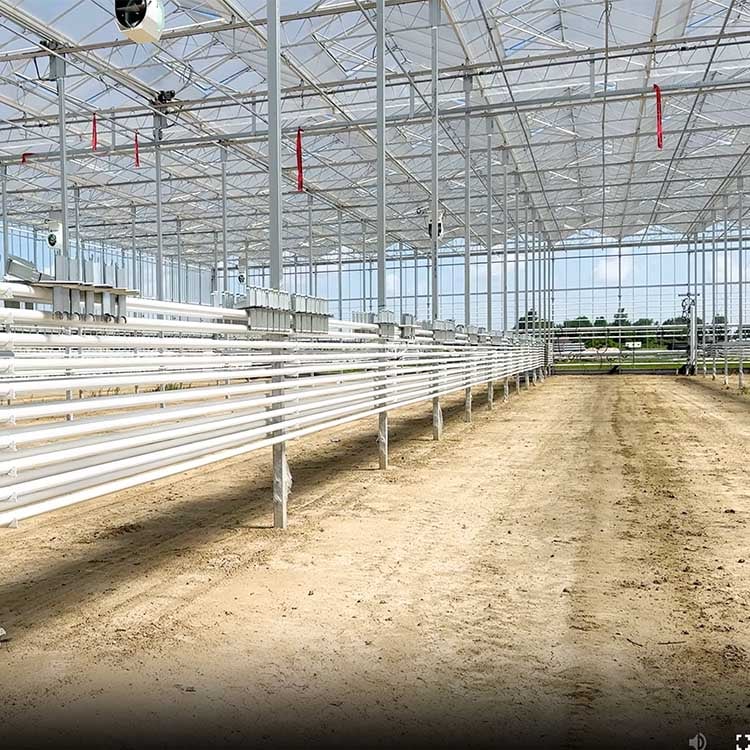
This Commercial Glass Greenhouse combines a modular steel frame with horticultural glass and roof ventilation. The connected multi-span design supports efficient land use and provides sufficient room for planting areas, working paths, crop-support systems, irrigation lines, and future equipment integration.
The roof ventilation system is positioned at the highest point of the greenhouse, where warm and humid air naturally accumulates. When the vents open, the greenhouse can release excess heat and moisture while allowing fresh air to enter through the sides or other ventilation openings.
This makes the structure suitable for commercial farms, agricultural parks, research facilities, plant nurseries, flower production bases, and other controlled growing projects.

Main Advantages
Roof vents help improve the natural movement of air inside the greenhouse. The ventilation system can be operated manually or automatically according to the selected configuration and project requirements.
It can help manage:
The final ventilation layout depends on greenhouse size, local climate, crop type, roof design, and the required level of environmental control.
Glass provides a clean and durable covering solution for commercial greenhouse projects. The glass specification can be selected according to light requirements, safety standards, insulation needs, local climate, and budget.
For projects requiring additional safety and impact resistance, toughened glass options can be considered.
The connected structure creates a continuous growing environment and allows the greenhouse to be expanded or divided into different production zones.
The internal space can be planned for:
The greenhouse is suitable for both medium-sized and large commercial projects. Its structure and systems can be configured according to the crop, site conditions, production cycle, and investment plan.
The final specifications should be confirmed according to local wind load, snow load, temperature, rainfall, crop height, equipment layout, foundation conditions, and installation requirements.
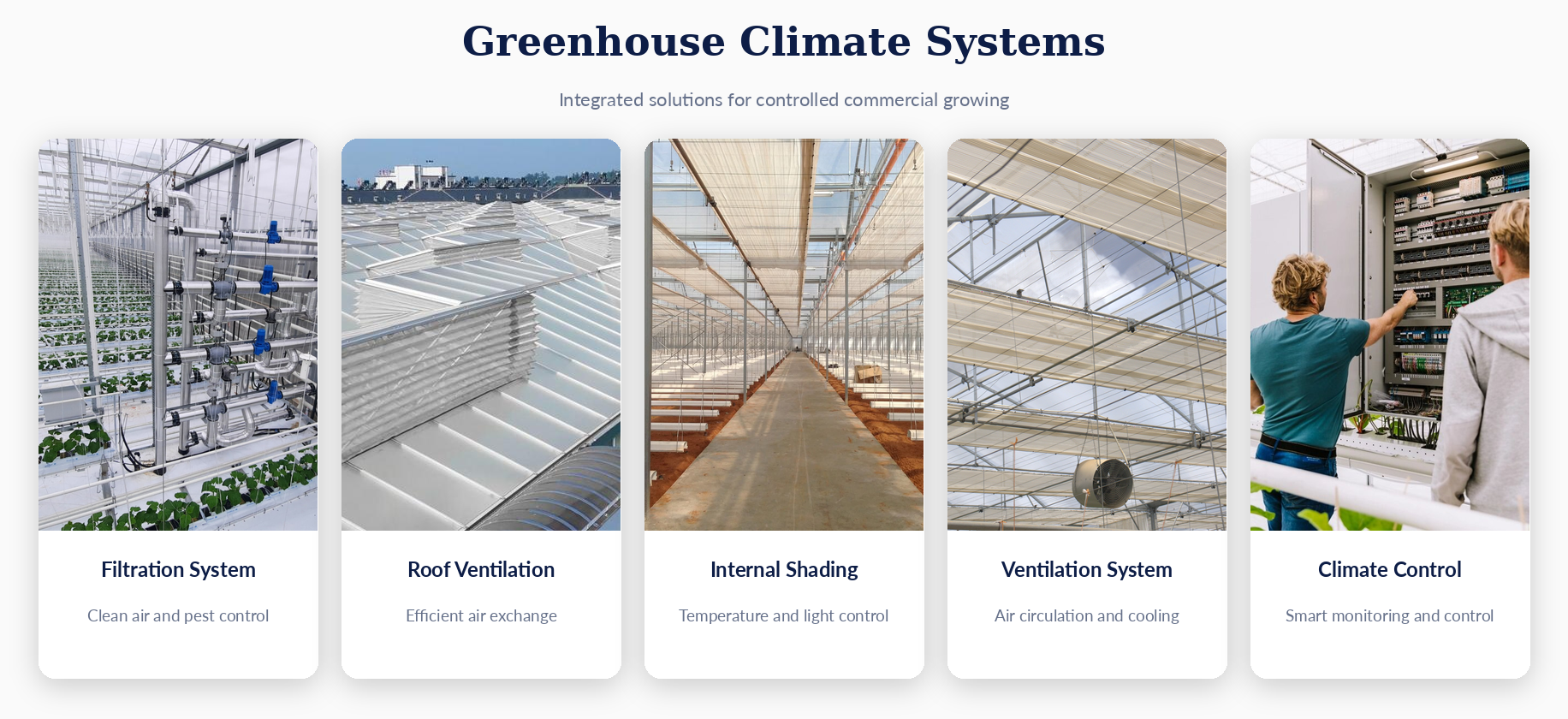
Roof ventilation is the main environmental-control feature of this greenhouse. Depending on the climate and crop, it can be combined with other systems to create a more stable growing environment.
Roof and side ventilation can be used together to support natural air exchange. In larger projects, circulation fans or automated vent controls may be added according to the required growing conditions.
For cold climates or winter production, the greenhouse can be configured with greenhouse heating equipment, hot-water pipes, warm-air systems, or other project-specific heating solutions.
In hot climates, the greenhouse may be equipped with circulation fans, cooling pads, shading systems, or other cooling equipment. The final selection depends on greenhouse size, local temperature, crop type, and operating requirements.
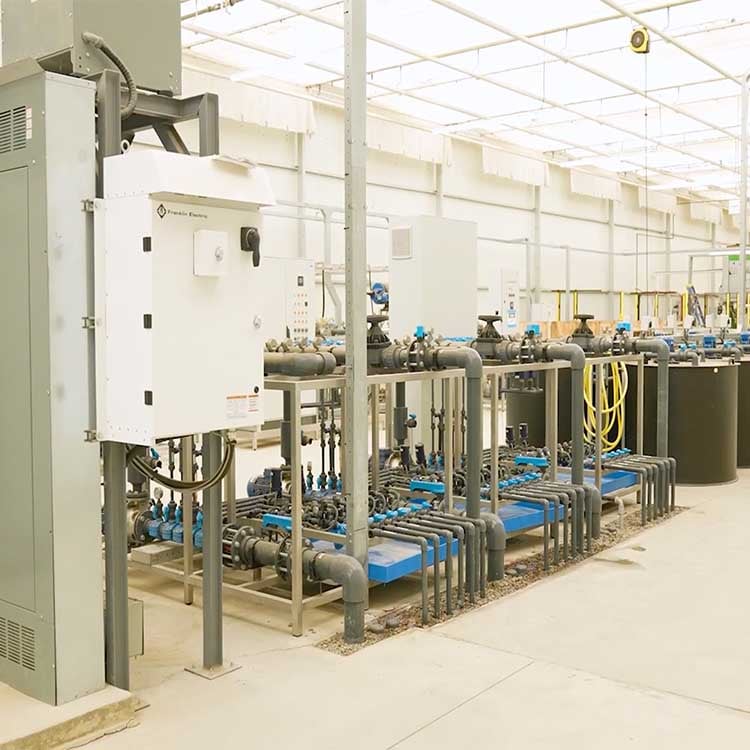
Irrigation and fertigation systems can be designed for soil, substrate, or hydroponic cultivation. The layout can include water distribution, filtration, nutrient delivery, drainage, and monitoring components.
Temperature, humidity, light, soil moisture, and other environmental conditions can be monitored through manual instruments or an integrated climate-control system.
The system configuration is not fixed. It can be kept simple for seasonal production or expanded for year-round commercial cultivation.
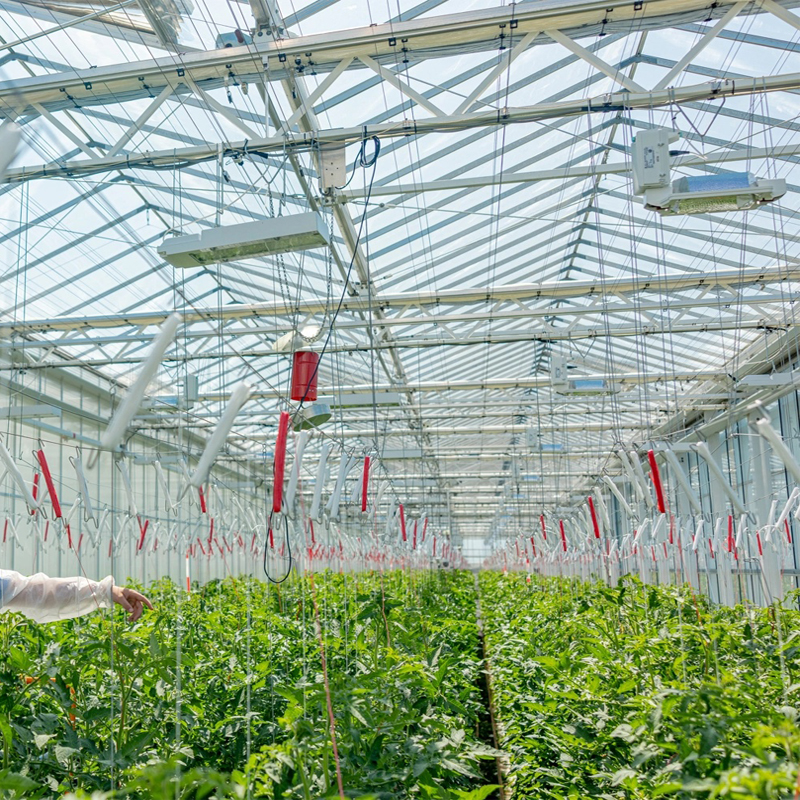
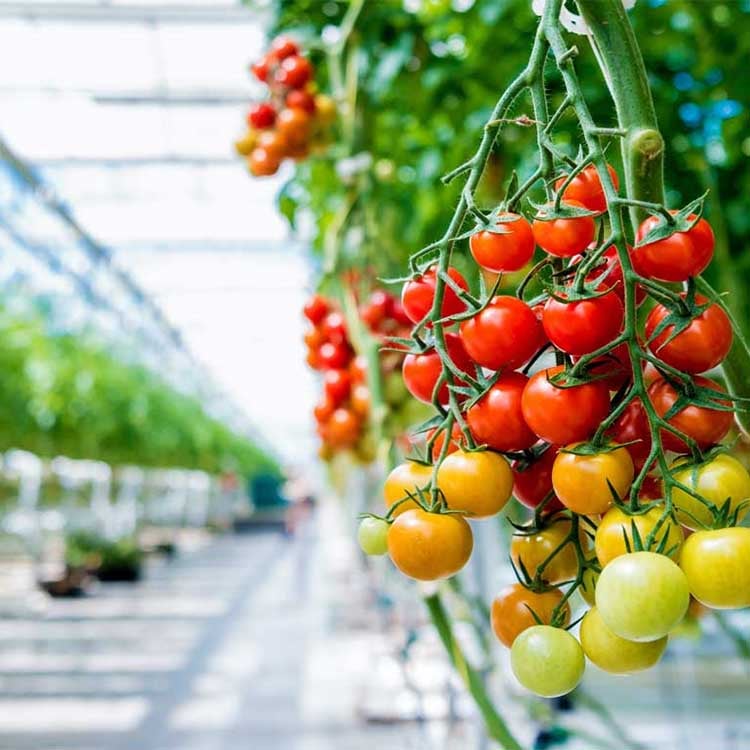
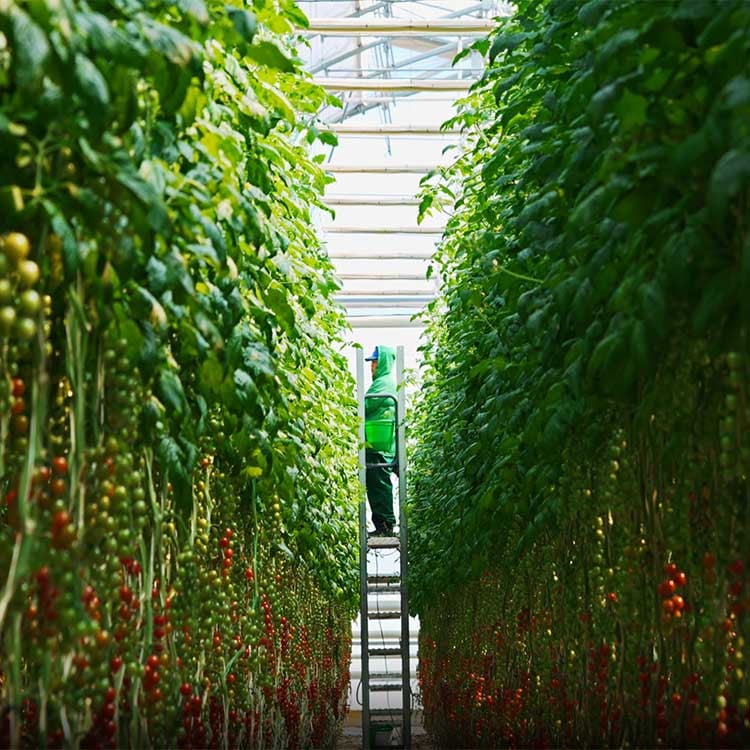
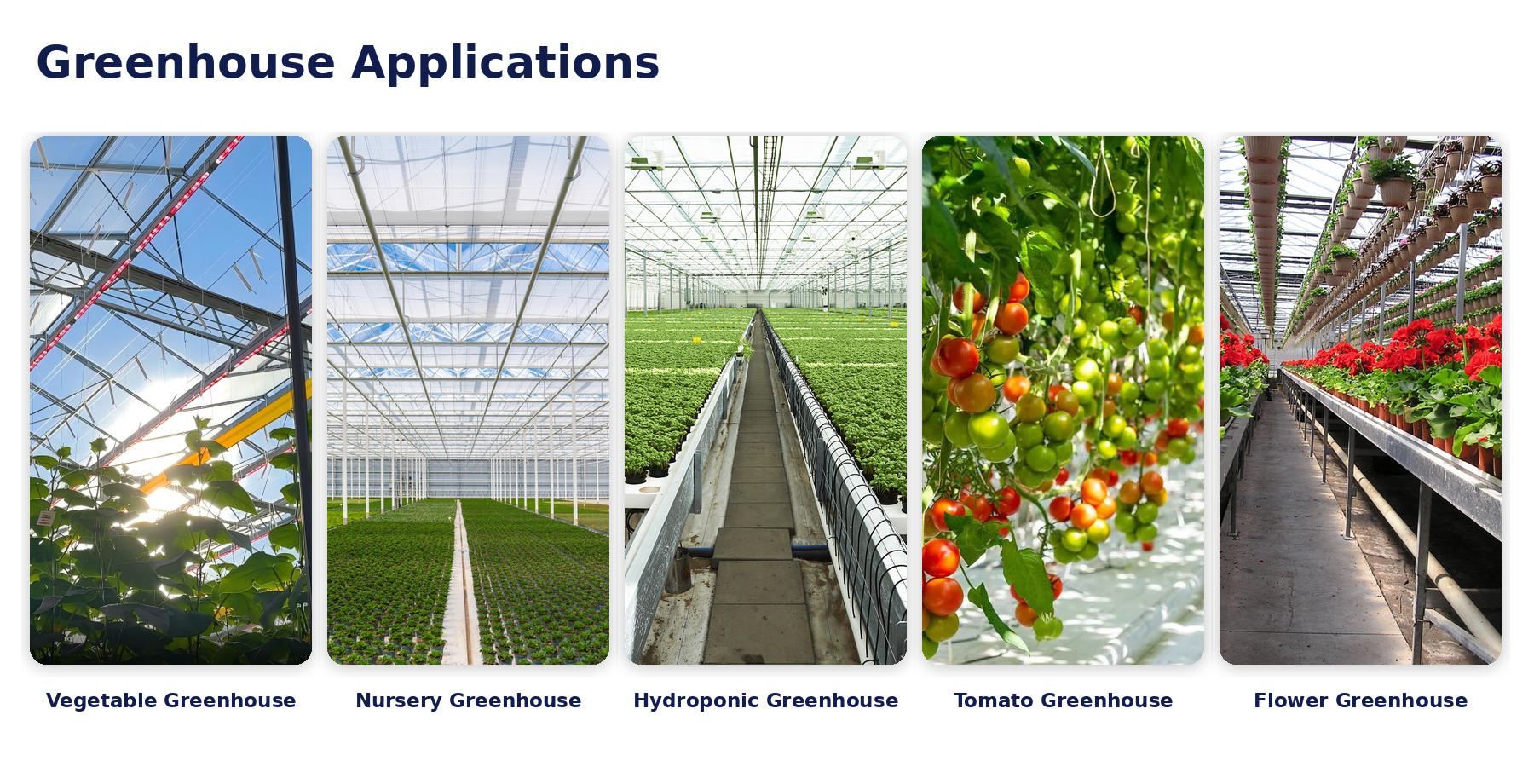
The greenhouse can be configured for tomato plant production, trellising, irrigation, harvesting, heating, cooling, and climate management.
It is suitable for commercial tomato greenhouse farming and can also support hydroponic or substrate-based tomato production.
The structure can be used for lettuce, cucumber, peppers, sweet peppers, herbs, leafy vegetables, and other commercial crops.
The internal layout can be adjusted according to planting density, crop height, harvesting method, and irrigation requirements.
The greenhouse is suitable for cut flowers, flower seedlings, potted plants, flower beds, ornamental plants, and other commercial flower applications.
Shading, heating, cooling, irrigation, and humidity management can be configured according to the specific crop.
For plant nurseries and seedling production, the greenhouse can be equipped with benches, seedling trays, irrigation, misting, shading, and heating systems.
It can support young plants, microgreens, propagation, and commercial nursery production.
The connected growing space can be planned for hydroponic channels, substrate bags, fertigation, drainage, nutrient management, and environmental monitoring.
A roof-ventilated glass greenhouse should not be configured with the same systems for every project. The suitable structure and equipment depend on the location, crop, production method, and operating plan.
Before preparing a proposal, we review:
For example, a tomato project may require higher internal clearance, crop-support systems, irrigation, and climate control. A lettuce or nursery project may focus more on efficient planting layout, shading, irrigation, and humidity management.
This approach helps customers select a practical glass greenhouse solution without adding unnecessary systems.
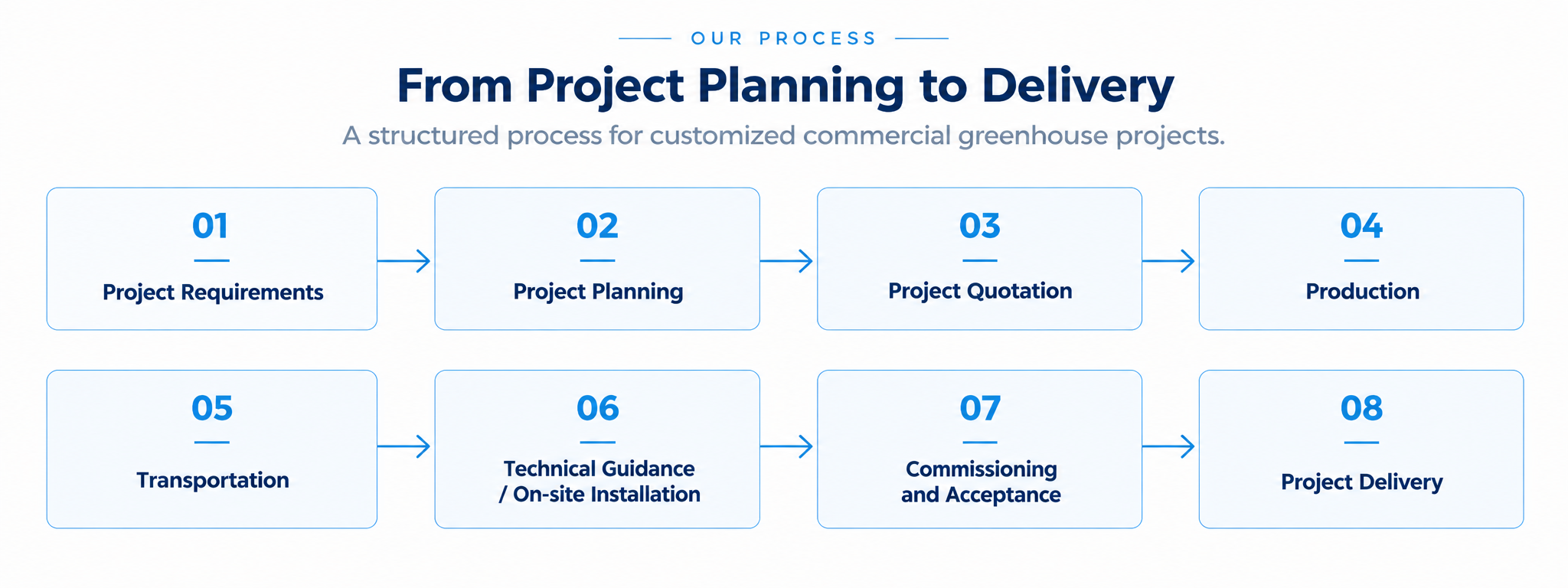
We provide project-based support for customers planning a new glass greenhouse or expanding an existing growing facility. After reviewing the project location, available land area, main crop, growing method, required greenhouse size, preferred glass specification, ventilation and climate-control needs, and installation conditions, our team can recommend a suitable greenhouse structure, internal layout, roof ventilation design, and system configuration.
Our support may include crop and climate analysis, greenhouse layout planning, structural and glass specification, ventilation and system configuration, technical drawings, quotation, manufacturing coordination, greenhouse installation guidance, and after-sales technical support.
If you are comparing greenhouse manufacturers in China, a greenhouse supplier Malaysia, or other international greenhouse suppliers, send us your project details to receive a customized proposal.
Tell us your project location, available land area, crop type, growing method, greenhouse size, glass preference, ventilation requirements, and expected installation conditions.
Our team can help you evaluate the suitable roof-ventilated glass greenhouse structure, glass specification, internal layout, and climate-control configuration for your project.
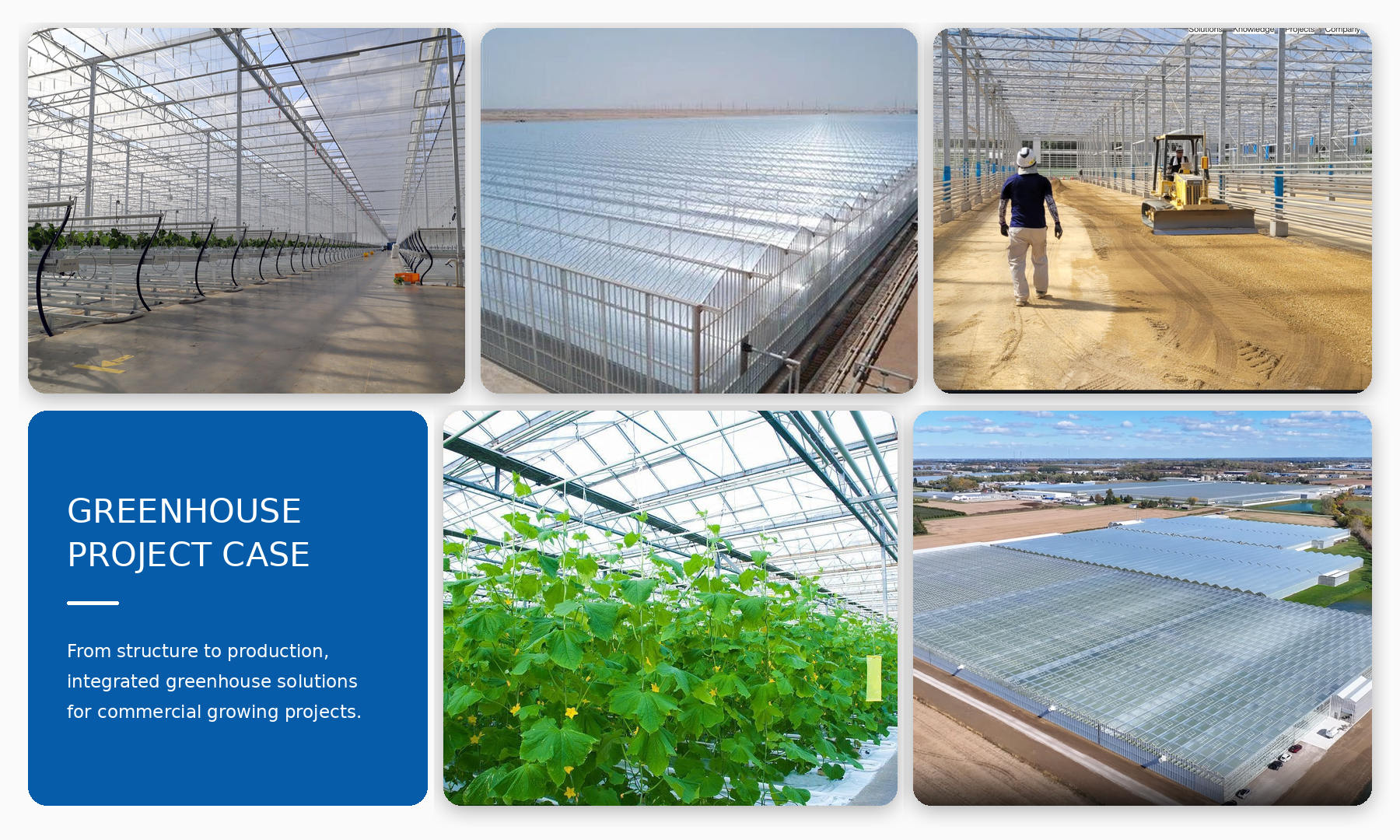
Real applications of roof-ventilated glass greenhouses for controlled commercial growing
Explore selected commercial glass greenhouse projects designed with roof ventilation for improved air exchange and more flexible climate management. These projects demonstrate the application of connected glass structures, internal growing layouts, ventilation systems, irrigation planning, and space reserved for additional climate-control equipment.
From structural installation to completed growing environments, each project reflects a practical greenhouse solution developed around crop type, site conditions, production goals, and future expansion needs.

Copyright © 2026 by Hebei Fengzhiyuan Greenhouse Equipment Manufacturing Co., Ltd Privacy Policy
 EN