Explore commercial cucumber greenhouse solutions from FZY, including tunnel, Gothic, multi-span and glass greenhouses with irrigation and climate control.
Contact Us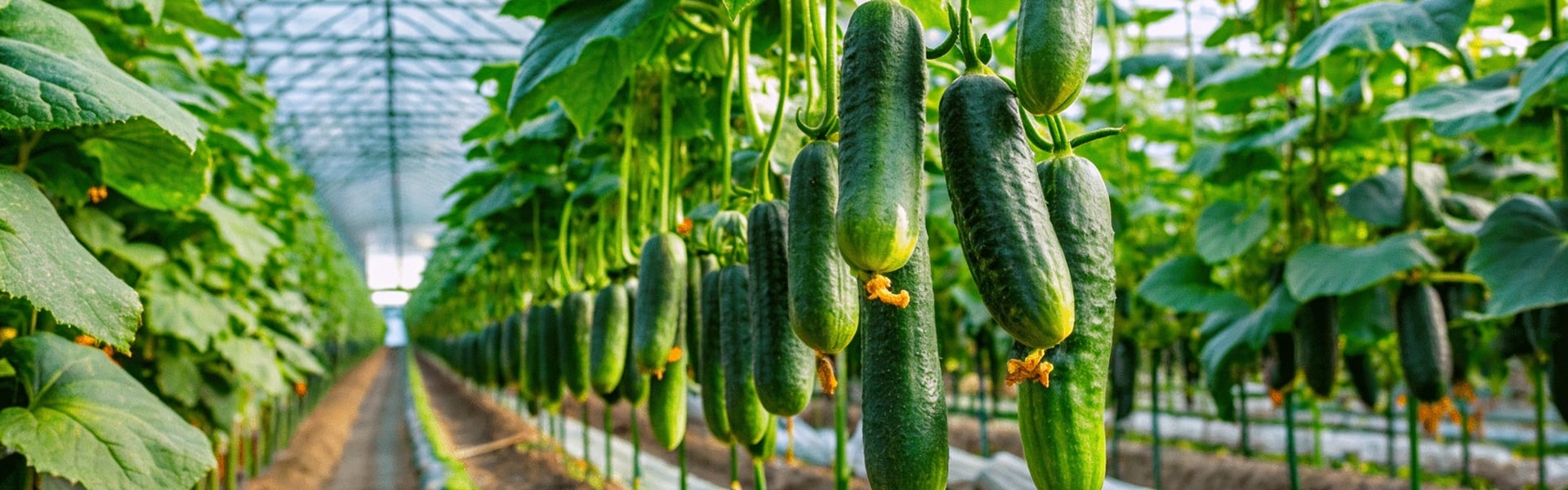
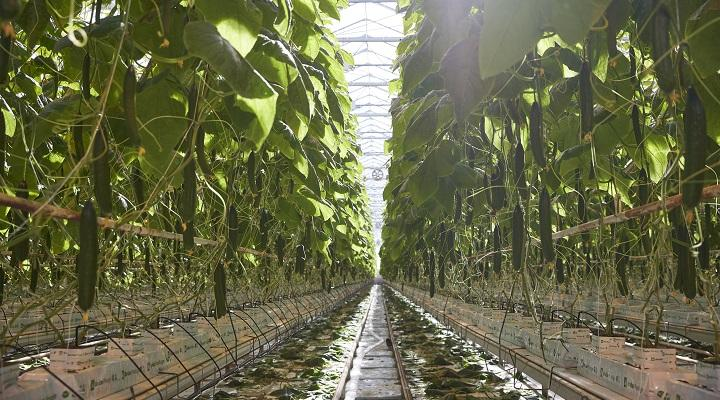
Greenhouse Solutions for Commercial Cucumber Cultivation
Cucumber cultivation requires more than just suitable growing space. Factors such as temperature, humidity, light, irrigation, and plant support all influence crop growth and development, as well as daily greenhouse management.
FZY Greenhouse provides greenhouse structures and supporting systems for commercial cucumber cultivation. From tunnel and Gothic greenhouses to multi-span film and glass greenhouses, we can configure different solutions based on local climate conditions, cultivation methods, greenhouse size, and project requirements.
Whether you are starting a new cucumber farm or expanding an existing one, choosing the right greenhouse is a crucial step in creating an efficient and manageable growing environment.
1.Understanding the Growing Requirements of Cucumbers
Cucumbers are warm-season crops that grow best under suitable temperature, moisture, and light conditions. In commercial greenhouse cultivation, maintaining a balanced growing environment is important for vegetative growth, flowering, fruit development, and consistent crop management.
Unlike open-field cultivation, greenhouse growing allows farmers to manage several environmental factors through structural design and supporting equipment.
Cucumbers generally prefer warm growing conditions. For many greenhouse cucumber varieties, daytime temperatures around 25–29°C and nighttime temperatures around 18–22°C are useful reference ranges, although suitable settings depend on the cultivar, light conditions, and growing stage.
Excessive heat can affect plant growth and fruit development, while low temperatures may slow crop development. Greenhouse ventilation, shading, heating, and cooling equipment can be selected according to the local climate.
Cucumber plants require appropriate moisture conditions, but excessive humidity, prolonged leaf wetness, and insufficient air movement can create an unfavorable growing environment.
A properly designed ventilation system helps exchange indoor and outdoor air, while circulation fans can support more uniform air movement around the crop canopy.
Adequate sunlight supports cucumber photosynthesis and development. Greenhouse covering materials should provide suitable light transmission while meeting local weather and structural requirements.
In regions with intense solar radiation, shading systems may be used to reduce excessive heat gain. In regions with limited winter sunlight, light availability should be considered during greenhouse design.
Cucumbers require a consistent water supply, particularly during active growth and fruit production.
Drip irrigation and fertigation systems allow growers to deliver water and nutrients in a controlled manner. Irrigation schedules should be adjusted according to crop development, growing media, weather conditions, and drainage performance.
Many commercial greenhouse cucumber varieties are grown vertically using trellising systems.
Vertical training can help improve space utilization, facilitate pruning and harvesting, and maintain access between growing rows. Greenhouse height, internal layout, and support structures should therefore be considered before construction.
2. Types of Greenhouses for Cucumber Cultivation
Different greenhouse structures provide different levels of environmental protection, ventilation flexibility, and equipment integration.
The most suitable greenhouse for cucumber cultivation depends on the local climate, growing season, preferred cultivation method, available budget, and long-term project objectives.
2.1 Gothic Greenhouse for Cucumber Cultivation
https://www.fzygreenhouses.com/gothic-multispan-greenhouse
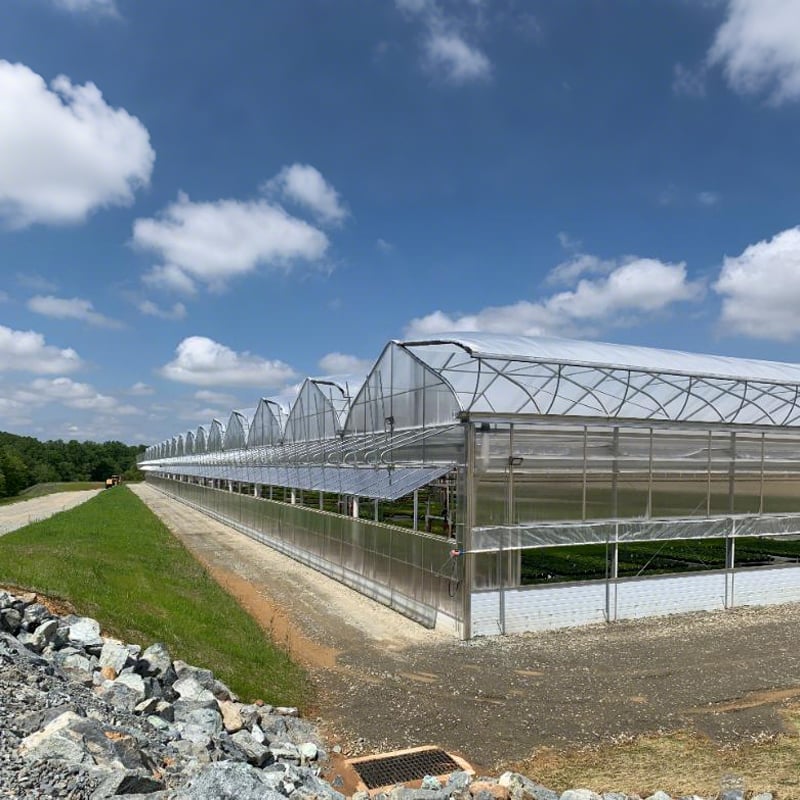
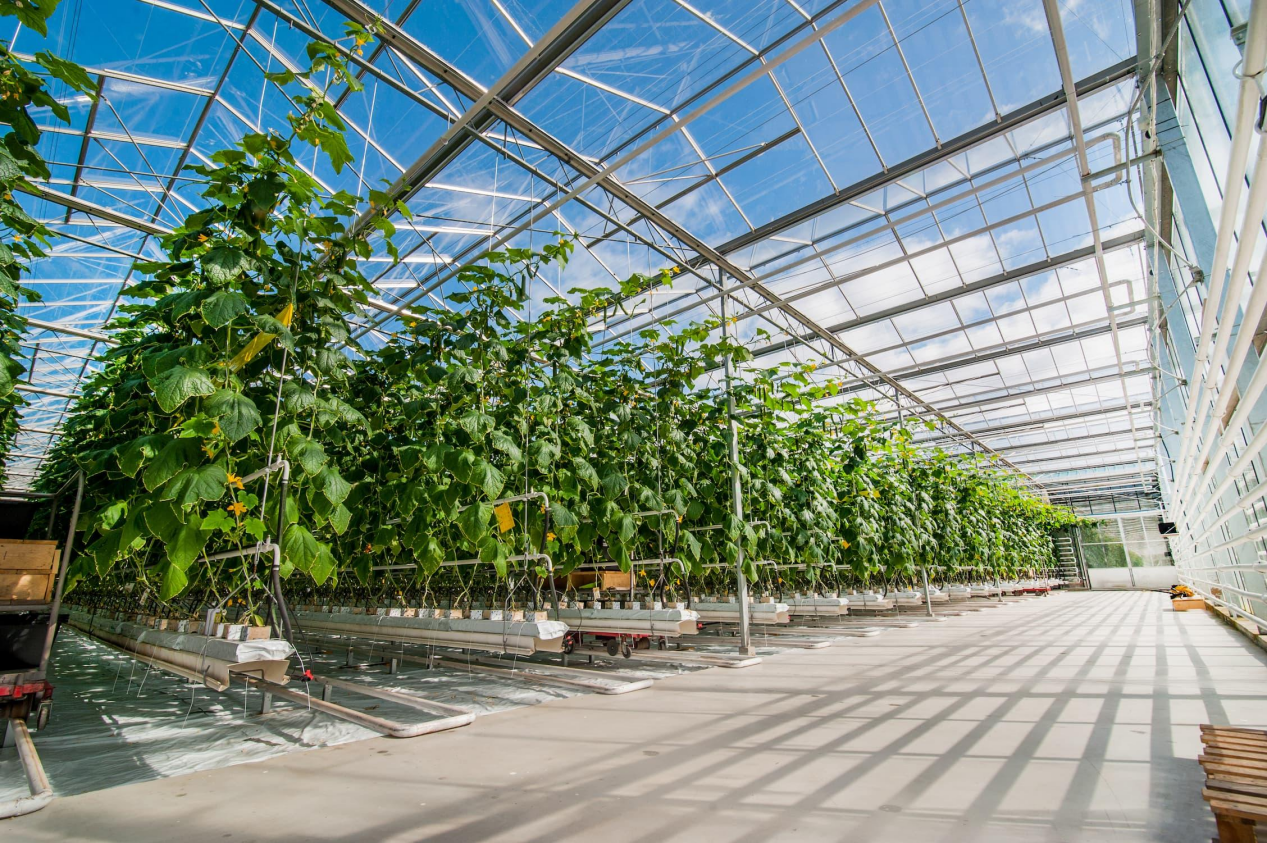
Gothic greenhouses are a practical option for commercial cucumber cultivation, particularly for growers seeking a flexible film-covered growing structure.
Their pointed arch roof design provides useful interior growing space and can support vertical cucumber training systems. Depending on the greenhouse dimensions and structural design, side ventilation, roof ventilation, irrigation, and shading equipment can be incorporated.
Cucumbers can be grown in soil beds or suitable substrate systems. Drip irrigation can supply water and nutrients along planting rows, while overhead support wires or trellising structures help guide plant growth.
For projects located in warm or seasonally hot regions, ventilation design is especially important to manage accumulated heat and humidity.
Recommended Growing Methods
Soil-based cucumber cultivation with drip irrigation
Substrate cultivation using grow bags or containers
Vertical trellising for commercial cucumber varieties
Suitable Applications
Gothic greenhouses can be considered for small and medium-sized commercial cucumber farms, seasonal production, and projects that require flexible ventilation and irrigation configurations.
Suggested Supporting Systems: Side Ventilation · Roof Ventilation · Drip Irrigation · Trellising · Optional Shading
2.2 Tunnel Greenhouse for Cucumber Cultivation
https://www.fzygreenhouses.com/tunnel-greenhouse
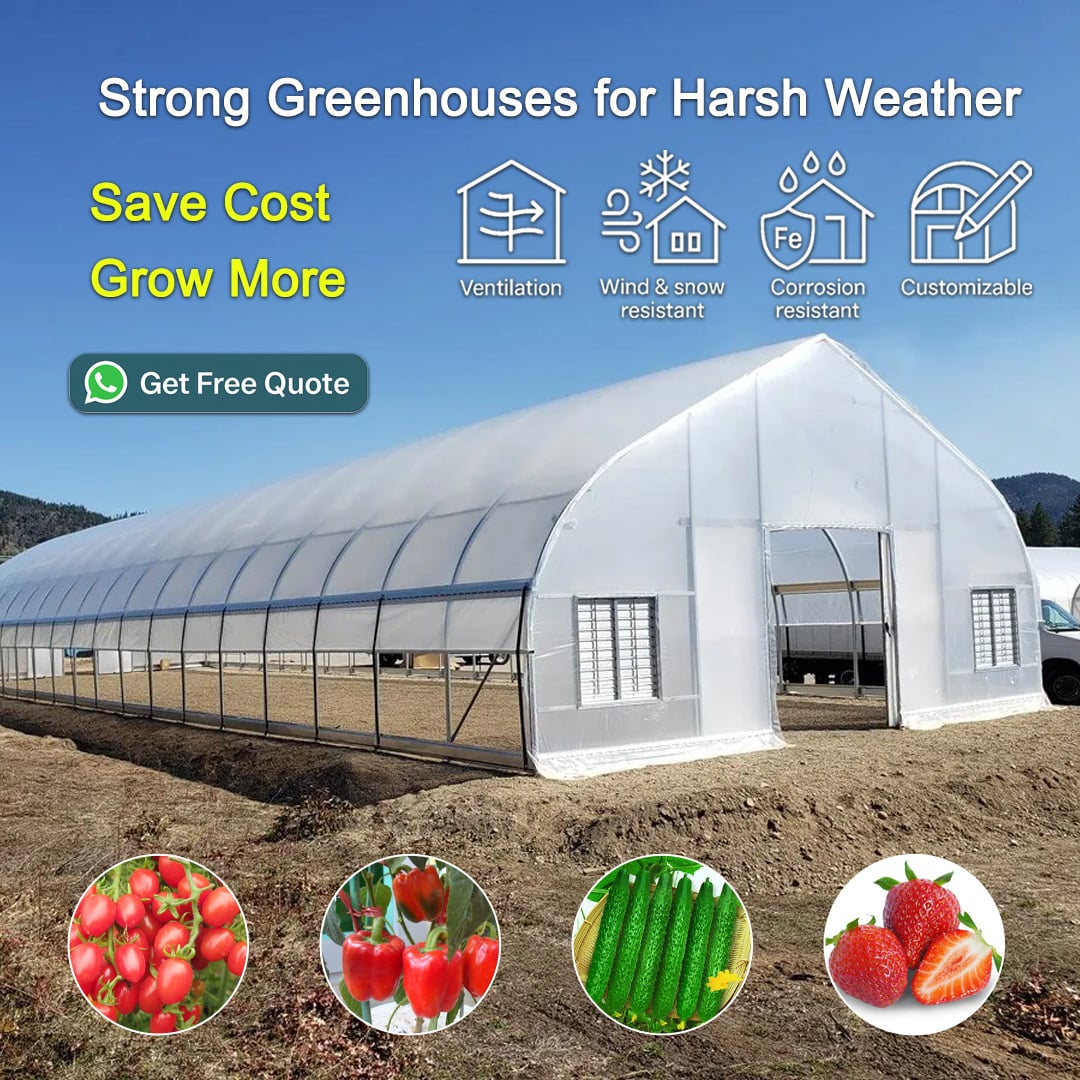
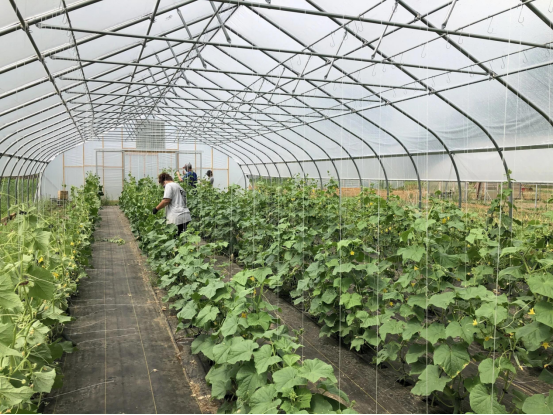
Tunnel greenhouses offer a relatively straightforward protected growing structure for cucumber cultivation. They are commonly used for seasonal production, growing-season extension, and agricultural projects seeking a simpler greenhouse configuration.
Cucumbers are often planted directly into well-drained soil beds and trained vertically using support nets or trellising wires. Drip irrigation can be installed along the crop rows to provide consistent water delivery.
In many tunnel greenhouse projects, temperature and humidity are primarily managed through sidewall openings, end vents, or other natural ventilation arrangements.
Growers should pay particular attention to overheating during sunny weather, as passively ventilated tunnel structures have limited cooling capability under unfavorable outside conditions.
Recommended Growing Methods
Soil cultivation in raised beds
Drip irrigation with mulching where appropriate
Trellised cucumber cultivation
Seasonal planting according to local weather conditions
Suitable Applications
Tunnel greenhouses are suitable for seasonal cucumber growers, smaller commercial farms, and producers seeking to extend their growing season without adopting a highly automated production system.
Suggested Supporting Systems: Roll-Up Side Ventilation · Drip Irrigation · Trellising · Optional Insect Screening
2.3 Multi-Span Film Greenhouse for Cucumber Cultivation
https://www.fzygreenhouses.com/gothic-multispan-greenhouse
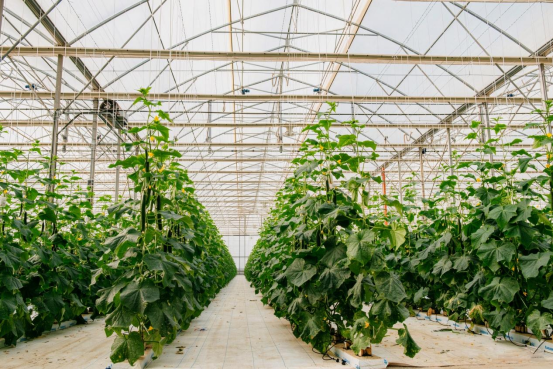
Multi-span film greenhouses are suitable for commercial cucumber projects requiring larger growing areas and more integrated greenhouse management.
By connecting multiple greenhouse bays under one structure, growers can plan production areas, irrigation layouts, internal pathways, and environmental systems in a coordinated way.
Depending on the design, multi-span greenhouses can accommodate soil-based cultivation, substrate growing systems, and automated fertigation equipment.
Roof ventilation, side ventilation, circulation fans, shading systems, and mechanical cooling can be considered according to the greenhouse location and growing requirements.
For larger production facilities, environmental monitoring and irrigation control can help growers manage different operating conditions more systematically.
Recommended Growing Methods
Commercial soil-based cucumber cultivation
Substrate cultivation with drip fertigation
Vertical cucumber training and pruning
Organized planting rows with service pathways
Suitable Applications
Multi-span film greenhouses are suitable for medium and large commercial cucumber farms, agricultural production companies, and greenhouse projects requiring integrated growing facilities.
Suggested Supporting Systems: Roof and Side Ventilation · Fertigation · Drip Irrigation · Climate Monitoring · Optional Cooling and Shading
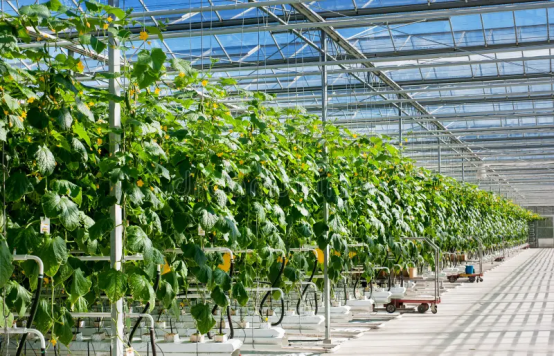
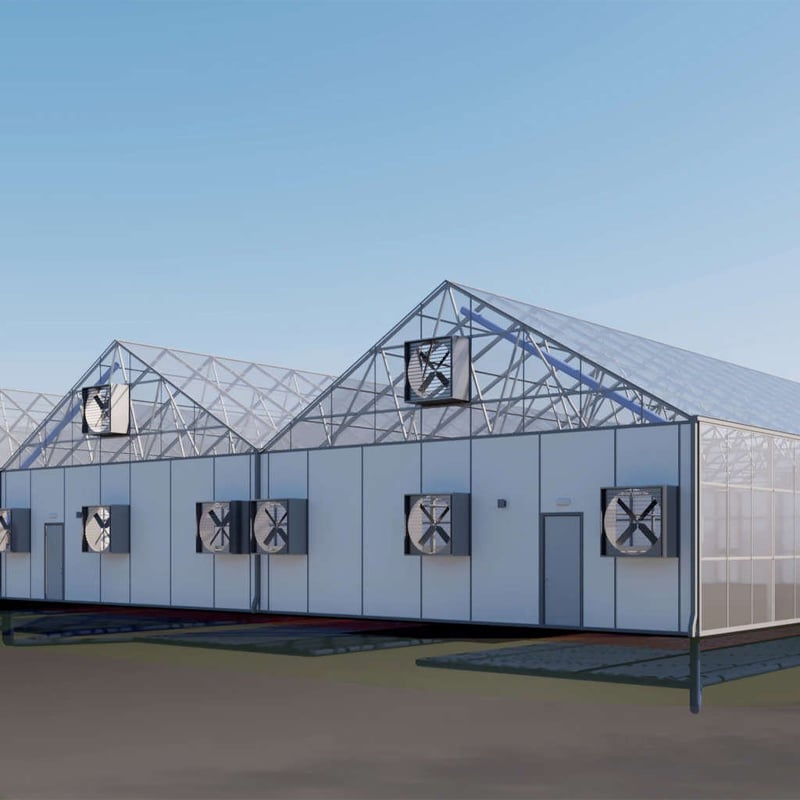
https://www.fzygreenhouses.com/glass-greenhouse
Glass greenhouses are an option for commercial cucumber projects that require extensive integration of climate management, irrigation, and crop support systems.
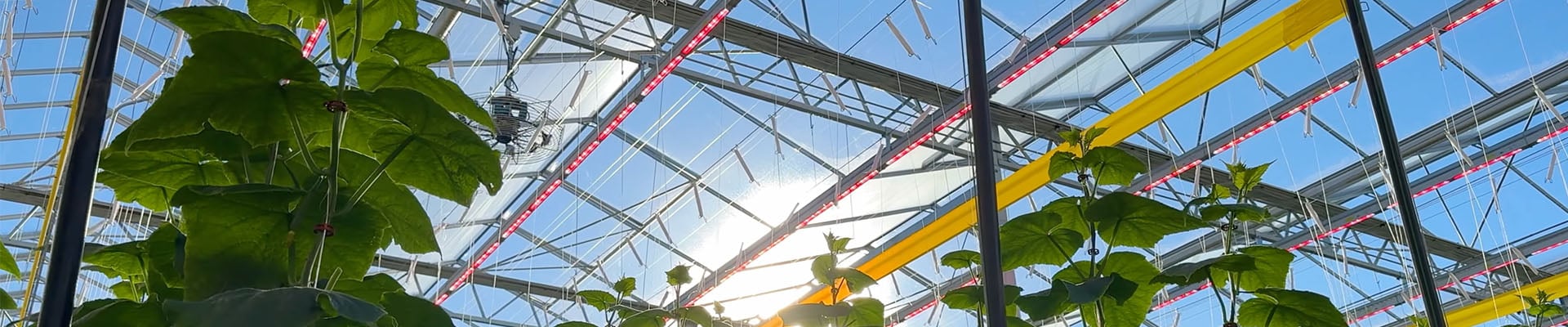
Their rigid covering and engineered structure can accommodate controlled cultivation layouts, automated ventilation, heating equipment, shading screens, fertigation systems, and environmental monitoring technologies.
Commercial cucumber production in glass greenhouses often uses substrate cultivation systems, such as suitable growing bags or containers, combined with drip fertigation and vertical crop training.
The final greenhouse configuration should be determined by local weather conditions, the intended production season, energy requirements, and operating costs.
Recommended Growing Methods
Substrate cucumber cultivation
Automated drip fertigation
Vertical high-wire cultivation where structural and operational conditions allow
Climate-managed commercial production
Suitable Applications
Glass greenhouses can be considered for large commercial farms, agricultural investment projects, and growers seeking a higher level of equipment integration and environmental control.
Suggested Supporting Systems: Automated Ventilation · Heating · Shading · Fertigation · Environmental Control · Optional Cooling
3. Cucumber Growing Methods in Greenhouses
https://www.fzygreenhouses.com/hydroponic-systems
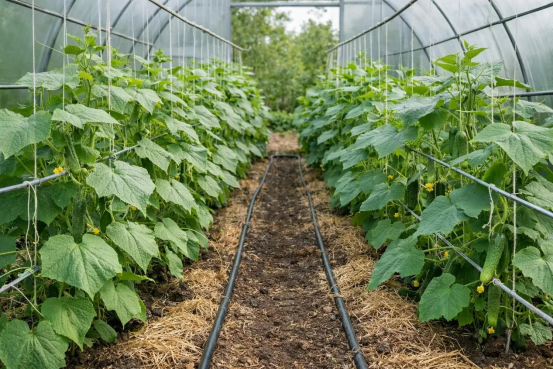
Soil-based cultivation is widely used in tunnel, Gothic, and other film greenhouse structures.
Cucumber plants are grown in prepared soil beds with suitable drainage and nutrient conditions. Drip irrigation can be installed along planting rows, while trellising systems provide vertical support.
This method may be suitable for growers familiar with soil management or projects where the existing soil quality supports cucumber production.
However, soil conditions should be evaluated before planting, particularly where drainage problems, salinity, or soilborne diseases may affect production.
Substrate Cucumber Cultivation
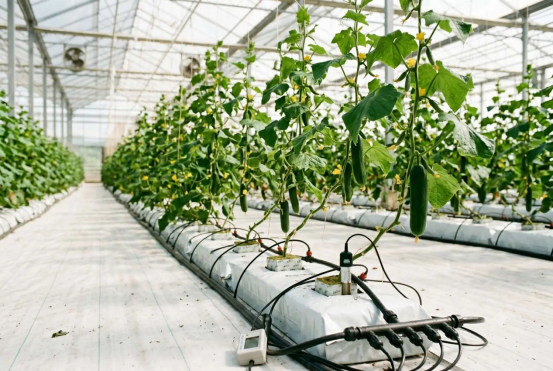
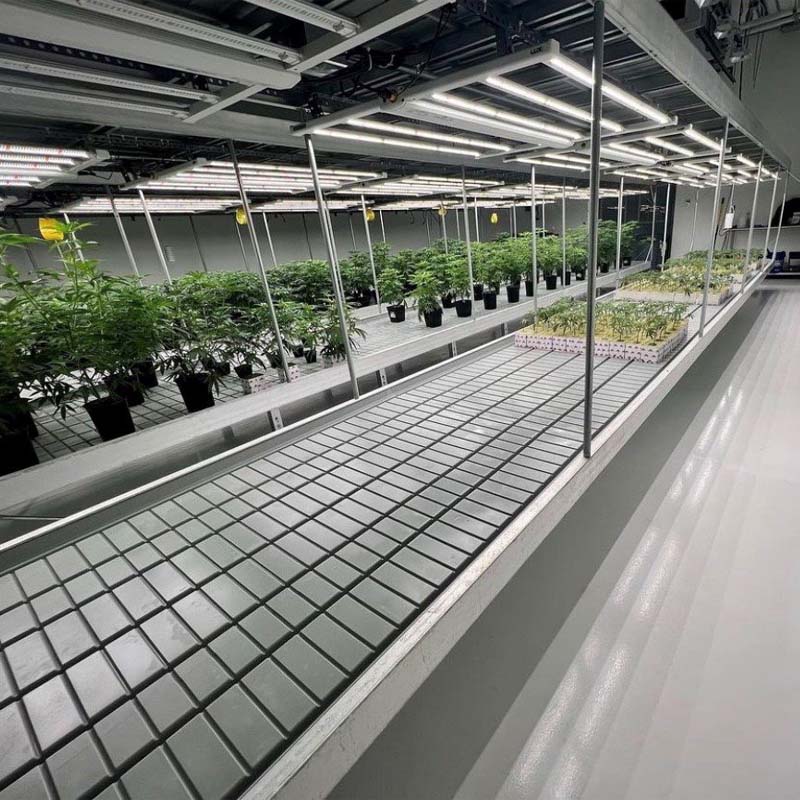
Substrate cultivation grows cucumber plants in suitable growing media rather than directly in field soil.
Common growing media include coconut coir and other horticultural substrates. Water and dissolved nutrients are typically delivered through drip fertigation.
This approach allows growers to manage irrigation and nutrient supply through a dedicated growing system, although substrate moisture, nutrient concentration, and drainage must be monitored carefully.
Substrate cultivation can be integrated into suitable film or glass greenhouse structures.
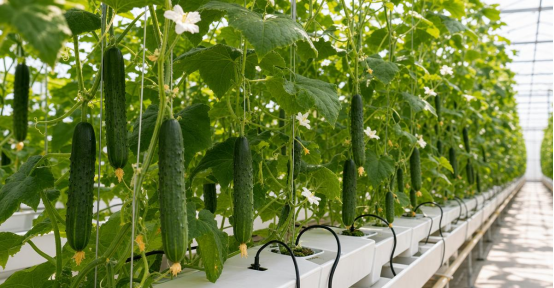
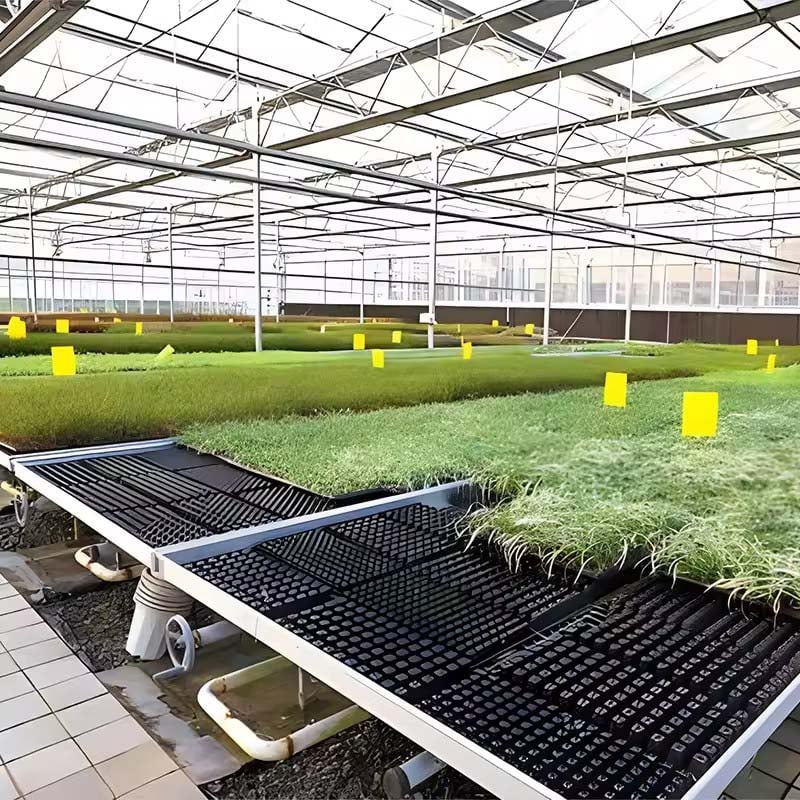
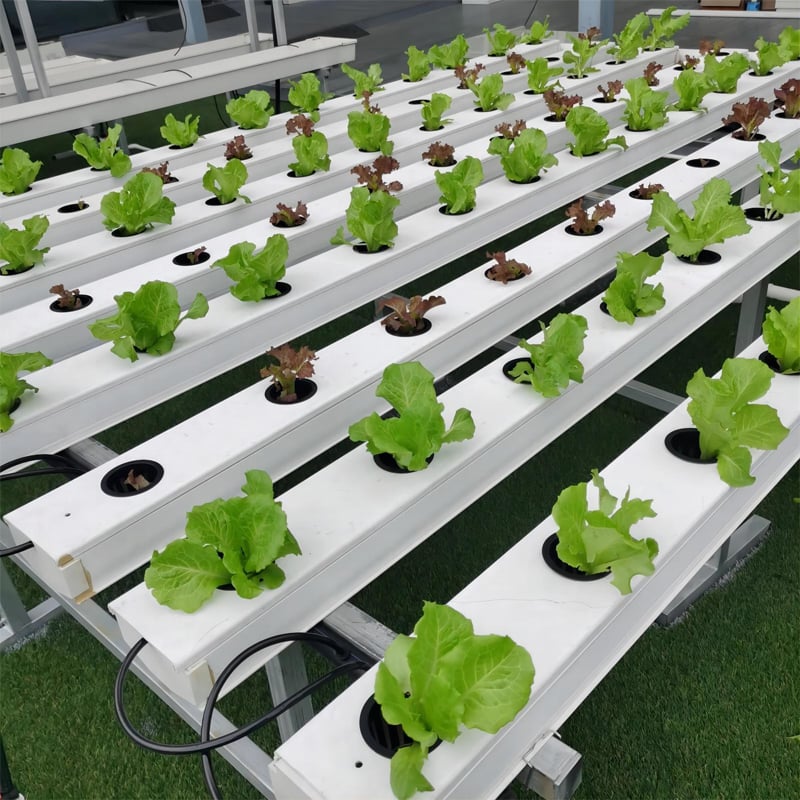
Hydroponic cultivation uses a managed nutrient solution to supply plants with water and essential nutrients.
In commercial cucumber production, this often includes drip-fed substrate systems. Other nutrient-solution-based configurations require evaluation of root-zone support, oxygen availability, sanitation, and operational management.
Successful hydroponic cucumber cultivation depends on reliable water quality, nutrient solution management, irrigation equipment, and a suitable greenhouse environment.
The appropriate system should be selected according to the grower's technical experience, production objectives, and available infrastructure.
A suitable greenhouse structure provides the foundation for cucumber cultivation, while supporting systems help growers manage the growing environment and routine farming operations.
Not every cucumber greenhouse requires the same equipment. System selection should be based on climate conditions, growing methods, greenhouse dimensions, and project requirements.
https://www.fzygreenhouses.com/greenhouse-systems
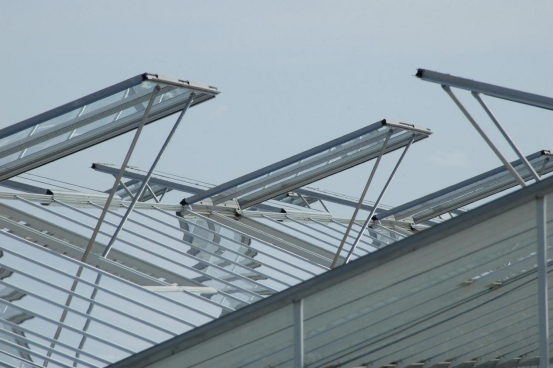
4.1 Greenhouse Ventilation System
Ventilation exchanges indoor and outdoor air to help manage greenhouse temperature, humidity, and carbon dioxide levels.
Natural roof and side ventilation or mechanical exhaust fans can be used depending on the structure and local climate.
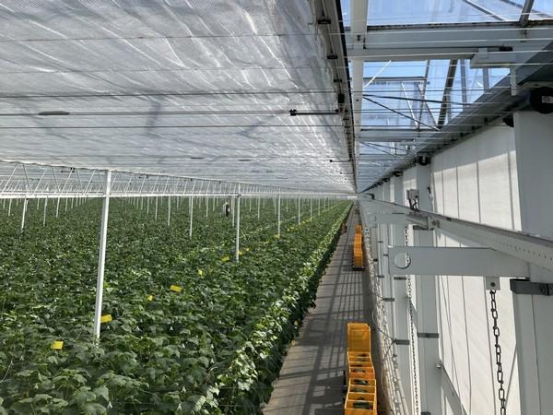
4.2 Greenhouse Shading System
Shading systems help manage excessive solar radiation and heat gain.
Depending on local sunlight conditions, internal or external shading systems may be considered to support temperature management while maintaining suitable light availability.
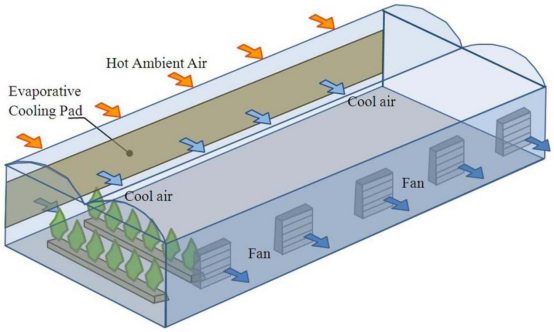
4.3 Greenhouse Cooling System
In regions with high outdoor temperatures, ventilation alone may not provide the desired growing conditions.
Evaporative cooling systems, including fan-and-pad arrangements, may be used where climatic conditions support their effectiveness. Cooling requirements should be evaluated alongside outdoor humidity and greenhouse design.
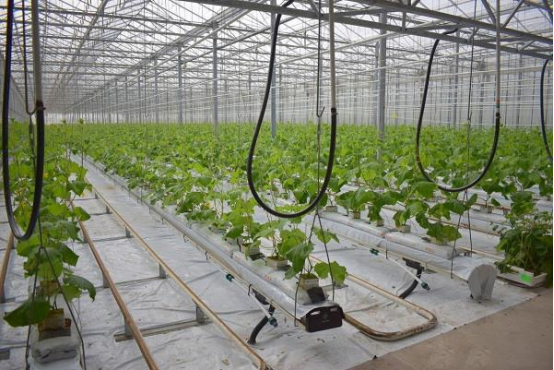
4.4 Drip Irrigation System
Drip irrigation delivers water directly to the root zone through irrigation lines and emitters.
It can be integrated into soil-based or substrate cucumber growing systems to provide a controlled water supply.
4.5 Fertigation System
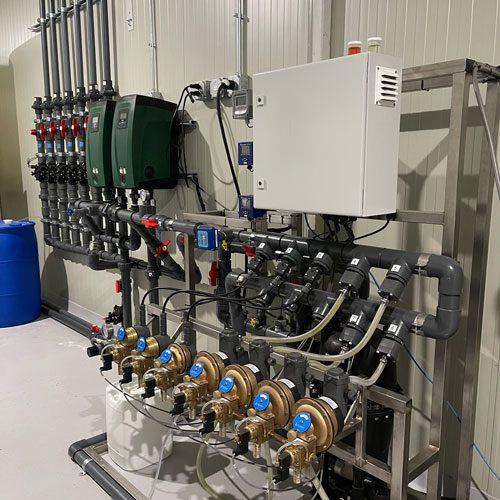
Fertigation systems combine irrigation and nutrient delivery to support managed crop feeding.
Depending on the configuration, growers can monitor irrigation timing, nutrient solution concentration, and pH to support consistent root-zone management.
4.6 Cucumber Trellising System
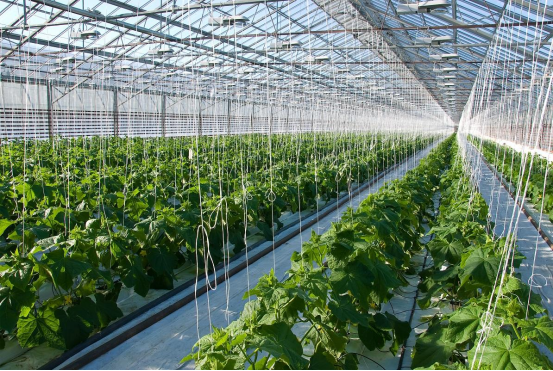
Trellising systems support vertical cucumber growth and provide a structure for plant training.
They may consist of support wires, strings, clips, or other crop-training components. The support system should be designed for the expected crop load and the greenhouse structure.
https://www.fzygreenhouses.com/greenhouse-equipment
Climate is one of the most important factors influencing cucumber greenhouse design.
A greenhouse suitable for a cool temperate region may require significantly different ventilation, cooling, or heating systems from one used in a hot tropical environment.
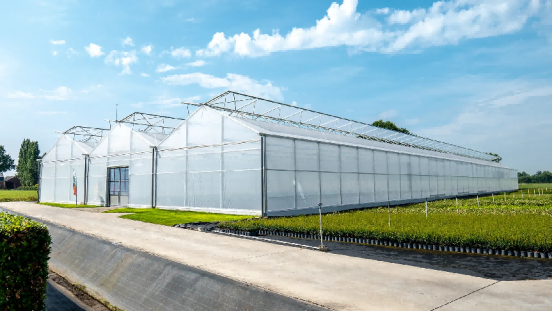
In hot and humid regions, cucumber greenhouse design should focus on managing accumulated heat, air exchange, and excess moisture.
Large ventilation openings, suitable roof or side ventilation, and circulation fans may help improve airflow. In some locations, mechanical ventilation may also be needed.
Because high outdoor humidity reduces evaporative cooling potential, cooling-system selection requires careful evaluation.
Design Considerations: Ventilation Capacity · Air Circulation · Rain Protection · Humidity Management
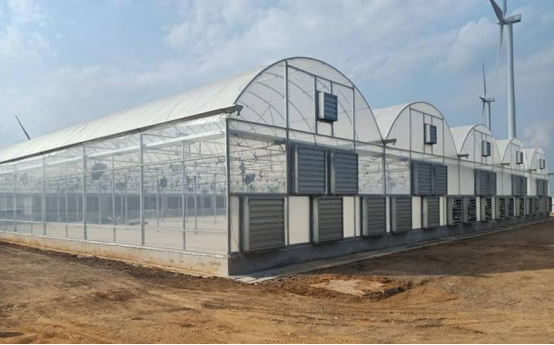
In hot and dry regions, cucumber cultivation requires careful management of high solar radiation, greenhouse temperature, and water availability.
Ventilation and shading may be combined with evaporative cooling where appropriate. Irrigation system design is also important to maintain a suitable moisture supply during periods of high evaporative demand.
Design Considerations: Shading · Cooling · Irrigation Capacity · Water Availability
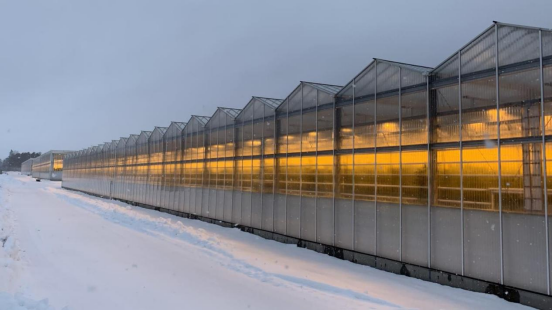
In temperate and cold regions, greenhouse cucumber production may require protection from low temperatures and significant day-to-night temperature changes.
Appropriate covering materials, ventilation controls, and heating equipment may be used to support the intended growing season.
During cooler periods, ventilation and humidity management should be balanced against unnecessary heat loss.
Design Considerations: Heat Retention · Heating · Controlled Ventilation · Seasonal Production Planning
https://www.fzygreenhouses.com/products
Cucumber greenhouse projects can range from small commercial growing facilities to large agricultural production operations.
Greenhouse size influences internal layout, equipment capacity, crop management, and infrastructure planning. However, total growing area alone does not determine the most suitable greenhouse structure or ventilation system.
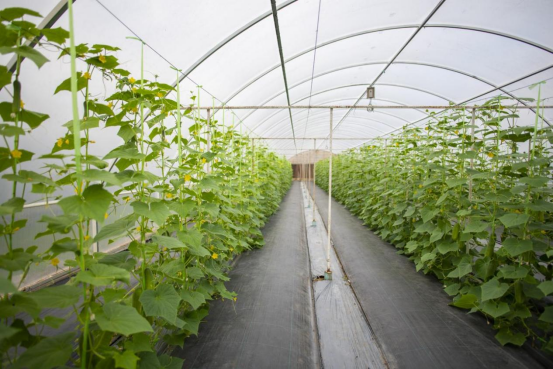
For small commercial cucumber farms, growers may prioritize straightforward greenhouse structures, manageable equipment configurations, and practical daily operation.
Tunnel and Gothic film greenhouses can be considered for these projects, with soil-based cultivation, drip irrigation, and trellising systems.
Natural ventilation and optional shading may be incorporated according to local conditions.
Typical Project Priorities: Practical Layout · Irrigation · Ventilation · Crop Accessibility
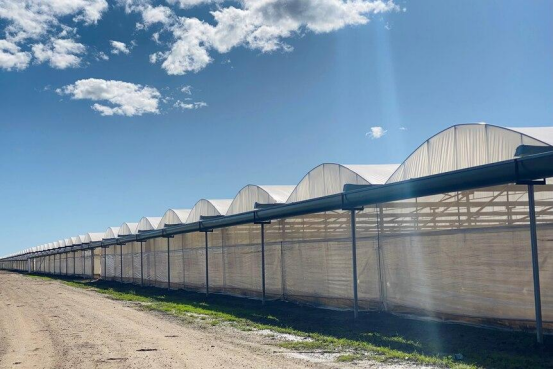
Medium-scale cucumber farms may require greater attention to irrigation distribution, environmental management, and organized crop production areas.
Gothic and multi-span film greenhouses can provide different configuration options for expanding commercial operations.
Depending on the growing method and project requirements, automated irrigation, fertigation, environmental monitoring, and additional ventilation equipment may be considered.
Typical Project Priorities: Growing Area Planning · Irrigation Distribution · Ventilation · Equipment Integration
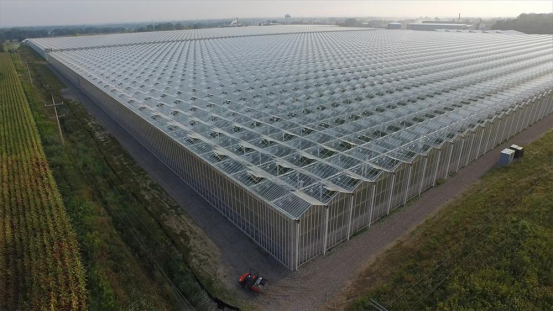
Large commercial cucumber projects typically involve more extensive planning of greenhouse layout, internal logistics, irrigation distribution, climate management, and maintenance access.
Multi-span film and glass greenhouses can accommodate integrated equipment configurations, depending on the project's technical and financial objectives.
For these facilities, greenhouse design should consider not only the growing area but also operating efficiency, climate conditions, available infrastructure, and long-term management requirements.
Typical Project Priorities: Integrated Greenhouse Design · Climate Management · Fertigation · Automation · Operational Planning
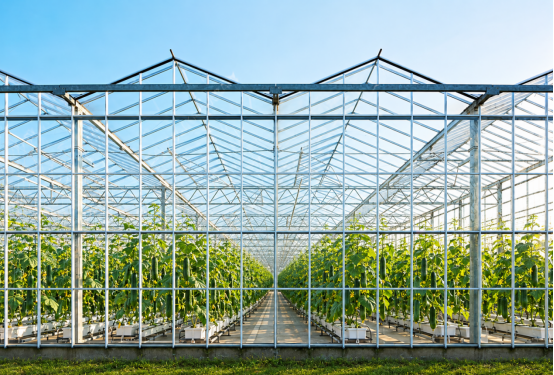
Every cucumber growing project has different requirements. Greenhouse design should therefore begin with an understanding of the crop, project location, production objectives, and available resources.
At FZY Greenhouses, we focus on providing greenhouse structures and suitable supporting equipment configurations for different agricultural applications.
For cucumber greenhouse projects, the planning process can address greenhouse type, structural dimensions, covering materials, ventilation options, irrigation arrangements, and other systems relevant to the intended growing environment.
Understanding Your Growing Requirements
We begin by identifying your project location, cucumber variety, preferred cultivation method, greenhouse size, and intended production season.
Selecting a Suitable Greenhouse Structure
Tunnel, Gothic, multi-span film, and glass greenhouse options can be evaluated according to climate conditions, growing requirements, and project objectives.
Planning Supporting Systems
Ventilation, shading, cooling, irrigation, fertigation, and crop support requirements are considered according to the proposed greenhouse configuration.
Developing a Project-Specific Solution
The proposed greenhouse configuration is discussed with the customer and refined according to project requirements, site conditions, and available resources.
Our goal is to help commercial growers and agricultural project developers identify practical greenhouse solutions suited to their cucumber cultivation needs.
There is no single greenhouse type suitable for every cucumber project. Tunnel and Gothic greenhouses can be practical choices for seasonal or smaller commercial operations, while multi-span film and glass greenhouses offer additional options for equipment integration and larger-scale production. The appropriate choice depends on climate, growing method, production season, and project budget.
Yes. Cucumbers can be grown in plastic film greenhouses using soil-based or suitable substrate cultivation methods. Proper ventilation, irrigation, drainage, and plant support are important for maintaining a suitable growing environment. The greenhouse configuration should reflect local weather conditions and the selected cucumber variety.
Both methods can support commercial cucumber production. Soil cultivation may be suitable for farms with good soil conditions and established growing practices. Hydroponic and substrate systems offer different approaches to irrigation and nutrient management but require appropriate equipment and operational expertise. The selection should reflect production goals, resources, and management capabilities.
Cucumber greenhouses require appropriate ventilation to help manage temperature and humidity. Natural ventilation may be sufficient under certain conditions, while mechanical ventilation or additional cooling may be necessary in other environments. Cooling equipment should be selected according to local temperature, humidity, greenhouse dimensions, and growing requirements.
Important information includes the project country or location, local climate, available land area, preferred greenhouse dimensions, cucumber variety, cultivation method, production season, and desired level of automation. These details help determine suitable greenhouse structures and supporting system configurations.
Every cucumber growing project has different requirements.
Whether you are planning a new commercial greenhouse or exploring an upgrade to your current growing facility, FZY Greenhouses can help you review suitable greenhouse structures and supporting system options.
Share your project location, growing area, preferred cultivation method, and equipment needs with our team.
Let's build a greenhouse solution around your growing plans.
FZY Greenhouses
www.fzygreenhouses.com
Copyright © 2026 by Hebei Fengzhiyuan Greenhouse Equipment Manufacturing Co., Ltd Privacy Policy
 EN