 EN

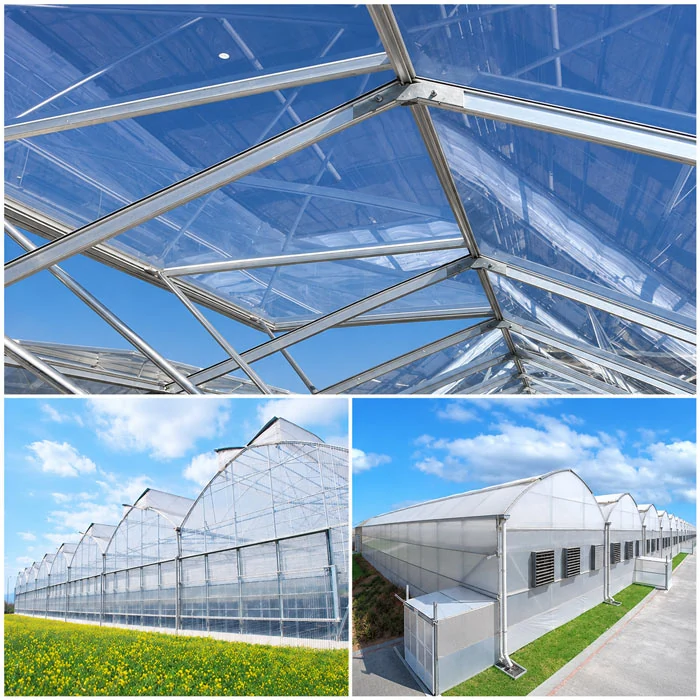
Your greenhouse covering affects more than the construction budget. It also influences light distribution, heat loss, structural demand, maintenance planning, and crop-management options. Glass, polycarbonate sheets, and plastic film can all work well, but only when they match your climate, greenhouse structure, crop, and operating plan. This guide compares the three materials and shows which questions you should resolve before specifying one.
What Should You Compare Before Choosing a Greenhouse Cover?
A useful comparison starts with project conditions, not with a single headline property. High light transmission is valuable, for example, but it does not automatically make a material the best option if the project also faces hail, high heating demand, limited structural capacity, or a tight replacement budget.
Before comparing products, define these project inputs:
- Local climate: solar radiation, temperature range, wind, hail, snow, rainfall, humidity, and UV exposure.
- Crop and production target: light demand, temperature range, humidity control, crop cycle, and expected revenue per square meter.
- Greenhouse structure: span, bay spacing, roof form, frame load capacity, foundation design, and ventilation openings.
- Operating strategy: heating, thermal screens, shading, ventilation, cooling, supplemental lighting, and condensation control.
- Financial horizon: available capital, energy cost, maintenance labor, replacement schedule, and expected service period.
Glass Greenhouse Covering
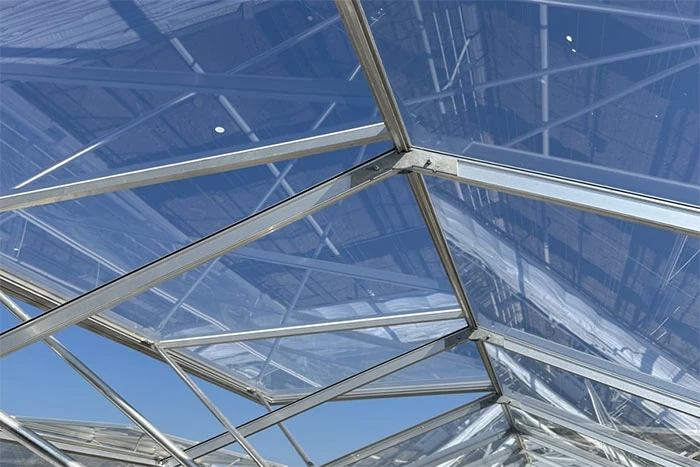
Glass is widely associated with high-standard commercial greenhouses, including Venlo-type projects. It is usually considered when the project requires strong light performance, a long operating horizon, and a rigid structure designed for the glazing load.
Main Advantages
- High light-transmission potential can support light-demanding crops when the glazing remains clean.
- The material resists UV aging and can remain in service for a long period under suitable operating conditions.
- Its hard, smooth surface is relatively easy to clean and does not stretch or sag.
- Standardized glazing systems can integrate roof vents, gutters, screens, and automated climate equipment.
Limits and Purchasing Risks
Glass is heavy and requires a compatible frame, foundation, glazing system, and installation method. It can break under impact, so hail exposure, maintenance access, replacement logistics, and worker safety must be considered. Single glazing also provides limited insulation compared with multiwall panels or a well-managed double-film system.
In a cold climate, the decision should therefore include heating capacity, energy prices, air leakage, thermal screens, and condensation management. High light transmission alone does not offset uncontrolled heat loss.
Best-Fit Projects
Glass is a strong candidate for long-term, high-output vegetable or flower projects that can support the initial investment and operate an integrated climate-control system. It is less suitable when the structure cannot carry the load, impact risk is high, or the project needs the lowest possible initial cost.
Polycarbonate Greenhouse Covering
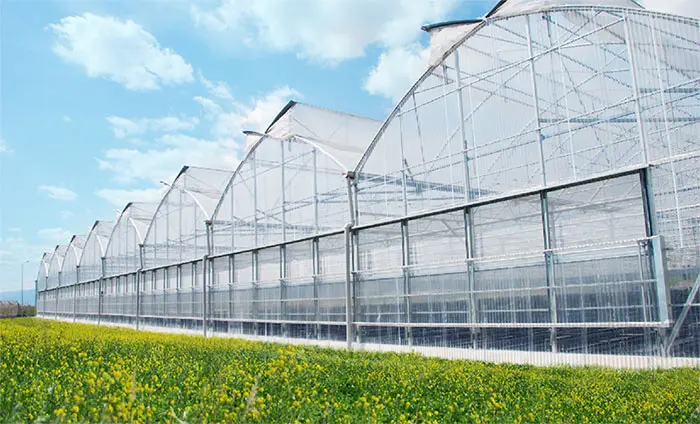
Polycarbonate sheets are rigid, lightweight coverings used on complete greenhouses or on selected areas such as sidewalls, end walls, and service zones. Multiwall panels create enclosed air spaces that can improve insulation compared with single glazing.
Main Advantages
- High impact resistance makes polycarbonate useful where hail or accidental impact is a concern.
- Multiwall configurations can reduce heat transfer when panel joints and perimeter seals are correctly installed.
- The sheets are lighter than glass, which can simplify handling and reduce dead load.
- Different panel structures, thicknesses, colors, and light-diffusing options support different project priorities.
Limits and Purchasing Risks
Panel performance varies by sheet structure, raw material quality, surface treatment, and installation. Light transmission can decline as panels age, particularly when the UV-protective surface is inadequate or installed in the wrong orientation. Dust, algae, moisture, or insects inside open flutes can also reduce appearance and performance.
The design must allow for thermal expansion and contraction. Fasteners, profiles, sealing tape, drainage, and joint spacing should follow the panel supplier’s instructions. Over-tight fastening or poorly sealed ends can create leaks, cracks, or internal contamination.
Best-Fit Projects
Polycarbonate is often suitable for propagation greenhouses, cold-region projects, research facilities, and commercial structures that need a balance of insulation, impact resistance, and manageable structural weight. Confirm panel specifications and fastening details before finalizing the frame.
Plastic Film Greenhouse Covering
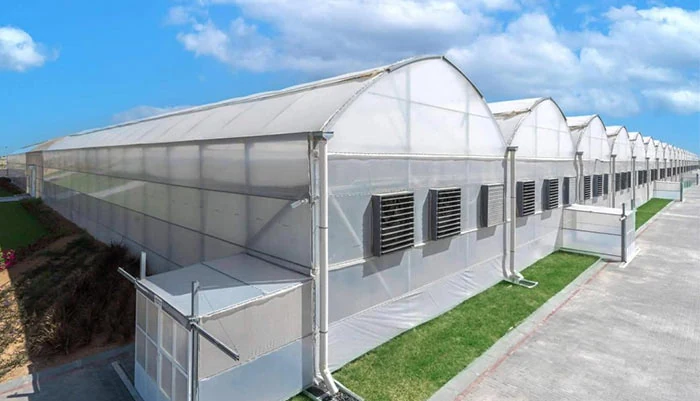
Plastic film is widely used for tunnel, high-tunnel, Gothic, and multi-span commercial greenhouses. PE and PO films are available with functions such as anti-drip, anti-fog, UV stabilization, infrared retention, and light diffusion. The correct choice depends on which functions are required and how long they remain effective in local conditions.
Main Advantages
- Lower initial material cost can make large covered areas more financially accessible.
- Low weight simplifies transport and installation and reduces covering dead load.
- Functional film options can support diffuse light, condensation control, and UV stability.
- A double-layer inflated system can improve insulation and stabilize the cover when correctly installed and operated.
Limits and Purchasing Risks
Film requires planned replacement and is sensitive to puncture, abrasion, poor tensioning, sharp frame edges, strong wind, UV exposure, and some agricultural chemicals. Actual service life depends on the film grade, climate, installation quality, structure, and maintenance—not only on nominal thickness.
For a double-layer system, check blower reliability, air-distribution tubing, sealing, and backup arrangements. For all film greenhouses, use compatible fastening profiles and inspect high-friction contact points before each severe-weather season.
Best-Fit Projects
Plastic film is often the practical choice for large vegetable-production areas, seasonal projects, and commercial farms that prioritize lower upfront investment. The budget should still include fastening components, installation labor, inspection, repair materials, and future replacement.
Glass vs Polycarbonate vs Plastic Film: Decision Table
The table below compares project-level implications rather than assigning one universal winner. Final specifications should be confirmed against local design loads and supplier data.
|
Decision Factor |
Glass |
Polycarbonate Sheets |
Plastic Film |
|
Light performance |
High direct-light potential; cleanliness matters |
Moderate to high, depending on panel structure and aging |
Varies by film grade; diffuse-light options are available |
|
Thermal performance |
Limited with single glazing; system upgrades may be required |
Good with multiwall panels and well-sealed joints |
Basic with one layer; improved by a double-layer inflated system |
|
Impact and weather risk |
Rigid but vulnerable to impact; requires a suitable frame and foundation |
High impact resistance; useful where hail is a concern |
Flexible but vulnerable to puncture, abrasion, wind damage, and poor tensioning |
|
Structural demand |
Highest dead load of the three options |
Lower than glass but requires correct fastening and expansion allowance |
Lowest covering weight, but wind design and fastening remain critical |
|
Maintenance focus |
Cleaning, broken panes, seals, gutters, and structural inspection |
UV layer, joint sealing, surface condition, and panel movement |
Tension, tears, contact points, inflation system, and replacement planning |
|
Investment profile |
Higher initial investment with a long-term project horizon |
Mid-to-high investment with insulation and impact benefits |
Lower initial investment with recurring replacement cost |
|
Typical fit |
High-standard commercial projects with strong capital and climate-control plans |
Cold or hail-prone projects and propagation facilities |
Large-area, cost-sensitive vegetable and flower production |
How to Choose the Right Material for Your Project
1. Start With Climate and Structural Loads
Obtain the applicable wind, snow, and other local design requirements before selecting the covering. Glass adds more dead load; film needs reliable tensioning and fastening; polycarbonate requires suitable supports and allowance for thermal movement. The complete structure—not the cover alone—must meet project conditions.
2. Match Light Strategy to the Crop
Consider total light, seasonal light availability, diffusion, shading, and crop sensitivity. In bright climates, diffuse light and shading control may be more useful than simply maximizing direct transmission. In low-light climates, dirt accumulation, condensation, frame shading, and aging losses become more important.
3. Calculate Operating Cost, Not Just Purchase Price
Compare initial material and installation cost with heating or cooling demand, cleaning, repairs, expected replacement, production downtime, and disposal. A low-cost covering can be economical, but only if its replacement cycle and climate-control requirements are included in the plan.
4. Check Compatibility With Other Greenhouse Systems
Covering choices affect roof and side ventilation, insect screens, thermal screens, shading, gutters, fans, cooling equipment, and sealing details. Confirm these interfaces during design instead of adding them after the structure is complete.
5. Request Comparable Supplier Information
Ask suppliers to quote against the same project brief. The submission should identify the proposed material, panel or film structure, UV protection, functional treatments, fastening system, installation requirements, warranty terms, and exclusions. Do not compare prices until the technical scope is aligned.
Common Specification Mistakes to Avoid
- Selecting only by purchase price without estimating heating, maintenance, and replacement costs.
- Using a general material name without defining the sheet structure, film functions, UV protection, or accessories.
- Assuming the highest light transmission is always best for every crop and climate.
- Ignoring wind, snow, hail, foundation, and frame compatibility during material selection.
- Treating anti-drip, diffusion, and infrared-retention functions as permanent without checking their rated conditions.
- Comparing supplier offers that include different fastening systems, thicknesses, installation scopes, or warranty conditions.
Frequently Asked Questions
Which greenhouse covering material lasts the longest?
Glass generally offers the longest material life under suitable conditions. However, the project must also account for breakage, seals, frame maintenance, and cleaning. Compare whole-system maintenance rather than material life alone.
Is polycarbonate better than glass for a greenhouse?
Not universally. Polycarbonate offers impact resistance and multiwall insulation, while glass can provide high light performance and long-term stability. Climate, crop, structure, and operating cost should determine the choice.
Is double-layer film suitable for cold climates?
It can improve insulation compared with single film, but it does not replace a complete cold-climate design. Heating, sealing, thermal screens, ventilation, and blower reliability must also be evaluated.
Which covering is most suitable for hail-prone areas?
Impact-resistant polycarbonate is often considered where hail is a major risk. The panel grade, support spacing, fastening system, and local load requirements still need engineering confirmation.
How often should greenhouse film be replaced?
There is no universal interval. Replacement depends on film grade, UV exposure, wind, chemicals, installation, abrasion, and maintenance. Use the supplier’s rated conditions and inspect the film regularly.
Does higher light transmission always improve production?
No. Crop response also depends on light distribution, temperature, humidity, shading, season, and climate control. In some projects, diffuse light or heat management may be more valuable than maximum direct transmission.
Can one greenhouse use more than one covering material?
Yes. Some projects combine roof and wall materials to balance light, insulation, impact risk, ventilation, and cost. The joints and structural interfaces must be designed as one system.
Final Thoughts
Choose glass for a long-term, high-standard project when the structure and climate system can support it; choose polycarbonate when insulation and impact resistance are priorities; choose film when large-area coverage and lower initial investment matter most. Before purchasing, align the cover with local loads, crop requirements, ventilation, energy strategy, and lifecycle cost.
Table of Contents
- What Should You Compare Before Choosing a Greenhouse Cover?
- Glass Greenhouse Covering
- Polycarbonate Greenhouse Covering
- Plastic Film Greenhouse Covering
- Glass vs Polycarbonate vs Plastic Film: Decision Table
- How to Choose the Right Material for Your Project
- Common Specification Mistakes to Avoid
-
Frequently Asked Questions
- Which greenhouse covering material lasts the longest?
- Is polycarbonate better than glass for a greenhouse?
- Is double-layer film suitable for cold climates?
- Which covering is most suitable for hail-prone areas?
- How often should greenhouse film be replaced?
- Does higher light transmission always improve production?
- Can one greenhouse use more than one covering material?
- Final Thoughts