 EN


- A greenhouse ventilation system should not be selected by comparing only the purchase prices of fans, vent-opening equipment, or cooling pads. A sound selection process starts with the local climate, greenhouse structure, and crop requirements, then checks effective airflow, air-inlet conditions, energy costs, and maintenance capabilities. Low-cost equipment that is poorly matched to the system may result in hot spots, moisture buildup, higher energy consumption, or insufficient actual fan airflow.
1. Start with the Local Climate and Control Objectives
Hot and dry regions can use fan-and-pad systems or other evaporative cooling methods. In hot and humid regions, priority should be given to improving air exchange and combining it with shading; the use of evaporative cooling should be evaluated carefully. In cold regions, winter dehumidification must be balanced with heat retention to avoid heat loss from excessive ventilation. Design should be based on the temperature, humidity, solar radiation, wind speed, and prevailing wind direction at the project site, rather than annual average climate data alone.
2. Choose the Ventilation Method Based on the Greenhouse Structure
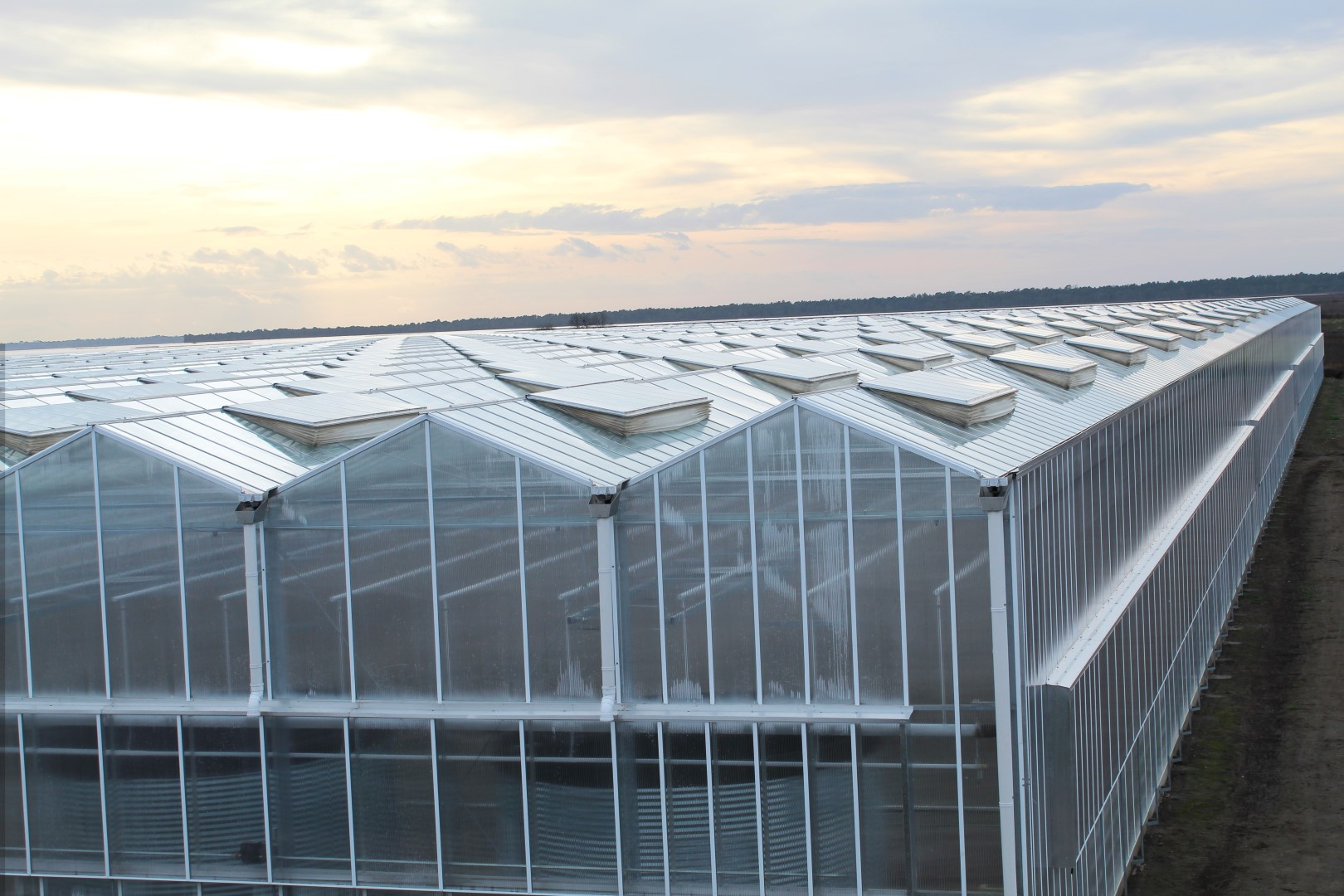
Roof and side openings use wind pressure and the stack effect to provide natural ventilation. This approach is suitable for projects with sufficient effective vent area and favorable natural wind conditions. Large multi-span greenhouses, sites with low wind speeds, or projects requiring stable summer production generally need mechanical exhaust ventilation or a combined system. Greenhouse length, width, height, covering materials, insect screens, and crop canopies all affect airflow paths.
|
Project Conditions |
Systems to Evaluate First |
Key Checks |
|
Mild climate with favorable natural airflow |
Roof and side natural ventilation |
Effective vent area, prevailing wind direction, and insect-screen resistance |
|
High temperatures with insufficient natural wind |
Mechanical exhaust ventilation |
Effective airflow, design static pressure, and air inlets |
|
Fan-and-pad cooling system |
Outdoor dry-bulb and wet-bulb conditions, cooling pad area, and water quality |
|
|
Hot and humid climate |
Enhanced air exchange and shading |
Use fogging or cooling pads with caution |
|
Large multi-span greenhouse |
Combined natural and mechanical ventilation |
Zoning control, airflow uniformity, and backup capacity |
3. Compare Actual System Performance
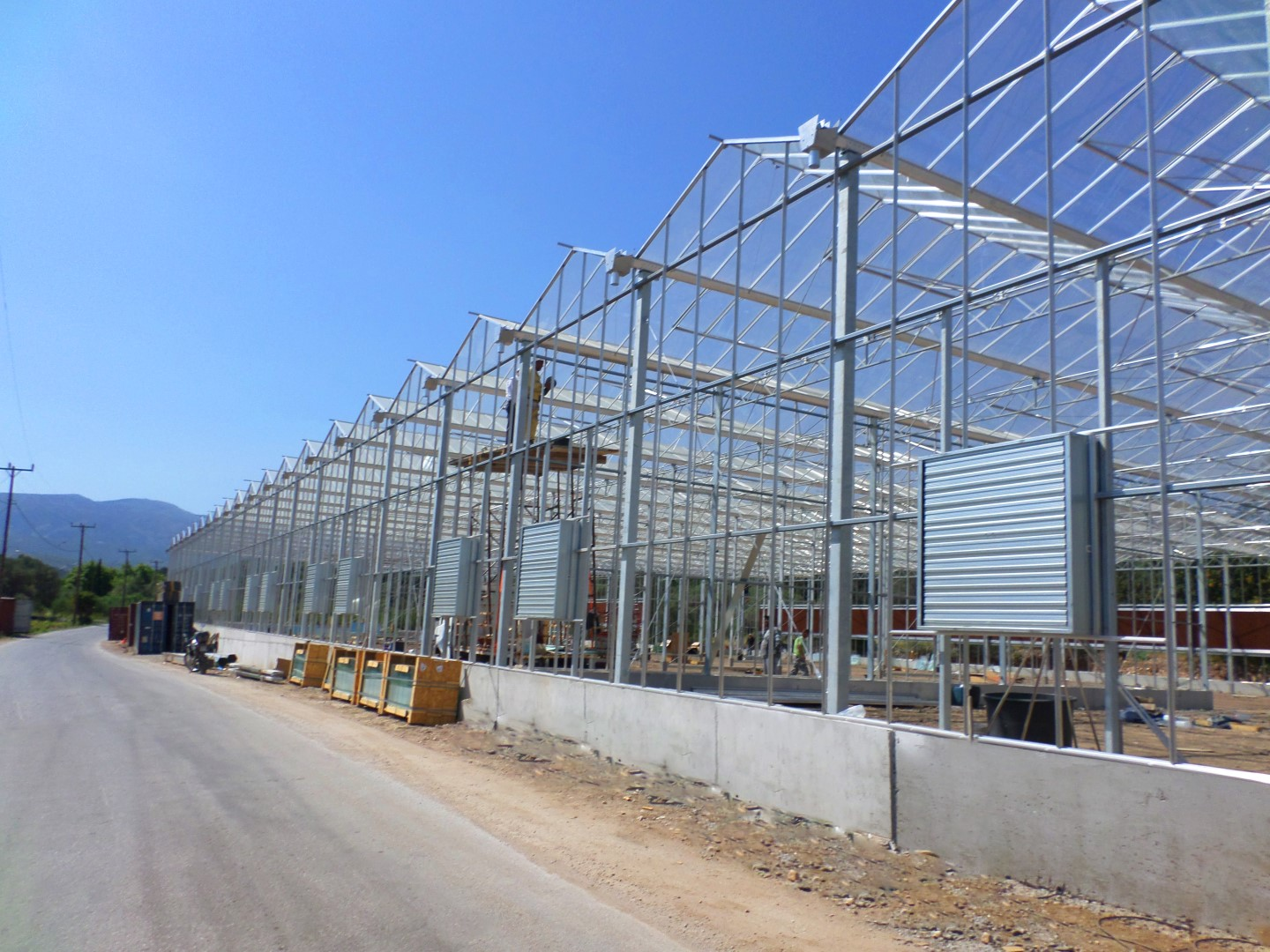
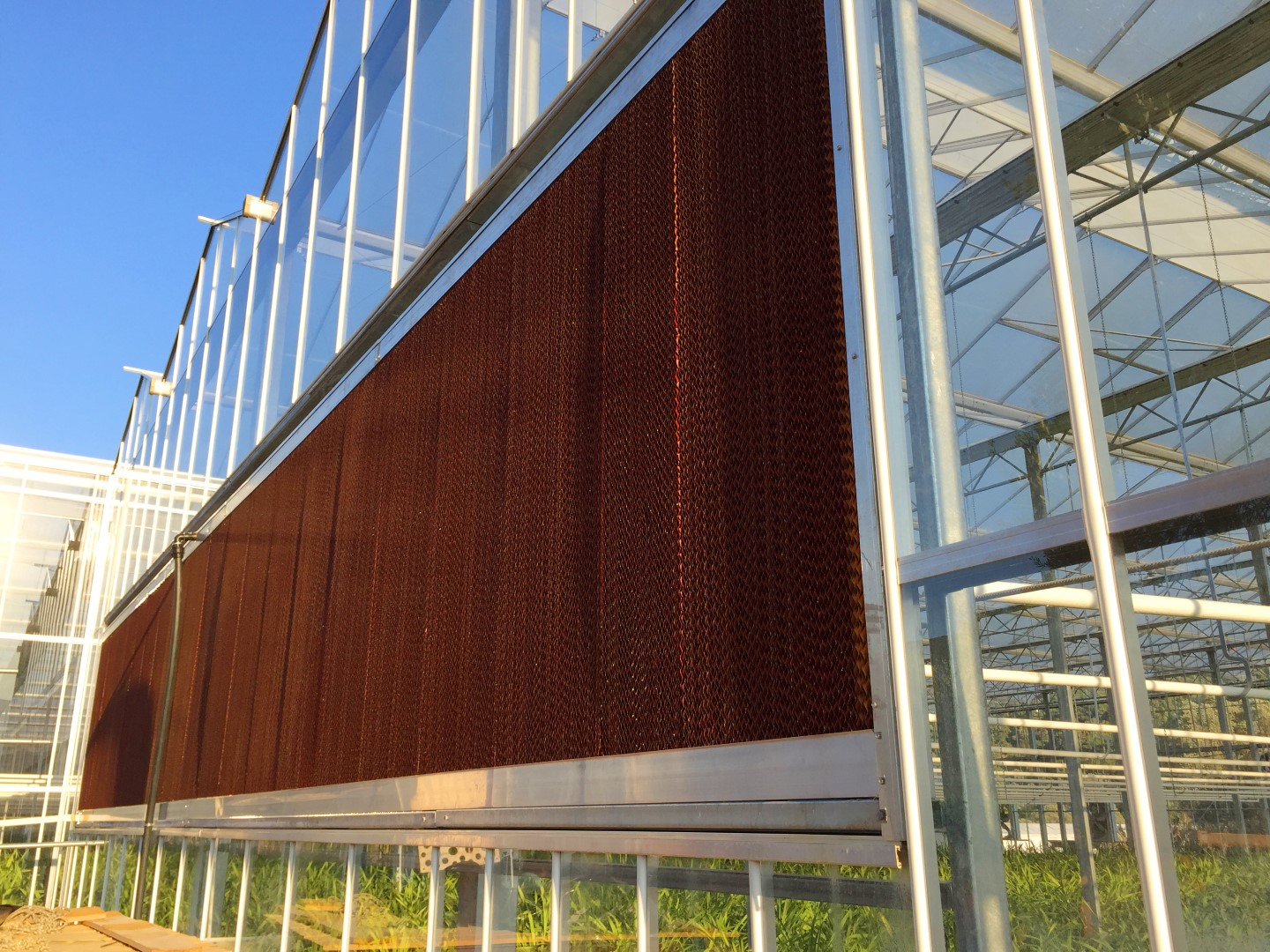
Insect screens, cooling pads, louvers, fan guards, air inlets, and crop canopies all create airflow resistance. Fans should therefore be selected based on their performance curves at the design static pressure. Exhaust airflow must also be matched with the air inlets. Insufficient inlet area increases negative pressure, reduces actual airflow, and leads to uneven air distribution.
It is also important to distinguish air exchange from air circulation. Roof vents, side vents, and exhaust fans exchange indoor and outdoor air, while circulation fans mainly move air within the greenhouse and reduce temperature and humidity dead zones. They cannot replace fresh-air exchange.
4. Calculate Long-Term Energy and Control Costs
The purchase price is only one part of the total cost. Fan efficiency under design operating conditions, operating hours, power supply conditions, maintenance frequency, and spare-parts availability should also be compared. Multiple fans should be switched on and off in stages and linked with roof vents, side vents, shading, and cooling pads so that the system operates according to seasonal conditions and actual loads rather than running at full capacity continuously.
5. Common Ventilation System Selection Mistakes
- Comparing only the initial purchase price without considering the system's total life-cycle cost;
- Looking only at the fan's maximum airflow at zero static pressure and ignoring its effective airflow at the design static pressure;
- Installing exhaust fans without providing adequately sized air inlets;
- Ignoring the resistance caused by insect screens, dust accumulation on cooling pads, and crop canopies;
- Treating circulation fans as equipment for indoor-outdoor air exchange;
- Adding evaporative cooling equipment indiscriminately in humid regions, making humidity management more difficult.
6. Conclusion
A suitable greenhouse ventilation system must meet requirements for environmental control, effective performance, energy consumption, and maintenance. First, determine whether natural ventilation, mechanical ventilation, or a combined solution is appropriate for the climate and greenhouse structure. Then verify effective vent area, design static pressure, the balance between air inlets and exhaust outlets, and airflow uniformity. Finally, compare equipment quality and long-term operating costs.