 EN
EN


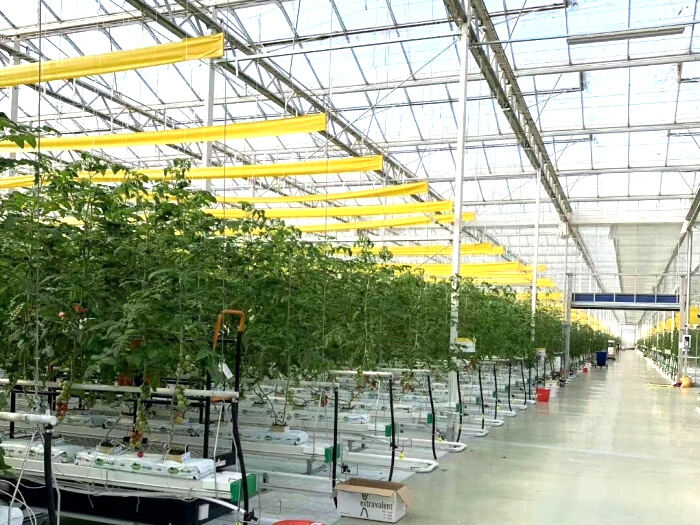
Key Decision Criteria for Irrigation in a Large Greenhouse
Water Efficiency vs. Uniformity: Balancing Yield and Resource Use
Big greenhouses face a constant battle between saving water and making sure it gets distributed evenly across all plants. Systems designed to cut down on waste can actually create dry spots where crops suffer. Studies show something pretty shocking too. When water isn't applied uniformly even by just 15%, tomato production drops around 19% according to research published last year in Horticultural Science Journal. The good news? Tools such as soil moisture sensors are changing things. These devices let growers tweak irrigation on the spot and maintain better than 95% uniform coverage most of the time. By focusing on both water conservation and proper distribution, farmers end up protecting their resources while still getting solid harvests and consistent quality from their crops.
Scalability and Maintenance Burden Across 1+ Hectare Facilities
Scaling irrigation beyond 1 hectare intensifies operational complexity. Traditional drip systems demand 40% more maintenance labor per hectare than automated alternatives (Greenhouse Management Report, 2023). Key pressure points include:
- Pressure consistency: Fluctuations increase by 300% in piping runs exceeding 200 meters
- Clogging vulnerability: Filter maintenance frequency triples at commercial scale
- Energy demands: Pumping costs rise exponentially with pipe length
Mobile overhead systems mitigate these issues through centralized controls—reducing manual checks by 70% while preserving flow accuracy across expansive growing areas.
Automated Micro-Sprinkler Systems: Optimal Balance for Large Greenhouse Operations
How Pressure-Compensating Nozzles Ensure Uniform Coverage at Scale
Pressure compensating nozzles keep the flow rate and droplet size pretty much the same throughout those long irrigation lines, even when there are pressure changes because of hills in the field or pumps acting up. These nozzles basically close down when pressure gets too high and open up again when it drops off, so farmers get that even coverage their expensive crops need over large areas. One farm we worked with on a 50 acre plot saw almost perfect uniformity in their spray pattern after switching to these nozzles, which means no more patches where plants go thirsty or get drowned. Plus, the self cleaning feature helps prevent blockages from fertilizer build up or dirt particles getting stuck, saving quite a bit of time on maintenance stuff. Farmers tell us this makes a big difference in crop consistency and saves water since less gets wasted running off into ditches instead of soaking into the soil where it belongs.
Smart Integration: ET-Based Scheduling and Real-Time Sensor Feedback
Smart irrigation setups these days mix evapotranspiration models with actual sensor networks to handle when and how much to water crops. The ET calculations figure out exactly what plants need based on local weather stuff like temp changes, air dampness levels, and sunlight intensity. At the same time, little sensors stuck in the ground check what's going on right where the roots are growing. When those sensors pick up enough moisture even though it's super hot outside, the whole system just waits before turning on the sprinklers, which stops wasting water. Some tests from last year showed greenhouses saved around 22 percent on their water bills compared to old fashioned timer systems. These smart systems can spot weird weather pockets too, like sudden humidity jumps near greenhouse vents, all displayed on central screens so growers can tweak things fast across big farming operations without stressing about plant health issues.
Drip Irrigation in Large Greenhouse Settings: When It Fits—and When to Hybridize
High-Value Crop Applications Where Subsurface Drip Delivers ROI
For those growing premium crops like tomatoes, berries, and orchids in big greenhouses, subsurface drip irrigation (SDI) really pays off. The system works by placing water and nutrients right at the roots through underground emitters. This setup slashes evaporation losses by about 30% compared to traditional surface watering methods. Plus it keeps leaves dry, which is a big plus since damp foliage tends to invite all sorts of fungal problems. Farmers report saving between 15% to 25% on fertilizers while seeing their yields jump anywhere from 10% to 20%, especially with plants that are sensitive to temperature changes. When we talk about automation, it makes life so much easier for growers managing vast operations. Most find that they recoup their investment in just 18 to 24 months thanks to reduced expenses on water and other inputs. Some even mention unexpected benefits after installation that weren't part of the original calculations.
Mitigating Clogging Risk in Recirculating Systems Through Filtration and Pulse Flushing
Clogging is SDI's primary constraint in large greenhouses using recirculated water. A three-tiered mitigation strategy proves effective:
- Multi-stage filtration, combining sand media (100–150 micron) with disc filters (120 mesh), removes organic and sediment particles
- Automated pulse flushing, cycling every 6–8 hours, clears biofilm from laterals
-
Bi-monthly acid injections dissolve mineral deposits
This protocol reduced emitter clogging by 70–80% in commercial trials. For facilities exceeding 1 hectare, sectional flushing valves at manifold junctions ensure complete debris expulsion while maintaining uninterrupted irrigation in active zones.
Mobile Overhead Solutions: Addressing Labor Shortages in Large Greenhouse Management
Big greenhouses over an acre face serious problems finding enough workers these days. That's where mobile overhead irrigation comes in handy. These systems automate watering using those big booms that hang from the ceiling and move across the greenhouse. They just follow programmed routes on tracks installed throughout the building. No more dragging hoses around or constantly moving sprinklers by hand. A grower we spoke to saw their workforce drop by about 40% once they installed this system. Instead of spending all day on basic watering duties, employees now have time to actually watch for pests and check crops properly, which makes a real difference in quality control.
Advanced systems integrate real-time positioning technology to optimize travel routes between crop zones, minimizing non-irrigation movement and ensuring full coverage. Automation also reduces worker exposure to humid microclimates and repetitive strain injuries—key contributors to agricultural turnover rates exceeding 30% (AgriTech, 2023).
The ability to scale is what really matters when it comes to getting these systems adopted widely. With modular setups, growers can expand gradually as needed. A single boom system typically handles around 5 acres of land without compromising on how evenly water gets distributed across the field. The control panels are all centralized now, so farmers can check things remotely and tweak settings without needing someone physically present at the site during those slow periods. This makes a big difference for operations dealing with seasonal crops that come and go quickly, where irrigation needs change constantly throughout the growing season.
Frequently Asked Questions
1. What is the advantage of using pressure-compensating nozzles in large greenhouses?
Pressure-compensating nozzles ensure uniform water flow and droplet size throughout irrigation lines, providing consistent coverage essential for expensive crops across large areas. They adapt to pressure changes and have self-cleaning features to prevent blockages.
2. How do mobile overhead irrigation systems address labor shortages?
Mobile overhead irrigation systems automate watering with moving booms, reducing manual labor needs by 40% and allowing workers to focus on other important tasks like pest monitoring and crop quality control.
3. What are the benefits of subsurface drip irrigation (SDI) for high-value crops?
SDI directly targets plant roots, reducing evaporation and keeping foliage dry to prevent fungal diseases. It offers significant savings on water and fertilizers, and is particularly beneficial for sensitive high-value crops like tomatoes and orchids.
Table of Contents
-
Key Decision Criteria for Irrigation in a Large Greenhouse
- Water Efficiency vs. Uniformity: Balancing Yield and Resource Use
- Scalability and Maintenance Burden Across 1+ Hectare Facilities
- Automated Micro-Sprinkler Systems: Optimal Balance for Large Greenhouse Operations
- Drip Irrigation in Large Greenhouse Settings: When It Fits—and When to Hybridize
- Mobile Overhead Solutions: Addressing Labor Shortages in Large Greenhouse Management
- Frequently Asked Questions