 EN

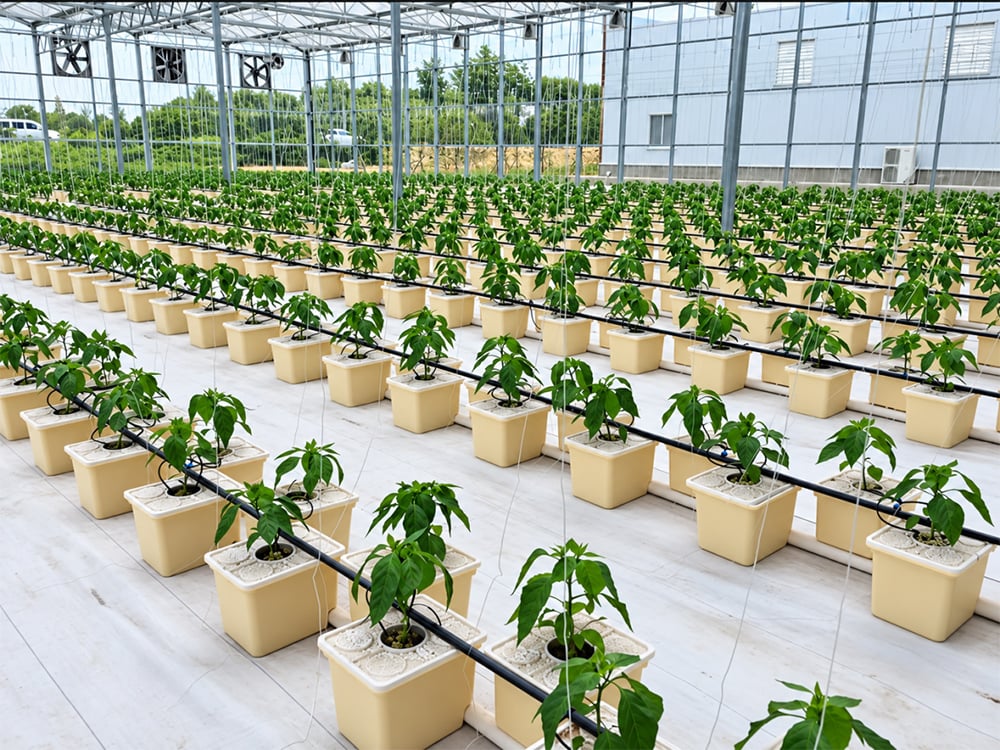
A Dutch bucket, also known as a Bato bucket, is a substrate-based hydroponic growing method that uses individual growing buckets, growing media, and a drip irrigation system. It is particularly suitable for fruiting crops such as tomatoes, cucumbers, sweet peppers, and eggplants, which have longer growing cycles, larger root systems, and require trellising.
一、How Does a Dutch Bucket System Work?
A water pump and fertigation equipment deliver nutrient solution to each growing bucket through drip lines and emitters, providing water and nutrients to the plants. Growing media such as coco coir, perlite, or clay pebbles support the roots while retaining an appropriate balance of moisture and air. Excess nutrient solution drains from the bottom of each bucket. It can either be discharged or collected, treated, and reused.
A Dutch bucket is more than just a growing container. It combines an individual growing space for each plant with automated drip irrigation and drainage collection, making the system easier to manage and suitable for large-scale commercial cultivation.
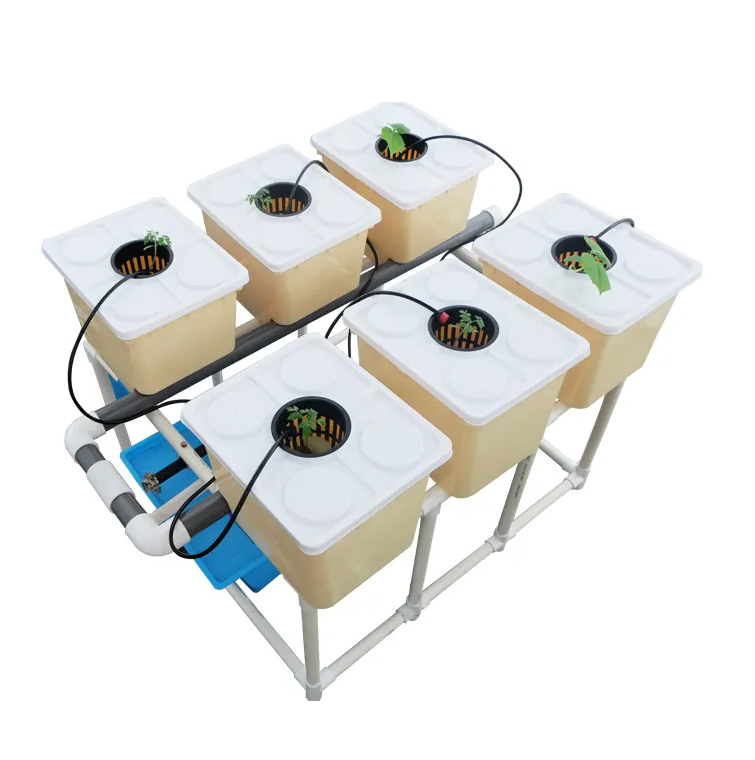
A small Dutch bucket system consists of growing buckets, drip lines, a support frame, and return pipes.
二、How Do You Choose Between an Open and a Recirculating System?
|
System Type |
Nutrient Solution Flow |
Advantages |
Management Focus |
|
Open system |
Drainage is collected but not returned to the nutrient-supply system, or is discharged directly. |
Simple structure; drainage has less impact on the overall system. |
Control the drainage volume to avoid wasting water and nutrients and to prevent environmental pollution. |
|
Recirculating system |
Drainage is collected, monitored, or treated before being returned to the reservoir. |
Improves water and fertilizer use efficiency. |
Continuously monitor pH, EC, water temperature, and system hygiene to prevent problems from spreading. |
三、What Are the Benefits of Dutch Bucket Systems?
1. Suitable for Large Fruiting Crops
Each individual bucket can hold a relatively large volume of growing media, providing enough root-zone space for long-cycle fruiting crops. The system also works well with trellising and staggered harvesting.
2. More Centralized Water and Nutrient Management
Drip irrigation can deliver nutrient solution along each growing row, and a recirculating system can recover some of the drainage. However, actual water and fertilizer savings depend on the irrigation strategy, drainage ratio, and recovery management.
3. Easy to Inspect Individual Buckets
If a dripper becomes blocked, drainage is abnormal, or a plant develops a problem, the affected bucket can be inspected and treated individually without disturbing the entire growing line.
4. Easy to Expand
More growing rows and buckets can be added according to the greenhouse layout. However, after expansion, the pump flow rate, operating pressure, main pipe size, and drainage return capacity must be checked again.
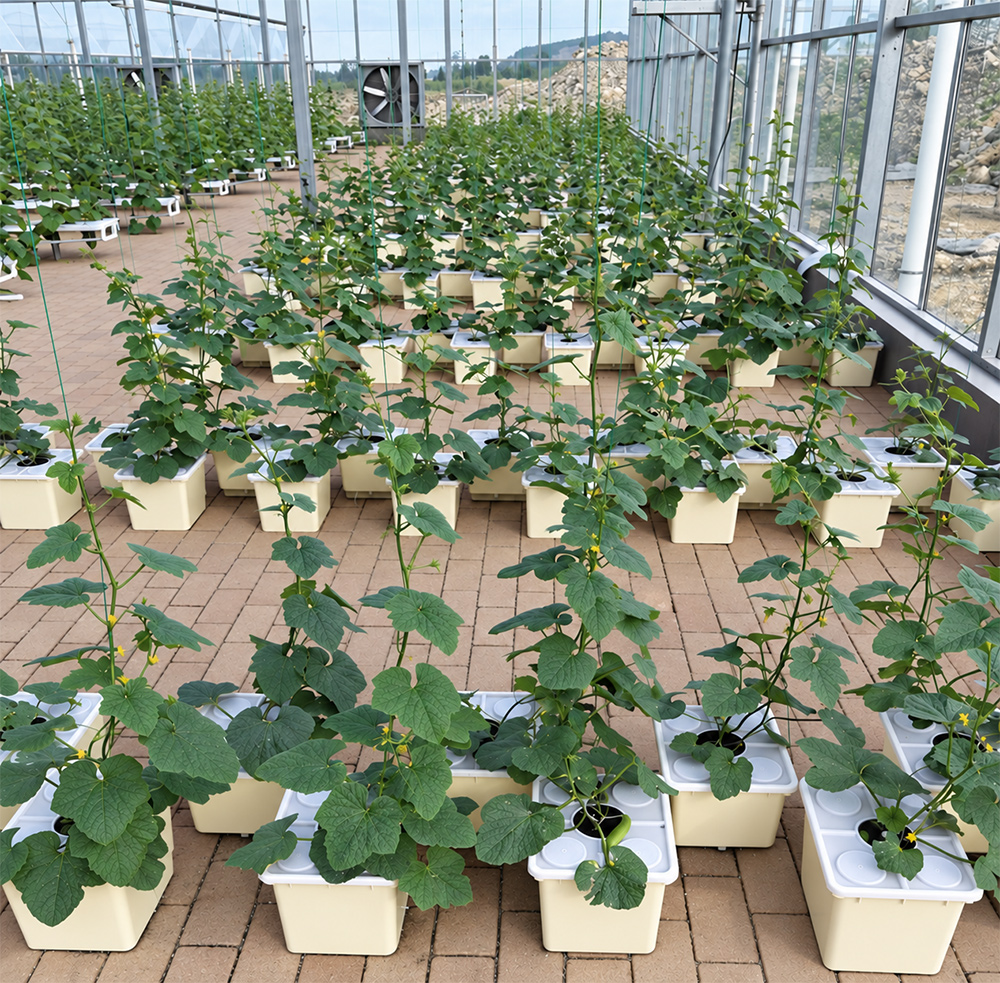
Climbing crops such as cucumbers can be trellised when grown in a Dutch bucket system.
四、Which Crops Are Suitable?
|
Crop Type |
Suitability |
Reasons and Management Considerations |
|
Tomatoes, cucumbers, sweet peppers, and eggplants |
Suitable |
These crops have relatively large root systems and long growing cycles. They need a stable supply of water and nutrients, sufficient root-zone space, and plant support. |
|
Strawberries, melons, and similar crops |
Suitable under certain conditions |
The system should be designed according to the variety, plant spacing, bucket size, and harvesting method. |
|
Lettuce, herbs, and other small leafy greens |
Generally not the first choice |
They can be grown in Dutch buckets, but NFT or DWC systems are often more suitable for high-density leafy-green production. |
五、How Do You Choose the Growing Media?
|
Growing Media |
Main Characteristics |
Points to Note |
|
Coco coir |
Good water retention; suitable for drip-irrigated fruiting crops. |
Check salinity, particle size, and buffering treatment before use. |
|
Perlite |
Lightweight, with good drainage and aeration. |
It has relatively low water-retention capacity, so irrigation management must be adjusted accordingly. |
|
Clay pebbles |
Durable, with good drainage; can be washed and reused. |
They retain relatively little water, so a more consistent nutrient-solution supply is needed. |
|
Mixed growing media |
Can balance water retention and aeration. |
Adjust the mixing ratio according to the crop, climate, and irrigation frequency. |
When choosing growing media, consider cost, reusability, drainage, water retention, chemical stability, and crop requirements. Material price should not be the only consideration.
六、 Common Risks and Key Management Points
Regularly check that drip irrigation is even and drainage is unobstructed. Adjust the moisture level of the growing media as needed, control root-zone temperature, and monitor nutrient solution and root health. Prepare backup pumps and an emergency nutrient-solution supply plan to prevent equipment failures from affecting crop growth.
七、 What Should Be Confirmed Before Starting a Project?
- Target crops, varieties, number of plants per bucket, and production cycle;
- Greenhouse dimensions, row spacing, trellising requirements, and access aisles;
- Source water quality and whether an open or recirculating system is required;
- Growing media type, irrigation frequency, and the planned drainage management method;
- Number of buckets, main pipe length, elevation differences, pump pressure, and drainage return capacity;
- Filtration, disinfection, alarms, backup pumps, and routine maintenance plans.
Table of Contents
- 一、How Does a Dutch Bucket System Work?
- 二、How Do You Choose Between an Open and a Recirculating System?
- 三、What Are the Benefits of Dutch Bucket Systems?
- 1. Suitable for Large Fruiting Crops
- 2. More Centralized Water and Nutrient Management
- 3. Easy to Inspect Individual Buckets
- 4. Easy to Expand
- 四、Which Crops Are Suitable?
- 五、How Do You Choose the Growing Media?
- 六、 Common Risks and Key Management Points
- 七、 What Should Be Confirmed Before Starting a Project?