 EN

A greenhouse shading system helps manage intense sunlight and heat buildup by reducing the amount of solar radiation entering the greenhouse. It is usually used together with natural ventilation, fan-and-pad cooling, or other cooling equipment. Its actual performance depends on the shading material, shading percentage, installation position, outdoor solar intensity, and ventilation conditions.
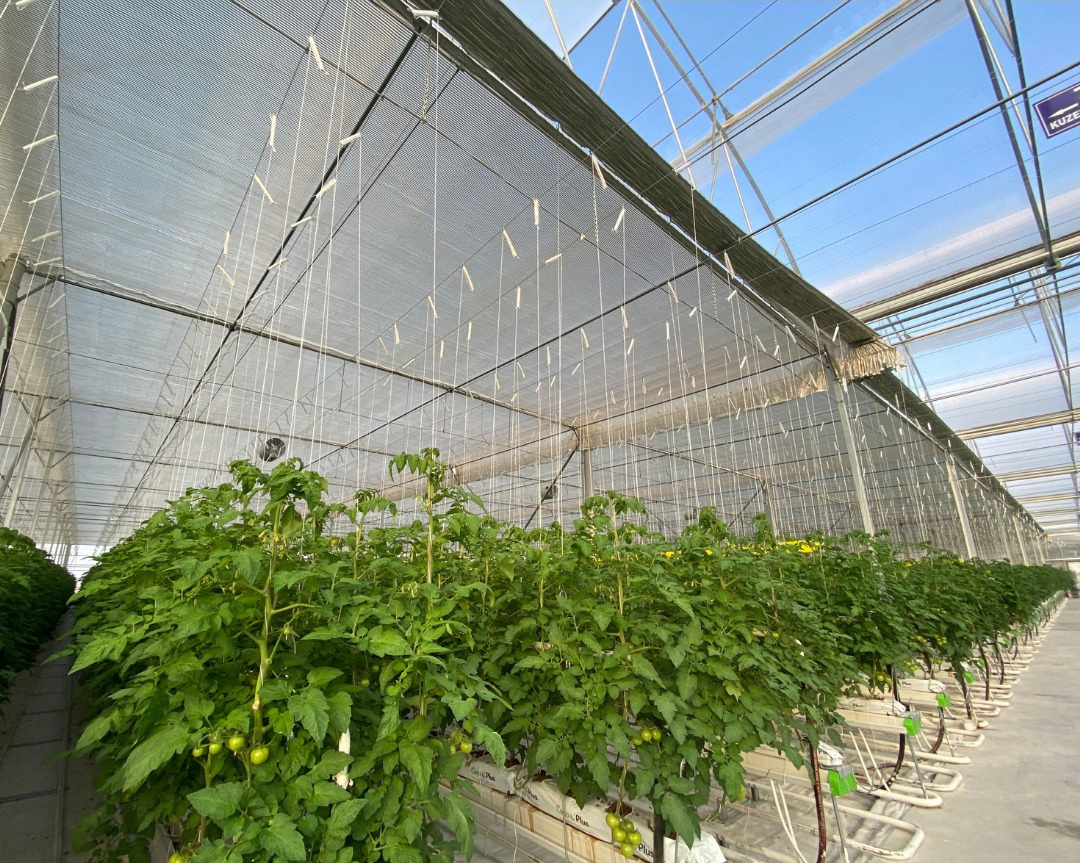
Internal shading screen in a tomato greenhouse, used to regulate the solar radiation reaching the crop canopy.
一、What Is a Greenhouse Shading System?
A greenhouse shading system usually consists of a shading screen or net, support structure, drive mechanism, geared motor, and control system. It can be installed inside the greenhouse covering or outside the greenhouse. Some internal screens provide daytime shading and help reduce heat loss at night. Control options include fixed, manual, electric, and automatic environmental control.
The shading percentage indicates how much the material reduces incoming light.
二、What Is the Difference Between Internal Shading, External Shading, and Energy-Saving Screens?
|
System Type |
Installation Position and Main Function |
Advantages |
Management Considerations |
|
External shading system |
Installed outside the greenhouse covering to reduce the amount of solar radiation entering the greenhouse. |
Provides a significant cooling effect. |
Consider wind loads, rain and snow, weather resistance, and safe retraction conditions. |
|
Internal shading system |
Installed below the greenhouse covering and above the crops to regulate light and some heat. |
Easier to protect and maintain; can be controlled by zones. |
Heat has already entered the greenhouse, so coordinate with ventilation; pay attention to condensation and airflow. |
|
Energy-saving screen |
A retractable screen installed inside the greenhouse. It adjusts light during the day, and some products help reduce heat loss at night. |
Combines light management with seasonal insulation. |
Choose according to product specifications; manage humidity and condensation. |
|
Fixed shade net |
Fixed installation with a simple structure. |
Lower initial investment and operating requirements. |
Cannot be adjusted according to weather conditions and may be unsuitable during periods of low light. |
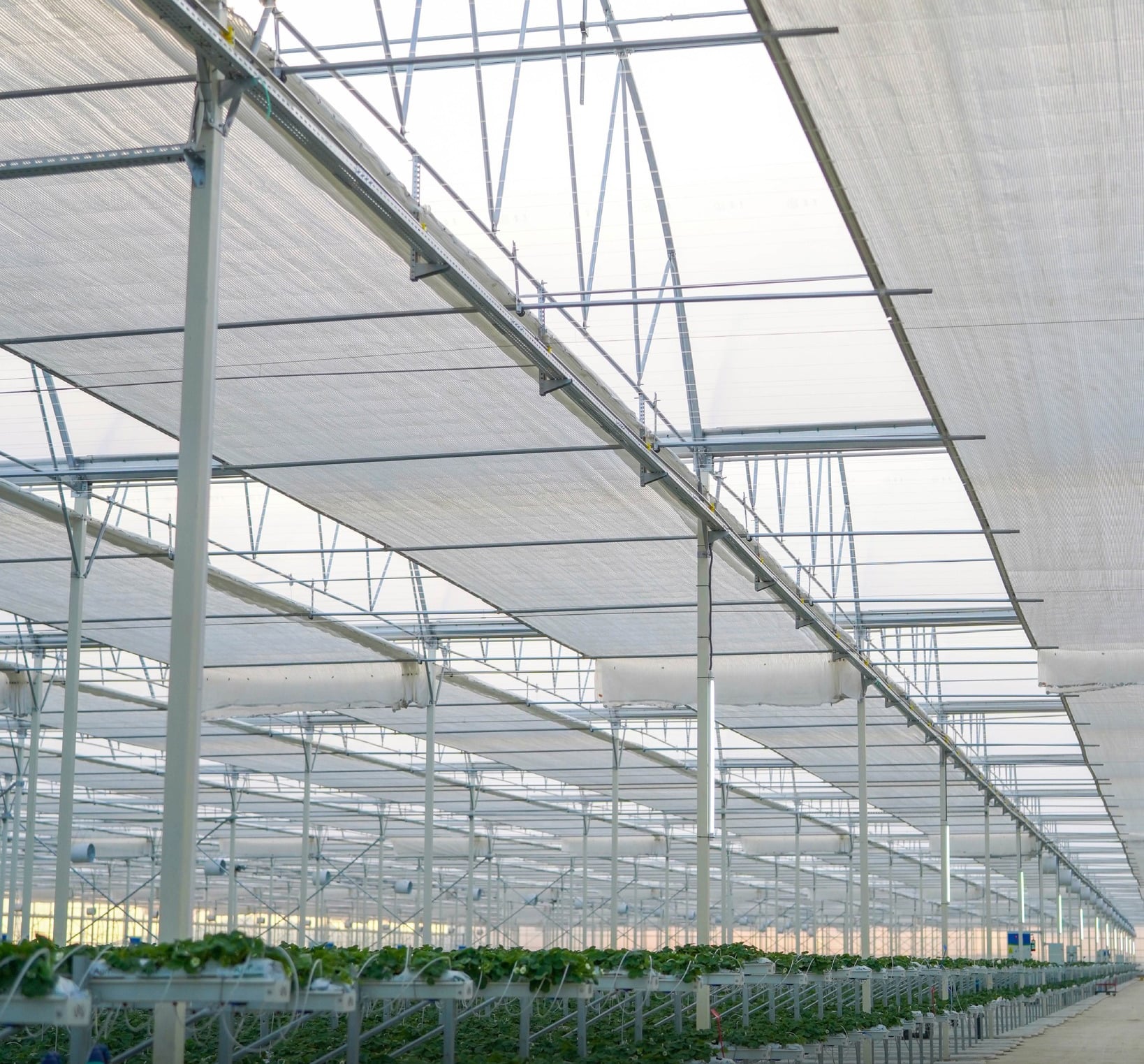
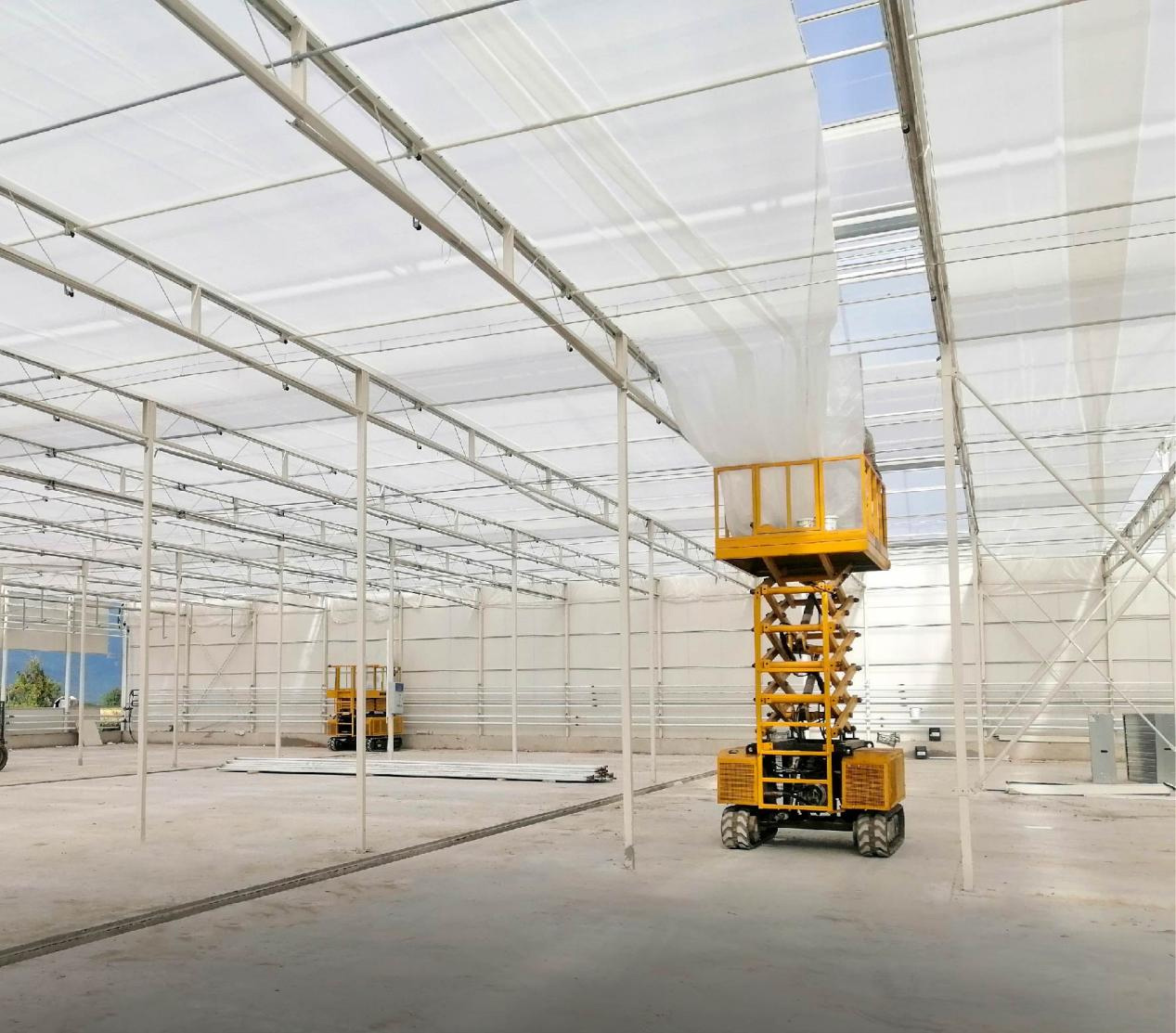
Retractable horizontal internal shading makes it easy to open or close the screen according to light and temperature requirements.
三、What Are the Benefits of a Greenhouse Shading System?
1. Reduce Intense Sunlight and Solar Heat
The shading system reduces the radiation reaching the crop canopy, helping relieve excessive light intensity and heat load during periods of high solar radiation.
2. Reduce the Risk of Sunscald
Proper shading can help reduce the risk of leaves and fruits being damaged by intense sunlight. However, excessive shading can also limit photosynthesis, so it should be adjusted according to the crop and its growth stage.
3. Improve the Operating Conditions for Cooling Systems
By reducing solar heat gain, the shading system can lower the load on ventilation or cooling systems.
4. Automatic Control
Motorized systems can open and close in zones according to light, temperature, time, and safety conditions. Sensor faults and errors in control logic still need to be checked manually.
5. Improve Environmental Stability
When coordinated with ventilation, circulation fans, fan-and-pad cooling, or fogging systems, shading helps reduce environmental fluctuations during periods of high solar radiation.
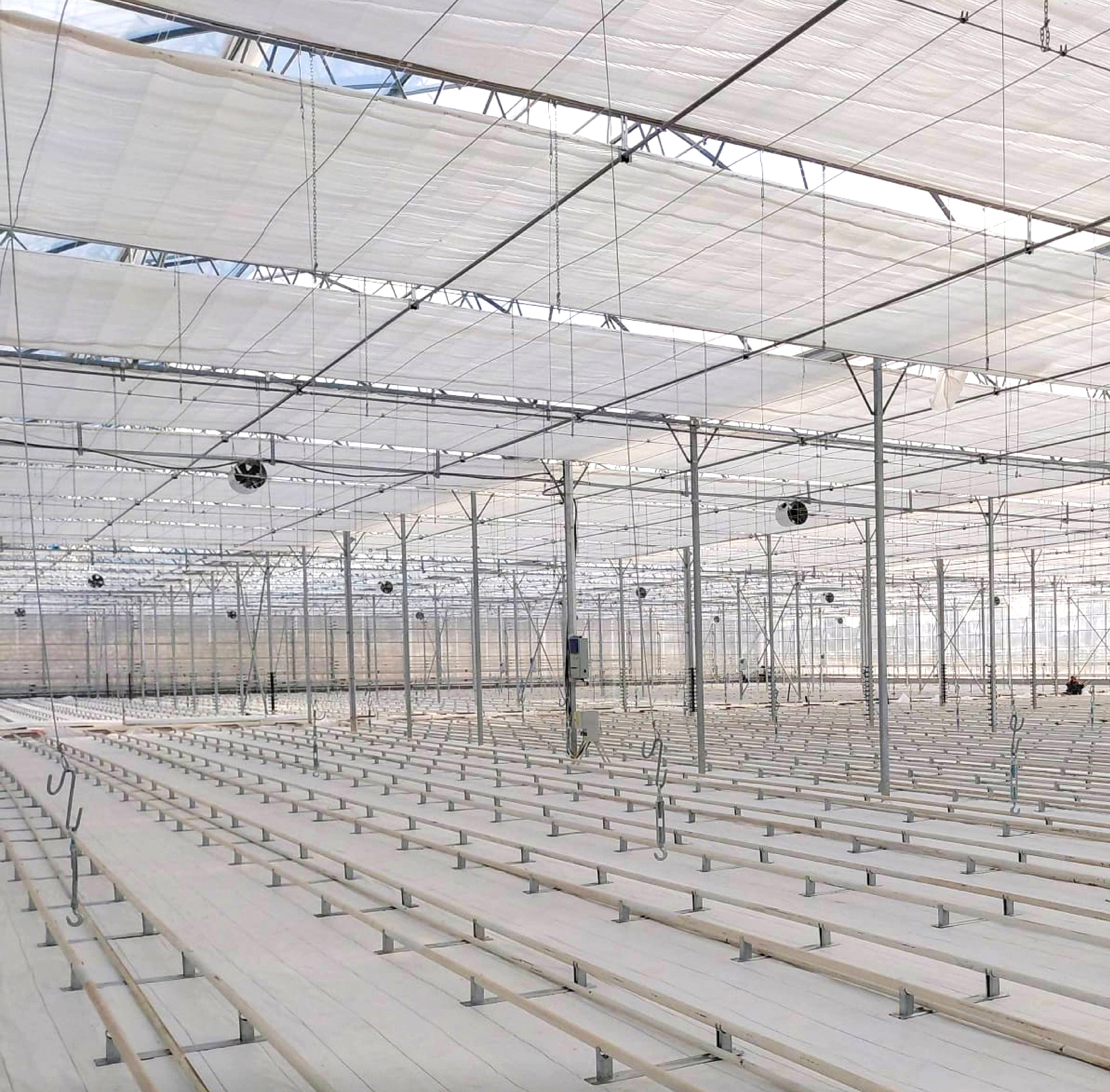
Internal shading screens need to operate in coordination with ventilation, circulation fans, and other climate-control equipment.
四、How to Choose the Shading Percentage and Screen Material?
|
Selection Factor |
What Needs to Be Confirmed |
Impact on Selection |
|
Crop and growth stage |
Whether the crop is light-demanding or shade-tolerant; whether it is at the seedling or fruiting stage; and its sensitivity to sunscald. |
Determines the acceptable shading level and when the screen should open or close. |
|
Local climate |
Solar radiation, summer temperature and humidity, wind speed, rain, and snow. |
Affects the choice of internal or external shading, weather resistance, and safety controls. |
|
Greenhouse covering material |
Glass, plastic film, or polycarbonate sheets, as well as their actual light transmittance. |
Helps assess the effective light transmission after the covering material and shading screen are combined. |
|
Material color and structure |
Black, white, or reflective materials; opening ratio and aluminum foil content. |
Affects light reflection, heat absorption, ventilation, and insulation. |
|
Growing system |
Soil cultivation, substrate cultivation, hydroponics, and multi-tier growing systems. |
Affects crop canopy height, light distribution, and zone control. |
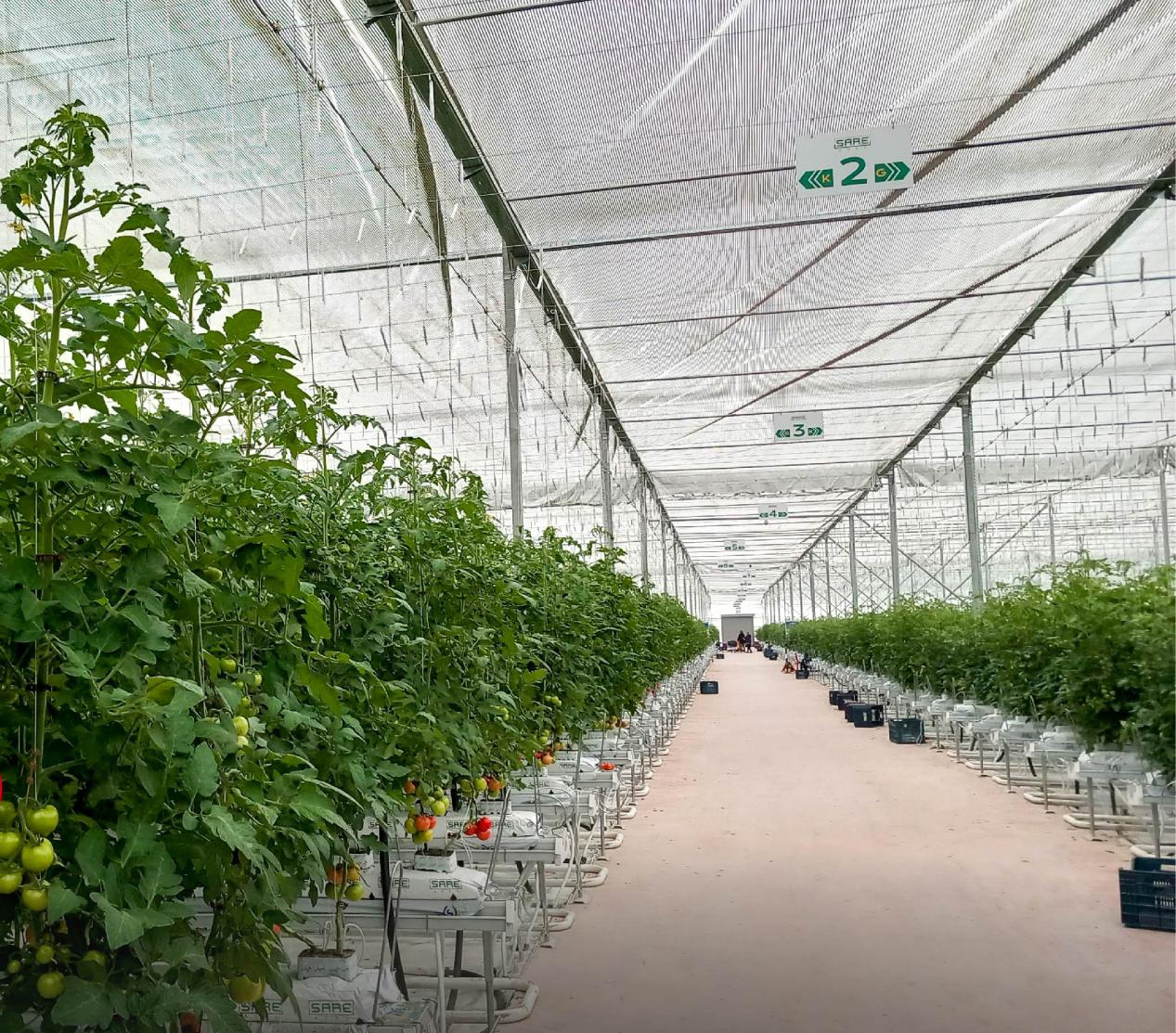
Shading systems can help manage intense sunlight for fruiting crops such as tomatoes.
五、How Should the Control System Operate?
The shading system should adjust automatically according to light and temperature, while providing safety protection based on wind speed, rain, and snow. This helps prevent frequent equipment cycling and damage in severe weather. Manual operation and fault-protection functions should also be retained. Regularly inspect the motor, drive components, screen, and sensors to ensure safe and stable operation.
六、Frequently Asked Questions
Is a Higher Shading Percentage Always Better?
No. An excessively high shading percentage may limit photosynthesis and affect crop growth. The appropriate level should be selected according to the crop, season, light transmittance of the covering material, and local solar radiation.
Can a Shading System Replace Ventilation and Fan-and-Pad Cooling?
No. Shading mainly reduces solar radiation and light intensity. The greenhouse still needs natural ventilation, mechanical ventilation, or evaporative cooling according to the local climate.
Can a Shading System Operate Automatically?
Motors, sensors, and climate controllers can be used to open and close the system automatically. However, automation cannot replace limit-switch calibration, mechanical inspections, sensor maintenance, or troubleshooting.
Table of Contents
- 一、What Is a Greenhouse Shading System?
- 二、What Is the Difference Between Internal Shading, External Shading, and Energy-Saving Screens?
- 三、What Are the Benefits of a Greenhouse Shading System?
- 1. Reduce Intense Sunlight and Solar Heat
- 2. Reduce the Risk of Sunscald
- 3. Improve the Operating Conditions for Cooling Systems
- 4. Automatic Control
- 5. Improve Environmental Stability
- 四、How to Choose the Shading Percentage and Screen Material?
- 五、How Should the Control System Operate?
- 六、Frequently Asked Questions
- Is a Higher Shading Percentage Always Better?
- Can a Shading System Replace Ventilation and Fan-and-Pad Cooling?
- Can a Shading System Operate Automatically?