 EN

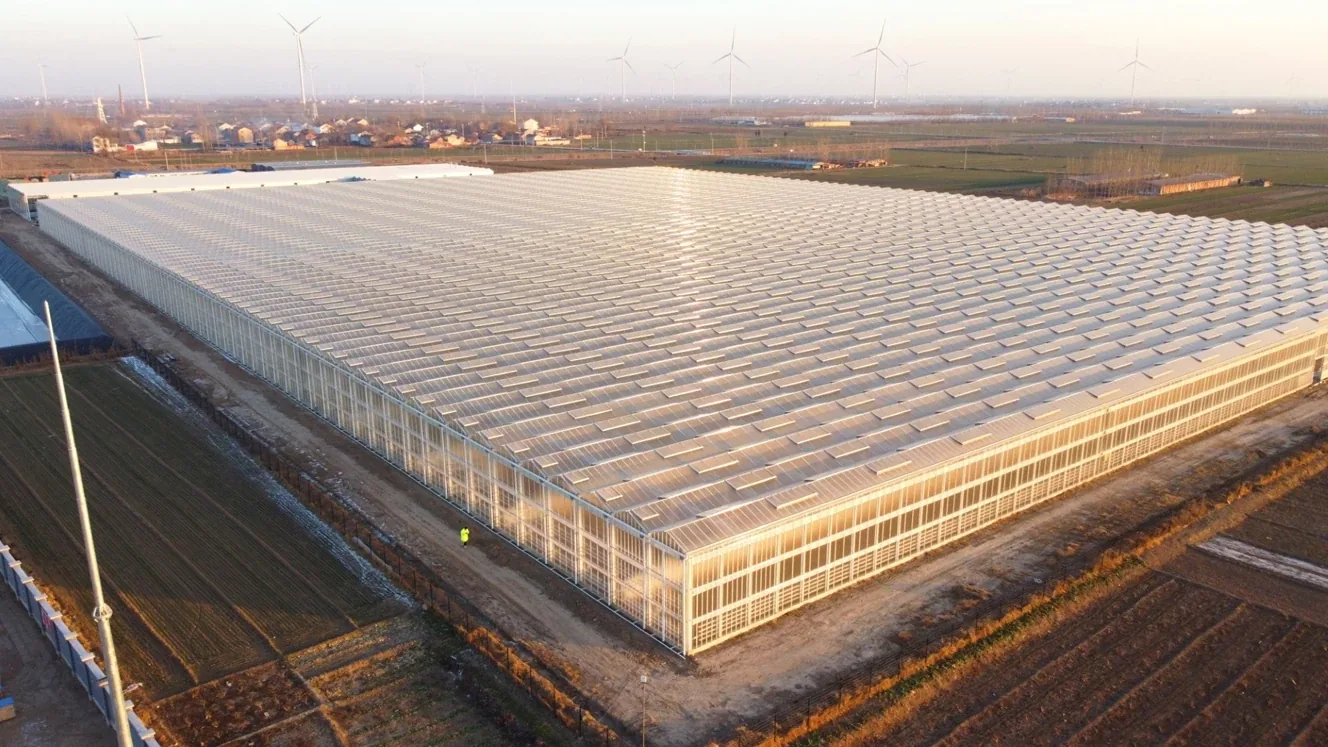
Traditional agriculture is often affected by weather and seasonal changes, which can impact crop yield and quality. Compared with open-field farming, greenhouses provide better control over growing conditions, reduce the impact of external factors, and create more opportunities for commercial and large-scale production.
So, what are the key benefits of using a greenhouse? How can it improve agricultural production? This article explores its advantages in climate control, crop protection, production efficiency, and commercial value.
一. What Are the Main Purposes of a Greenhouse?
A greenhouse is an agricultural structure that uses a covering material and supporting systems to create a more manageable growing environment for crops. It is more than a shelter for plants. Through structural design, ventilation, shading, irrigation, and environmental-control equipment, growers can manage important growing conditions more effectively.
The five main purposes of a greenhouse are outlined below.
1. Controlling the Growing Environment
In open fields, growers have limited direct control over temperature, humidity, and light. A greenhouse can be equipped with different systems to adjust the internal environment according to crop requirements.
- Ventilation systems: Roof or side vents help exchange indoor and outdoor air and remove excess heat.
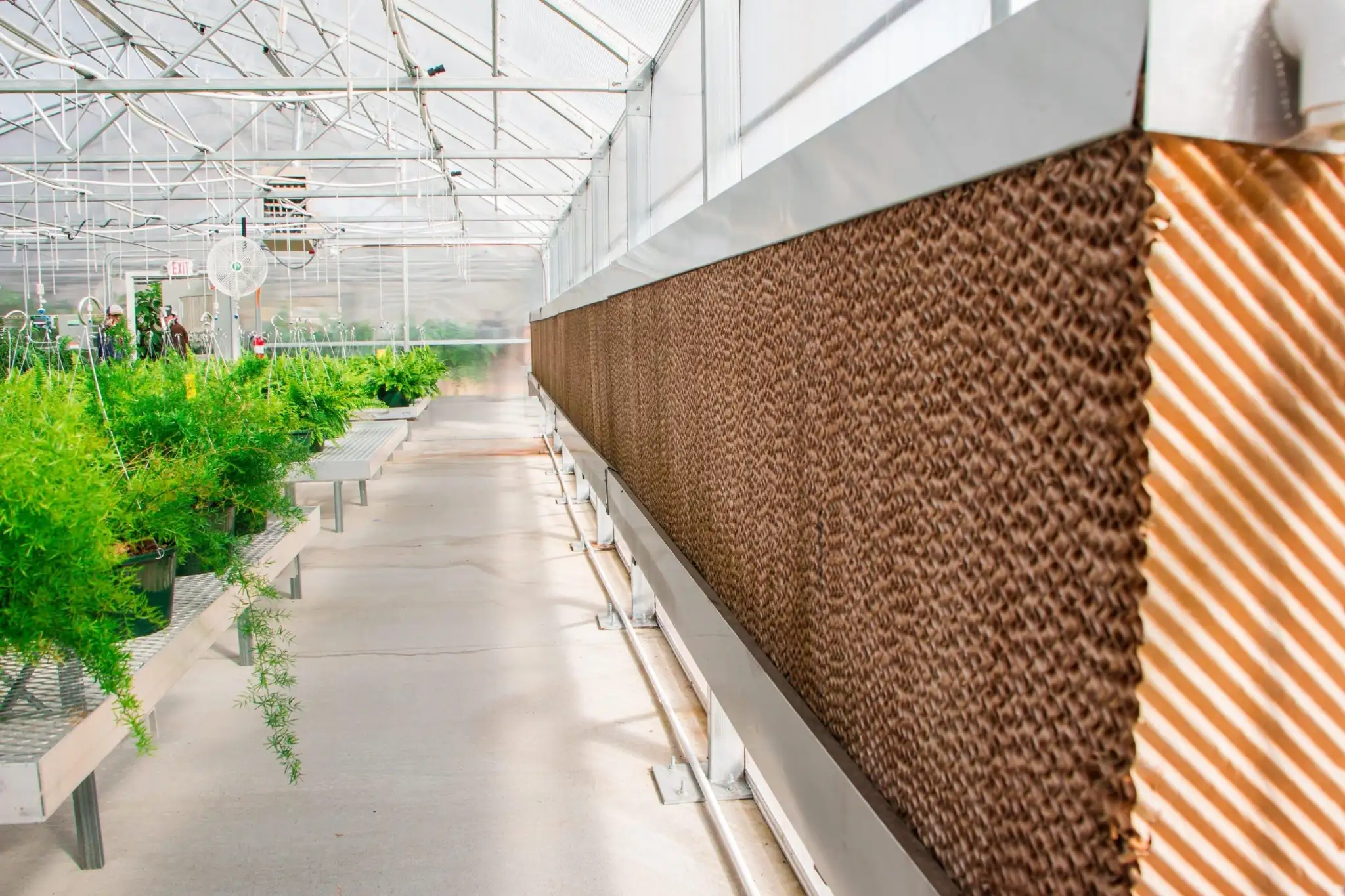
- Fan-and-pad cooling systems: Evaporative cooling helps reduce greenhouse air temperature in hot conditions.
- Shading systems: Internal or external shade screens reduce excessive solar radiation and help protect crops from heat stress.
- Heating systems: Boilers, unit heaters, or other heating equipment provide warmth when temperatures are too low.
- Air circulation fans: These improve air movement and help reduce temperature and humidity differences within the greenhouse.
When properly selected and combined, these systems allow growers to adjust greenhouse conditions according to local climate and crop needs.
2. Protecting Crops from Adverse Weather
Open-field crops are directly exposed to strong winds, heavy rain, hail, frost, and extreme heat. These conditions may cause plants to lodge, leaves to tear, fruit to become damaged, or even an entire growing cycle to fail.
Greenhouse covering materials provide an additional physical barrier between crops and the outside environment. Depending on the project location and production requirements, growers may choose:
- Plastic film greenhouses: Commonly used for commercial vegetables, fruits, and many other crops.
- Polycarbonate greenhouses: Offer durable cladding and useful insulation characteristics for projects requiring stronger enclosure performance.
- Glass greenhouses: Provide high light transmission and are widely used in high-standard commercial growing facilities.
The greenhouse frame, foundations, and connections can also be designed to meet local wind and snow loads. However, a greenhouse cannot eliminate all weather-related risks. Its protection level depends on structural engineering, covering materials, installation quality, and local climate conditions.
3. Extending the Growing Season
Outdoor production is often scheduled around local seasons. In cold regions, low temperatures may restrict winter vegetable production. In hot regions, excessive heat can make it difficult to grow certain crops during summer.
By using insulation, heating, ventilation, and shading systems, a greenhouse can reduce the impact of seasonal changes and create a longer or more flexible production window.
This may allow growers to:
- Start selected crops earlier in the season.
- Extend production into spring and autumn.
- Grow certain crops during off-season periods when conditions can be managed.
- Schedule multiple planting and harvesting cycles according to market demand.
For commercial farms, this flexibility can improve annual facility utilization and support more consistent production planning. Whether year-round production is feasible still depends on local climate, energy costs, crop requirements, and the greenhouse systems installed.
4. Improving Water and Fertilizer Management
In open-field farming, rainfall, evaporation, and soil conditions all influence water and nutrient availability. Heavy rain may wash nutrients away, while hot weather can increase irrigation demand.
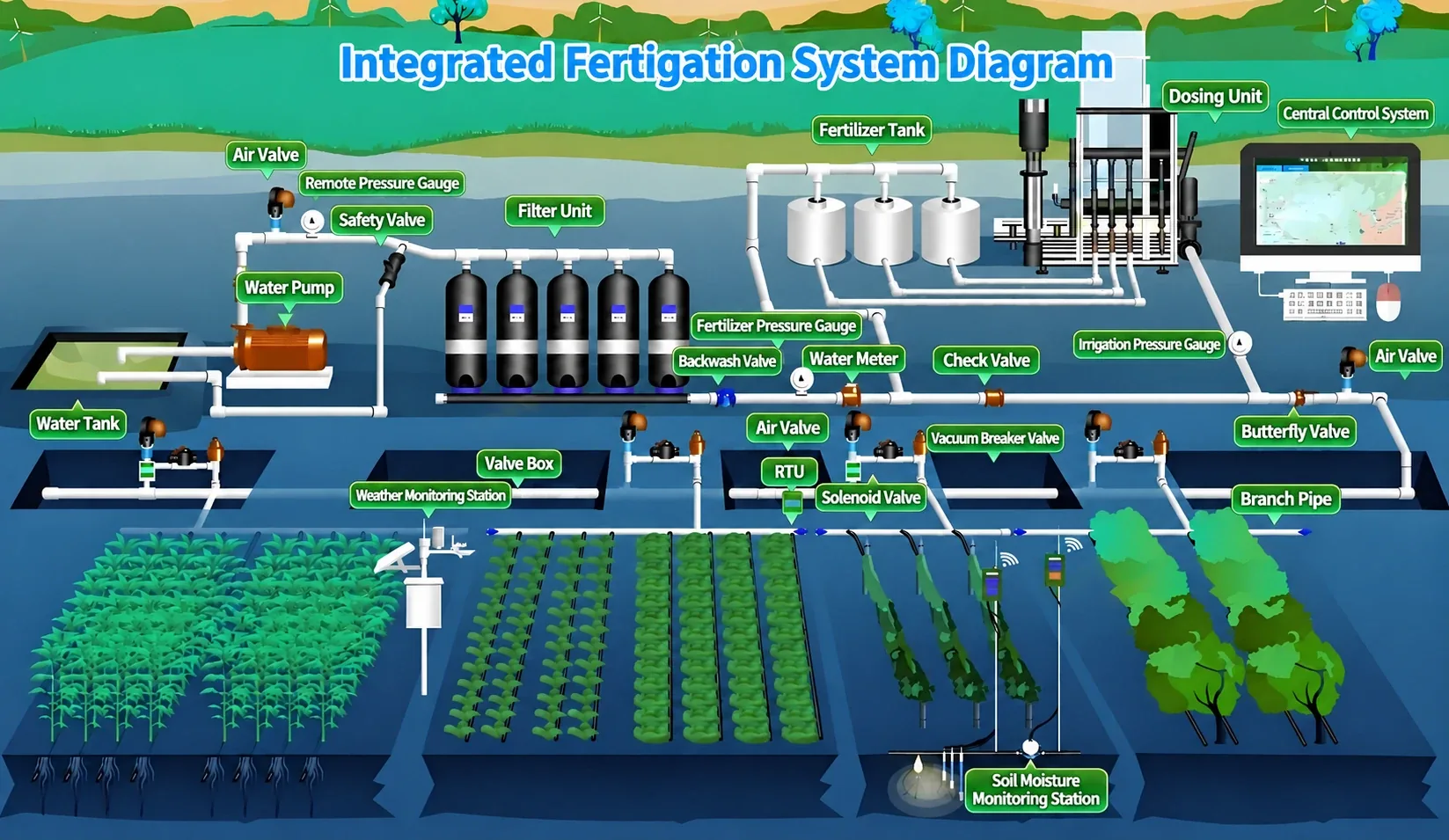
A greenhouse can be combined with drip irrigation, micro-sprinklers, and fertigation systems to manage water and fertilizer application more precisely. Common options include:
- Drip irrigation: Delivers water close to the crop root zone.
- Venturi fertilizer injectors: Use water flow to draw fertilizer solution into the irrigation line.
- Automatic fertigation systems: Apply water and nutrients according to programmed schedules and target solution parameters.
- Nutrient solution circulation systems: Used in some hydroponic projects to collect and reuse nutrient solution when the system is designed for recirculation.
Appropriate water and fertilizer management can reduce unnecessary resource use and improve the precision of crop production.
5. Supporting More Consistent Crop Quality
For commercial growers, product quality is just as important as yield. High-value crops such as tomatoes, cucumbers, sweet peppers, and strawberries have specific requirements for temperature, humidity, water, and nutrients.
Greenhouse management can reduce some fluctuations in external growing conditions and help growers maintain more consistent conditions between production batches. Final crop quality still depends on many factors, including variety selection, cultivation practices, nutrition management, and pest and disease control.
二. Greenhouse Farming vs. Open-Field Farming
Neither greenhouse farming nor open-field farming is universally better. Each is suitable for different production goals and operating conditions.
Open-field farming can be a practical, lower-investment option when the climate is suitable and large-scale production costs need to be kept low. Greenhouses offer more management options when environmental control, product quality, production timing, and supply consistency are priorities.
|
Comparison |
Greenhouse Farming |
Open-Field Farming |
|
Environmental control |
Temperature, humidity, ventilation, and light can be adjusted with equipment. |
Mainly depends on natural conditions. |
|
Weather exposure |
The covering structure provides a degree of protection. |
Crops are directly exposed to the weather. |
|
Growing season |
Can extend the production season under suitable conditions. |
Usually more restricted by local seasons. |
|
Pest management |
Can incorporate insect screens and other preventive measures. |
More exposed to pests entering from the surrounding environment. |
|
Water and fertilizer |
Can use drip irrigation and fertigation for more precise application. |
Precision depends on the irrigation setup and field conditions. |
|
Crop consistency |
More control over growing conditions can support consistency. |
More affected by weather fluctuations. |
|
Initial investment |
Requires investment in the structure and related systems. |
Usually requires less investment in protective infrastructure. |
|
Operating costs |
May include energy, equipment maintenance, and additional labor. |
Often lower in infrastructure costs, depending on the production method. |
From a business perspective, the key advantage of a greenhouse is not that it removes the influence of nature entirely. Rather, it reduces direct dependence on outdoor conditions and gives growers more control over production.
三. What Practical Problems Can Greenhouses Help Solve?
The value of a greenhouse becomes clearer when viewed through real production scenarios.
Scenario 1: Vegetable Production in Hot Climates
In the Middle East, Africa, and some tropical and subtropical regions, high summer temperatures and intense solar radiation can be major constraints on vegetable production. When temperatures move beyond a crop's suitable range, tomatoes, cucumbers, and lettuce may experience heat stress, poor fruit set, or reduced quality.
Depending on the local climate, a greenhouse project may incorporate:
- External or internal shading systems.
- Fan-and-pad evaporative cooling.
- Roof and side ventilation.
- Air circulation fans.
- Drip irrigation and automatic fertigation.
These systems can be combined to improve the internal growing environment. The final configuration should be based on local temperature, humidity, water availability, and crop requirements.
Scenario 2: Winter Production in Cold Regions
In Europe, North America, and other regions with cold winters, low temperatures and frost can significantly restrict outdoor vegetable production. A greenhouse can use insulation, internal thermal screens, and heating equipment to maintain more suitable conditions for crops.
Winter greenhouse projects should pay particular attention to:
- The structural design for local snow loads.
- The light transmission and thermal performance of covering materials.
- Air tightness and heat loss.
- The heating system's required thermal capacity.
- Thermal screens and energy management.
Greenhouse design should consider not only the equipment inside the structure but also the local minimum temperature, snowfall, and wind loads.
Scenario 3: Commercial Production of High-Value Crops
For crops such as strawberries, tomatoes, sweet peppers, and cucumbers, growers often focus on product quality, harvest scheduling, and output per unit of growing area.
A greenhouse can be integrated with trellising systems, growing gutters, irrigation and fertigation, and environmental monitoring equipment to create a more organized production system.
Depending on crop characteristics and production targets, growers may also select hydroponic systems such as:
- NFT (Nutrient Film Technique).
- DFT (Deep Flow Technique).
- Dutch Bucket systems.
- Substrate growing systems.
The appropriate system depends on crop root characteristics, planting density, operating practices, and the overall project design.
Scenario 4: Farms That Need a More Consistent Supply
When a farm supplies supermarkets, wholesalers, restaurants, or food processors, production scheduling and supply consistency become important business considerations.
Outdoor production can be interrupted or delayed by seasonal and weather changes. A greenhouse can help growers plan staggered planting batches and reduce some production disruptions. By coordinating growing area, crop varieties, and production cycles, a commercial farm can develop a more continuous supply plan.
四. What Should You Consider Before Building a Greenhouse?
Although greenhouses offer many advantages, not every agricultural project needs a complex or highly automated facility. A suitable greenhouse should be designed around actual growing and business requirements rather than simply adding as many systems as possible.
1. Local Climate Conditions
Climate is one of the most important foundations of greenhouse design. Before selecting a structure or equipment package, collect information about:
- Highest summer temperature.
- Lowest winter temperature.
- Annual rainfall.
- Maximum wind speed and design wind load.
- Maximum snowfall and design snow load.
- Daylight duration and solar radiation.
These factors influence greenhouse structure, covering materials, ventilation, cooling, heating, and other system configurations.
2. Crop Type and Production Goals
Different crops have different greenhouse requirements. Tomatoes and cucumbers may require appropriate trellising height, ventilation, and fertigation. Strawberries may need carefully planned growing gutters, irrigation, and fruit-handling space. Lettuce requires a suitable temperature range and planting density.
Before designing a greenhouse, define the target crops, growing method, planting density, and expected production goals.
3. Project Scale and Investment Budget
A greenhouse project may include the main frame, covering material, ventilation, shading, cooling, heating, irrigation, and automatic control systems. Commercial investors should determine the appropriate project scale and equipment configuration based on growing area, crop value, target output, and local energy costs.
Adding more equipment does not automatically make a greenhouse more profitable. Each system should have a clear purpose and a reasonable return on investment.
4. Maintenance and Operating Capabilities
A greenhouse is a long-term agricultural facility. In addition to the initial construction cost, owners should plan for routine maintenance, including:
- Inspection and maintenance of greenhouse equipment.
- Cleaning of irrigation lines and filters.
- Inspection of covering materials.
- Maintenance of fans, motors, and electrical components.
- Inspection of structural connections and fasteners.
- Routine operation of environmental-control systems.
The growing team should also have the necessary crop-management knowledge and equipment-operation skills.
五. Is Greenhouse Farming More Profitable Than Open-Field Farming?
This is one of the most common questions asked by agricultural investors. The answer is not always yes.
A greenhouse can improve growing conditions, extend the production season, and, with suitable technology and management, increase output per unit area or improve product quality. At the same time, it requires a higher initial investment and may involve additional energy, maintenance, and operating costs.
A proper financial evaluation should consider more than yield per square meter. Key factors include:
- Initial investment: Greenhouse structure, covering materials, and supporting equipment.
- Production costs: Seeds, fertilizers, water, electricity, labor, and routine maintenance.
- Production capacity: Annual growing cycles, yield per unit area, and marketable product percentage.
- Selling prices: Local market demand, product quality, and seasonal price changes.
- Sales channels: Whether the farm has reliable buyers and distribution channels.
For high-value vegetable and fruit production, the environmental control offered by a greenhouse may create significant commercial value. For large-scale, lower-value crops in suitable climates, open-field farming may remain the more economical option.
The right choice is the one that matches the greenhouse investment with crop value, local market conditions, and the farm's operating capabilities.
六. Conclusion: The Real Value of a Greenhouse Is Greater Control Over Production
Greenhouses are not intended to replace all open-field agriculture. They provide commercial growers with a more flexible and manageable way to produce crops.
With appropriate structural design and system configuration, a greenhouse can help growers:
- Reduce the impact of some adverse weather conditions.
- Improve control over temperature, humidity, and ventilation.
- Extend the production season for selected crops.
- Manage irrigation and fertilization more precisely.
- Create more consistent growing conditions.
- Develop a more systematic commercial growing operation.
For agricultural businesses looking to expand production, improve product quality, or supply markets more consistently, a greenhouse can be a worthwhile long-term investment.
However, a successful greenhouse project depends on more than the structure itself. Structural engineering, equipment selection, crop planning, and day-to-day operation all play important roles.
Table of Contents
- 一. What Are the Main Purposes of a Greenhouse?
- 1. Controlling the Growing Environment
- 2. Protecting Crops from Adverse Weather
- 3. Extending the Growing Season
- 4. Improving Water and Fertilizer Management
- 5. Supporting More Consistent Crop Quality
- 二. Greenhouse Farming vs. Open-Field Farming
- 三. What Practical Problems Can Greenhouses Help Solve?
- Scenario 1: Vegetable Production in Hot Climates
- Scenario 2: Winter Production in Cold Regions
- Scenario 3: Commercial Production of High-Value Crops
- Scenario 4: Farms That Need a More Consistent Supply
- 四. What Should You Consider Before Building a Greenhouse?
- 1. Local Climate Conditions
- 2. Crop Type and Production Goals
- 3. Project Scale and Investment Budget
- 4. Maintenance and Operating Capabilities
- 五. Is Greenhouse Farming More Profitable Than Open-Field Farming?
- 六. Conclusion: The Real Value of a Greenhouse Is Greater Control Over Production