 EN


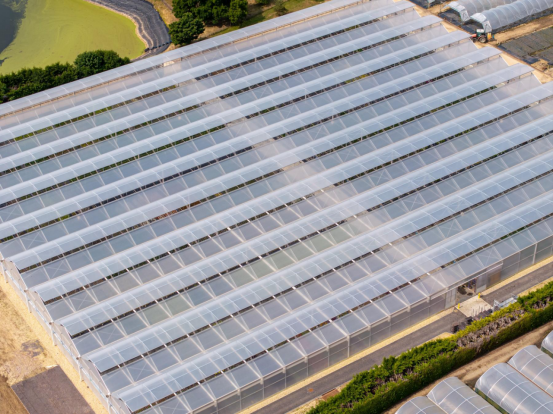
Explore greenhouse ventilation solutions suitable for different crops, climates, and greenhouse sizes. Find the greenhouse ventilation system that's right for your commercial growing project.
Ventilation Solutions for Different Crops, Climates, and Greenhouse Projects
Every greenhouse project has its own unique ventilation requirements. Factors such as crop type, local climate, greenhouse scale, and specific growing conditions all influence airflow within the structure.
A well-designed greenhouse ventilation system effectively removes excess heat and moisture while introducing fresh outdoor air, creating a more balanced growing environment. Depending on the specific needs of your project, ventilation can be achieved through roof vents, sidewall openings, exhaust fans, or a combination of natural and mechanical ventilation.
At FZY Greenhouses, we place great importance on ensuring that greenhouse equipment is precisely matched to the actual growing environment. Whether you are planning a small-scale commercial greenhouse or a large agricultural production facility, understanding the available ventilation options is a crucial step toward selecting the right system.
The ideal solution d epends on the crops being grown, the local climate, the greenhouse structure, the scale of the project, and the specific requirements of the grower.
Explore the case studies below to discover which greenhouse ventilation solutions are best suited for your project.
Greenhouse Ventilation Solutions for Different Crops
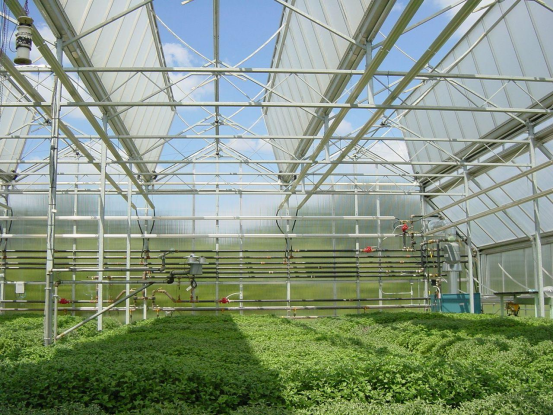
Different crops have different temperature, humidity, and airflow requirements. Plant density, canopy structure, and growing methods also influence how ventilation systems should be designed.
Selecting a suitable greenhouse ventilation system helps growers manage the growing environment and adapt to changing weather conditions.
Fruiting Vegetable Greenhouse Ventilation
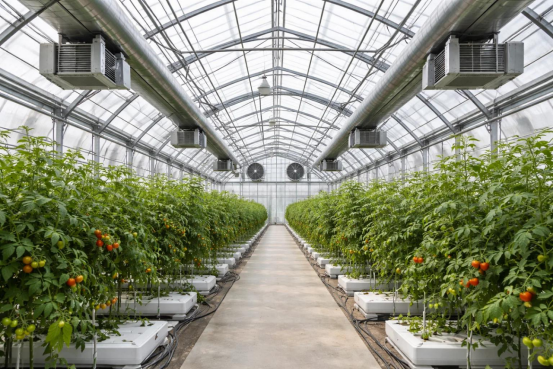
Suitable Crops: Tomatoes, Cucumbers, Peppers, Eggplants, and Other Fruiting Vegetables
Fruiting vegetables are widely cultivated in commercial greenhouses, where temperature, humidity, and airflow management are important throughout the growing cycle.
Crops such as tomatoes and cucumbers often develop dense foliage, which can restrict air movement and contribute to moisture accumulation. Excessive humidity and condensation may increase disease risks, while insufficient ventilation can lead to heat buildup during warm weather.
An appropriate ventilation system helps exchange indoor and outdoor air, remove excess moisture, and improve airflow distribution around the crop canopy.
Depending on the greenhouse structure and local climate, roof vents, sidewall openings, mechanical exhaust fans, and internal circulation fans may be combined to support environmental management.
Key Growing Requirements:
Removal of excess heat during warm periods
Humidity and condensation management
Air movement through dense crop canopies
Fresh air exchange
Flexible ventilation according to seasonal conditions
Recommended Ventilation Systems:
Natural Roof Ventilation
Sidewall Ventilation
Mechanical Exhaust Fans
Internal Air Circulation Fans
Supplementary Cooling Systems Where Required
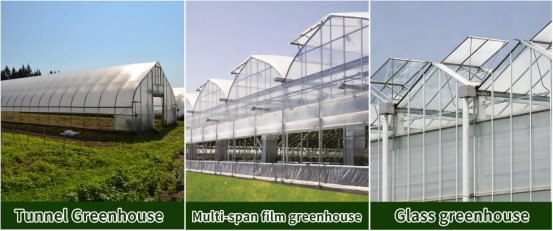
Suitable Greenhouse Types: Multi-Span Film Greenhouses, Gothic Greenhouses, and Glass Greenhouses
Suitable Growers: Commercial Vegetable Growers, Hydroponic Growers, and Agricultural Producers
Leafy Vegetable Greenhouse Ventilation
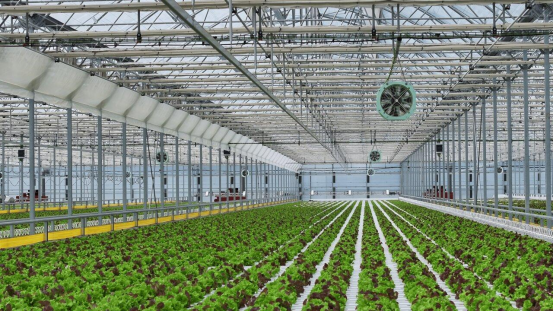
Suitable Crops: Lettuce, Spinach, Kale, and Other Leafy Greens
Leafy vegetables benefit from suitable temperature, humidity, and air movement during cultivation.
In greenhouse production, particularly in hydroponic and densely planted systems, excessive heat and moisture accumulation can affect the growing environment.
Ventilation helps remove accumulated heat and humid air while supporting air exchange across planting areas.
In warm climates, ventilation may need to be combined with shading or cooling systems when outdoor air exchange alone cannot maintain suitable temperatures.
Key Growing Requirements:
Management of excessive greenhouse temperatures
Consistent airflow across planting areas
Humidity control
Adaptable ventilation for different growing stages
Recommended Ventilation Systems:
Roof and Sidewall Ventilation
Mechanical Exhaust Fans
Air Circulation Fans
Evaporative Cooling Where Climatically Suitable
Suitable Greenhouse Types: Multi-Span Film Greenhouses, Gothic Greenhouses, and Glass Greenhouses
Suitable Growers: Leafy Vegetable Producers, Hydroponic Farms, and Commercial Greenhouse Growers
Flower and Ornamental Greenhouse Ventilation
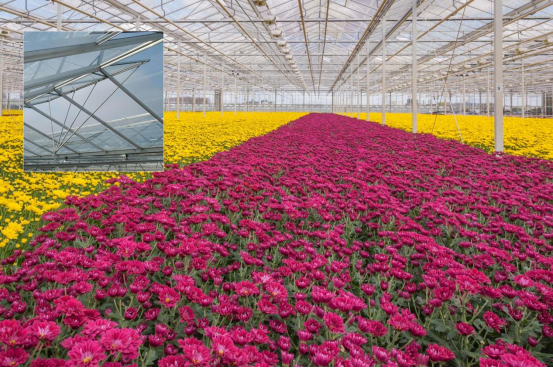
Suitable Crops: Roses, Gerberas, Chrysanthemums, Potted Flowers, and Ornamental Plants
Flowers and ornamental plants often require careful management of temperature, humidity, and airflow to maintain plant quality and support healthy growth.
Different plant species have different environmental requirements. Excessive humidity can encourage condensation and increase disease risks, while high temperatures may affect flowering, growth, and plant appearance.
Ventilation systems help remove excess heat and moisture while introducing fresh outdoor air.
Depending on the production environment, roof vents, sidewall openings, mechanical ventilation, and internal circulation systems may be used together.
Key Growing Requirements:
Temperature and humidity regulation
Condensation management
Uniform air movement
Flexible ventilation for different plant varieties
Recommended Ventilation Systems:
Natural Roof Ventilation
Sidewall Ventilation
Mechanical Exhaust Fans
Internal Air Circulation Fans
Suitable Greenhouse Types: Glass Greenhouses, Multi-Span Film Greenhouses, and Gothic Greenhouses
Suitable Growers: Commercial Flower Growers, Nursery Operators, and Ornamental Plant Producers
Greenhouse Ventilation Applications for Different Climates
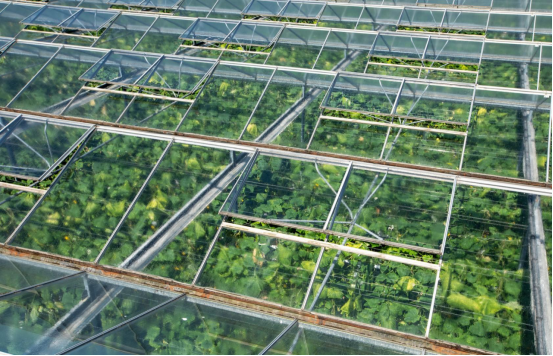
Local climate is one of the most important factors influencing greenhouse ventilation system selection.
Temperature, humidity, wind conditions, solar radiation, and seasonal weather patterns affect how effectively different ventilation methods can operate.
Choosing a suitable greenhouse structure and ventilation configuration together can help growers address local climate challenges and manage their growing environments more effectively.
Greenhouse Ventilation for Hot and Humid Climates
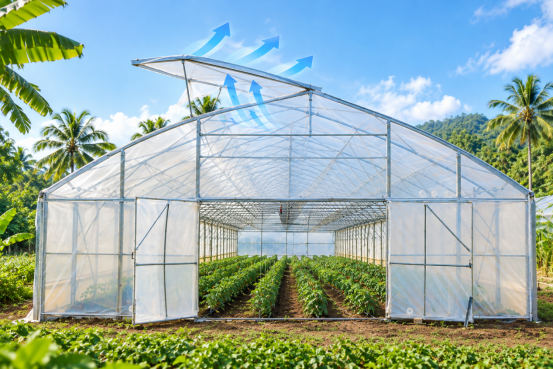
Climate Challenges
Hot and humid climates, commonly found in tropical and subtropical regions, create challenges associated with high temperatures, excessive moisture, and limited evaporative cooling potential.
In these environments, greenhouse ventilation should focus on removing accumulated heat, exchanging humid indoor air with outdoor air when beneficial, and improving airflow around crops.
Because outdoor humidity is often high, ventilation alone may not always provide sufficient cooling or dehumidification.
Suitable Greenhouse Types
Sawtooth Greenhouses: Roof openings can support the release of accumulated warm air and promote natural ventilation when properly designed and oriented.
Multi-Span Film Greenhouses: Roof and sidewall ventilation openings can provide multiple pathways for air exchange across growing areas.
Gothic Greenhouses: Ventilation openings can be incorporated into the greenhouse structure according to local wind, rainfall, and growing requirements.
Recommended Ventilation Systems
Roof Ventilation Systems
Sidewall Ventilation Systems
Mechanical Exhaust Fans
Internal Air Circulation Fans
Automatic Ventilation Control Where Applicable
A combination of natural and mechanical ventilation may be considered to address changing weather conditions.
Evaporative cooling should be evaluated carefully because high outdoor humidity can significantly limit cooling performance.
Suitable Growers
Tropical Vegetable Growers
Commercial Fruiting Vegetable Producers
Hydroponic Vegetable Growers
Agricultural Project Developers in Humid Regions
Application Focus: Heat Removal, Humidity Management, and Air Exchange
Greenhouse Ventilation for Hot and Dry Climates
Climate Challenges
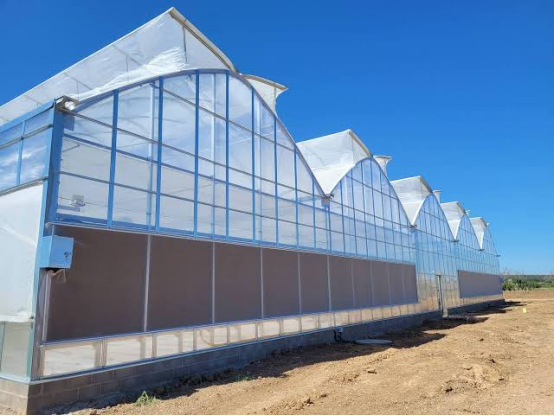
Greenhouses in hot and dry regions frequently experience intense solar radiation, high daytime temperatures, and significant cooling requirements.
Although ventilation can remove accumulated greenhouse heat, outdoor air may still be too hot to provide sufficient cooling for sensitive crops.
In such conditions, ventilation may need to be combined with evaporative cooling and shading systems.
Suitable Greenhouse Types
Multi-Span Film Greenhouses: Can be configured with mechanical ventilation and evaporative cooling equipment according to project requirements.
Glass Greenhouses: Can incorporate exhaust fans, ventilation openings, shading systems, and evaporative cooling equipment.
Gothic Greenhouses: May accommodate mechanical ventilation and cooling systems depending on structural design and environmental requirements.
Recommended Ventilation Systems
Mechanical Exhaust Ventilation
Fan and Pad Cooling Systems
Internal Air Circulation Fans
Roof or Sidewall Ventilation Where Suitable
Supplementary Shading Systems
Fan and pad cooling systems use exhaust fans to draw outdoor air through wetted cooling pads. As water evaporates, the incoming air temperature decreases while its humidity increases.
Cooling performance depends on outdoor temperature, relative humidity, equipment configuration, airflow distribution, and water availability.
Suitable Growers
Commercial Vegetable Growers
Fruiting Vegetable Producers
Flower and Ornamental Growers
Agricultural Investors Developing Projects in Arid Regions
Application Focus: Temperature Reduction, Air Exchange, and Evaporative Cooling
Greenhouse Ventilation for Mild and Temperate Climates
Climate Challenges
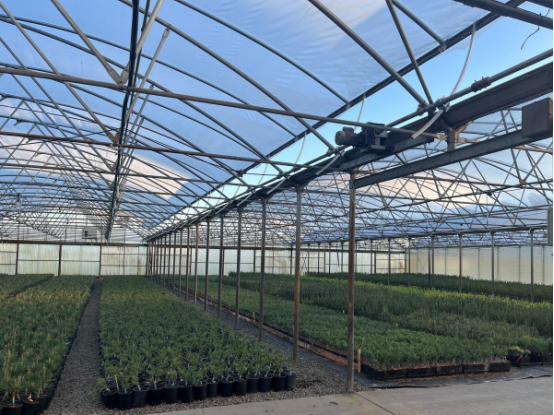
Mild and temperate climates often provide favorable conditions for natural greenhouse ventilation during parts of the year.
However, changing temperatures, wind conditions, and solar radiation can still cause heat accumulation or excessive humidity inside greenhouses.
Ventilation systems should allow growers to adjust airflow according to seasonal and daily weather conditions.
Suitable Greenhouse Types
Gothic Greenhouses: Can incorporate roof and sidewall ventilation for seasonal climate management.
Multi-Span Film Greenhouses: Adjustable roof and side openings can be used to support natural airflow across growing areas.
Glass Greenhouses: Can use roof ventilation and compatible environmental control equipment for flexible operation.
Recommended Ventilation Systems
Natural Roof Ventilation
Sidewall Ventilation
Automatic Vent Opening Systems
Supplementary Mechanical Exhaust Fans
Internal Air Circulation Fans
Natural ventilation uses wind pressure and temperature differences to promote air exchange through greenhouse openings.
Mechanical ventilation may be added where natural airflow is insufficient or more consistent air exchange is required.
Suitable Growers
Commercial Vegetable Growers
Flower and Ornamental Growers
Nursery Operators
Independent and Commercial Greenhouse Growers
Application Focus: Natural Air Exchange, Seasonal Flexibility, and Practical Operation
Greenhouse Ventilation for Cold and Seasonal Climates
Climate Challenges
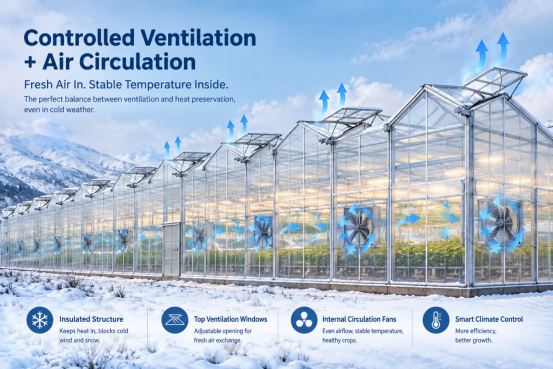
In regions with cold winters or significant seasonal temperature changes, greenhouse ventilation must be balanced with heat conservation.
Even during colder periods, crop transpiration can cause humidity to accumulate inside the greenhouse.
Ventilation helps remove excess moisture when outdoor conditions permit, but excessive air exchange may increase heating requirements.
Ventilation strategies should therefore be coordinated with heating, air circulation, and environmental monitoring systems.
Suitable Greenhouse Types
Glass Greenhouses: Can incorporate controlled roof ventilation alongside heating and environmental management systems.
Multi-Span Film Greenhouses: Can use adjustable ventilation openings and suitable covering configurations for seasonal operation.
Gothic Greenhouses: May be equipped with ventilation systems designed to respond to seasonal conditions and heating requirements.
Recommended Ventilation Systems
Controlled Roof Ventilation
Adjustable Sidewall Ventilation Where Suitable
Mechanical Ventilation for Controlled Air Exchange
Internal Air Circulation Fans
Integrated Heating and Ventilation Control Where Applicable
Ventilation should be managed according to indoor humidity, outdoor temperature, crop requirements, and heating conditions.
Suitable Growers
Year-Round Commercial Vegetable Growers
Greenhouse Operators in Cold Regions
Flower and Nursery Growers
Agricultural Developers Planning Protected Cultivation Projects
Application Focus: Humidity Management, Heat Conservation, and Seasonal Climate Control
Greenhouse Ventilation Solutions for Different Growers
Different greenhouse operators have different expectations for ventilation performance, operational efficiency, maintenance, and environmental control.
Understanding these needs helps identify suitable ventilation systems for different commercial applications.
Commercial Vegetable Growers
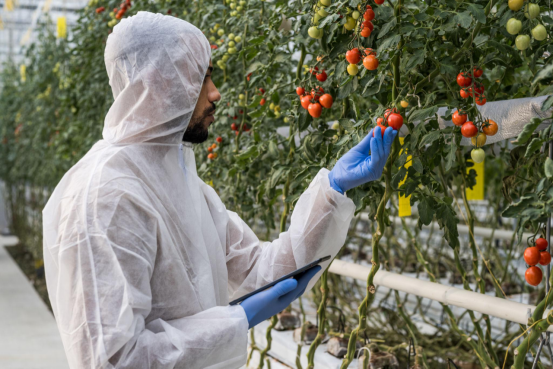
Commercial vegetable growers need ventilation systems that support the temperature, humidity, and airflow requirements of their crops.
For fruiting and leafy vegetables, ventilation may involve natural roof openings, sidewall ventilation, mechanical exhaust fans, and internal circulation equipment.
The appropriate configuration depends on crop type, local climate, growing method, and greenhouse structure.
Main Priorities: Crop Environment, Reliable Ventilation, and Daily Operation
Hydroponic Greenhouse Growers
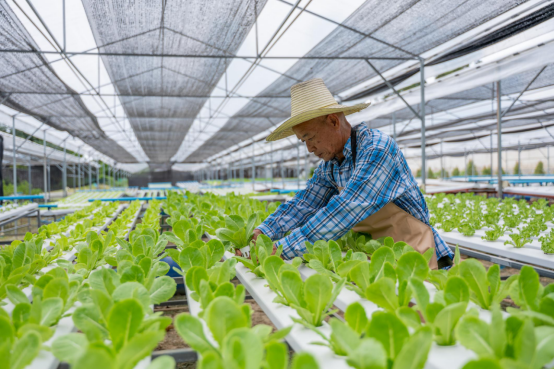
Hydroponic production often involves intensive planting arrangements and careful environmental management.
Ventilation helps address heat accumulation, excessive humidity, and airflow distribution within the growing area.
System selection should consider crop type, planting density, greenhouse layout, and compatibility with other environmental equipment.
Main Priorities: Airflow Distribution, Humidity Management, and Environmental Monitoring
Flower Growers and Nursery Operators
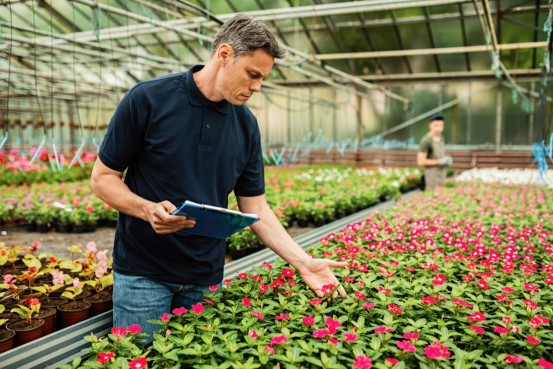
Flower and nursery growers may cultivate different plant varieties with varying environmental requirements.
Flexible ventilation systems help manage temperature and humidity as growing conditions change.
Depending on the facility, natural ventilation and internal circulation may be combined with mechanical ventilation.
Main Priorities: Plant Quality, Climate Flexibility, and Consistent Air Movement
Agricultural Project Developers

Agricultural developers and investors need ventilation systems that can be considered as part of an overall greenhouse project.
Ventilation equipment should be evaluated alongside greenhouse structures, cooling systems, heating equipment, and other environmental management systems.
Early planning can help identify equipment compatibility, installation requirements, and long-term maintenance needs.
Main Priorities: System Integration, Project Planning, Scalability, and Long-Term Operation
Greenhouse Ventilation System Options
Different greenhouse ventilation technologies serve different purposes.
Understanding the functions and applications of each system can help growers identify a suitable ventilation configuration for their greenhouse projects.
Natural Greenhouse Ventilation
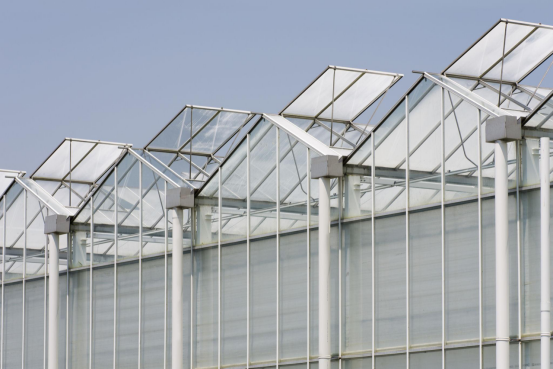
Natural ventilation exchanges indoor and outdoor air through greenhouse openings using wind pressure and temperature differences.
Common configurations include roof vents, sidewall vents, and roll-up side openings.
Natural ventilation can provide effective air exchange when outdoor conditions are favorable and the greenhouse has appropriately designed ventilation openings.
Its performance depends on greenhouse geometry, vent area, wind conditions, and the difference between indoor and outdoor temperatures.
Common Applications: Multi-Span Film Greenhouses, Gothic Greenhouses, Glass Greenhouses, and Sawtooth Greenhouses
Mechanical Greenhouse Ventilation
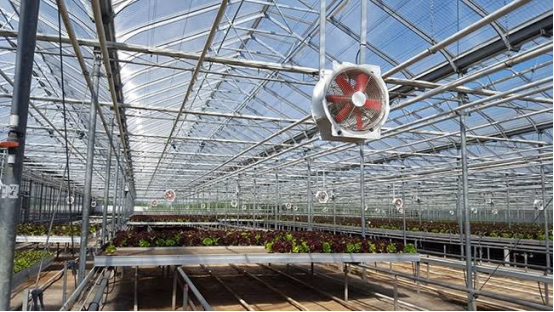
Mechanical ventilation uses powered exhaust fans to remove indoor air and draw fresh outdoor air through designated openings or inlets.
It can provide additional or more controllable air exchange when natural ventilation is insufficient.
Fan selection should consider airflow requirements, static pressure, inlet design, and operating conditions.
Common Applications: Commercial Vegetable Greenhouses, Flower Greenhouses, and Projects Requiring Additional Air Exchange
Fan and Pad Cooling Systems
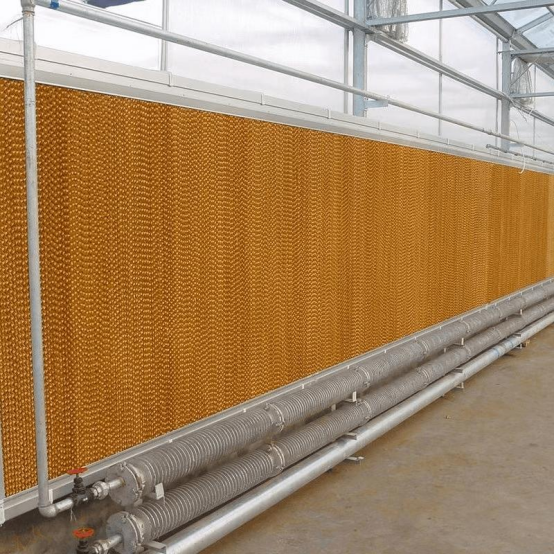
Fan and pad cooling systems combine mechanical exhaust ventilation with evaporative cooling.
Exhaust fans draw outdoor air through wetted cooling pads. As water evaporates, the incoming air temperature decreases while its humidity increases.
This approach is generally more effective in hot climates with relatively low outdoor humidity.
Water availability, water quality, maintenance requirements, and airflow distribution should be considered during system selection.
Common Applications: Commercial Greenhouses in Hot and Dry Regions
Integrated Greenhouse Ventilation and Climate Management
Some greenhouse projects require multiple ventilation and environmental management systems to operate together.
Depending on project requirements, natural ventilation, exhaust fans, evaporative cooling, air circulation, and compatible control equipment may be coordinated.
For example, a greenhouse may rely on natural ventilation when outdoor conditions are favorable and use mechanical ventilation or additional cooling when greater environmental control is needed.
The appropriate system configuration depends on local climate, greenhouse design, crop requirements, and operational objectives.
Common Applications: Commercial Greenhouse Projects Requiring Coordinated Environmental Management
How to Choose the Right Greenhouse Ventilation System
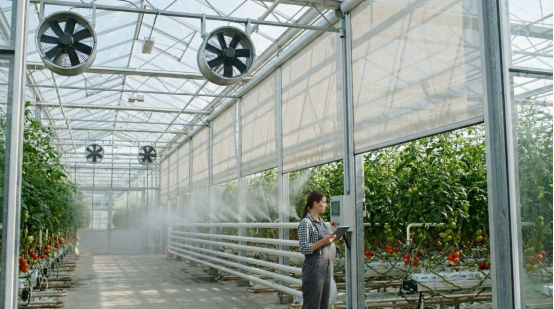
Selecting a suitable greenhouse ventilation system begins with understanding the actual growing conditions and operational needs of the project.
1. Identify Your Crop Requirements
Different crops have different temperature, humidity, and airflow requirements.
Consider the crop type, growing method, planting density, and production schedule before selecting ventilation equipment.
2. Evaluate the Local Climate
Review seasonal temperature ranges, relative humidity, prevailing wind conditions, and solar radiation.
These factors affect the suitability of natural ventilation, mechanical ventilation, and evaporative cooling.
3. Consider the Greenhouse Structure
Greenhouse type, roof configuration, dimensions, covering materials, and available ventilation openings influence airflow patterns and equipment installation.
Ventilation should be considered during the greenhouse design stage whenever possible.
4. Determine the Required Ventilation and Cooling
Some greenhouse projects can rely primarily on natural ventilation, while others require mechanical air exchange or supplementary cooling.
The appropriate combination depends on the local climate, environmental requirements, and greenhouse configuration.
5. Consider Grower Requirements and Long-Term Operation
Evaluate operating costs, maintenance access, energy consumption, water availability where applicable, and compatibility with other greenhouse systems.
The final configuration should be based on project-specific conditions and appropriate engineering assessment.
Table of Contents
- Greenhouse Ventilation Solutions for Different Crops
- Greenhouse Ventilation Applications for Different Climates
- Greenhouse Ventilation Solutions for Different Growers
-
Greenhouse Ventilation System Options
- Natural Greenhouse Ventilation
- Mechanical Greenhouse Ventilation
- Fan and Pad Cooling Systems
- Integrated Greenhouse Ventilation and Climate Management
- 1. Identify Your Crop Requirements
- 2. Evaluate the Local Climate
- 3. Consider the Greenhouse Structure
- 4. Determine the Required Ventilation and Cooling
- 5. Consider Grower Requirements and Long-Term Operation