 EN


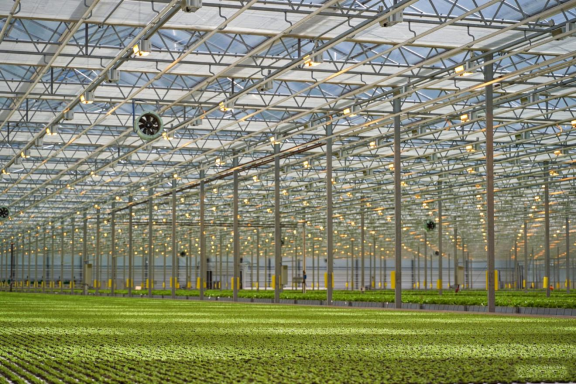
Why Climate and Crop Requirements Matter in Greenhouse Ventilation
Greenhouse ventilation plays a vital role in maintaining suitable growing conditions in commercial greenhouses by helping regulate temperature, humidity, and carbon dioxide (CO₂) levels through air exchange.
However, ventilation challenges vary across climates, and crops differ in their temperature, humidity, and airflow requirements.A ventilation system suitable for one growing environment may not be suitable for another.
Therefore, selecting the appropriate commercial greenhouse ventilation system requires careful consideration of local climate conditions, crop requirements, and greenhouse structure. Understanding these factors helps commercial growers find greenhouse ventilation solutions that meet the specific needs of their projects.
1. Understanding the Main Types of Greenhouse Ventilation Systems
Ventilation system selection plays an important role in determining how effectively a greenhouse can manage temperature, humidity, and air exchange.Commercial greenhouse ventilation systems typically employ natural ventilation, mechanical ventilation, or a combination of ventilation and evaporative cooling. Each method manages airflow differently, and its effectiveness depends on outdoor conditions and greenhouse design.
Natural Ventilation
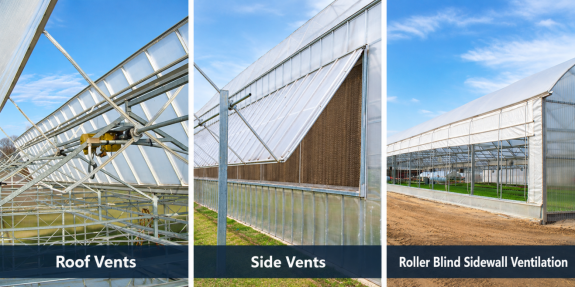
Natural ventilation uses wind pressure and differences in indoor and outdoor temperature to move air through greenhouse openings. Common options include roof vents, sidewall vents and roll-up side vents for film-covered greenhouses. Roof vents allow warm air to escape near the top; sidewall openings provide a path for replacement air. Actual airflow depends on vent size and position, surrounding buildings, wind and weather.
Natural systems can have relatively low operating energy needs, although automated vent motors and controls still consume electricity. They are often suitable when the greenhouse structure and local weather support sufficient natural air exchange.
Mechanical ventilation or forced ventilation
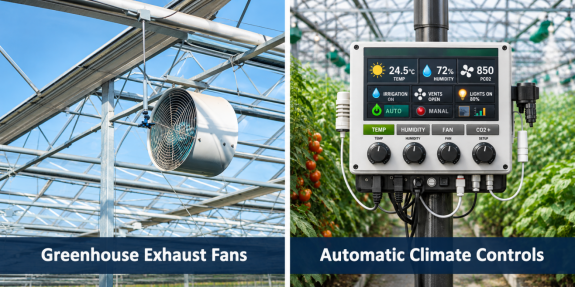
Mechanical ventilation uses exhaust fans and properly designed air inlets to exchange indoor air with outdoor air.
Unlike natural ventilation, which relies on outdoor wind and temperature differences, forced ventilation in greenhouses provides a more controlled form of air exchange.
Forced ventilation is particularly useful when natural airflow is insufficient or when growers need more stable ventilation under changing weather conditions.
Mechanical ventilation can also be used in conjunction with automatic control systems to adjust fan operation based on greenhouse temperature and humidity.
Depending on project requirements, additional fans or airflow control equipment may be used. Fan capacity, air inlet area, and airflow paths should be carefully designed to ensure effective air exchange throughout the greenhouse.
Fan and Pad Cooling Systems
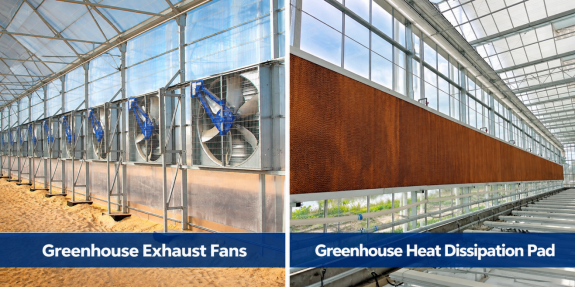
A fan and pad cooling system combines mechanical ventilation with evaporative cooling.
Exhaust fans draw outside air through water-saturated cooling pads. As water evaporates, it absorbs heat from the incoming air, reducing its temperature before the air enters the greenhouse.
This system is particularly effective in hot and dry climates, where low outdoor humidity allows greater evaporative cooling.
In humid climates, however, its cooling potential is reduced because the outside air already contains substantial moisture.
Selecting a fan and pad system also requires consideration of water availability, water quality, electricity consumption, and regular maintenance.
|
Ventilation Type |
Suitable Conditions |
Main Advantage |
Main Limitation |
|
Natural Ventilation |
Mild weather and favorable wind conditions |
Low operating energy requirement |
Depends on outdoor conditions |
|
Mechanical Ventilation |
Projects requiring controlled air exchange |
More predictable airflow |
Limited cooling below outdoor temperature |
|
Fan and Pad Cooling |
Hot and dry climates |
Ventilation with evaporative cooling |
Reduced effectiveness in high humidity |
The most suitable system depends not only on the ventilation method itself but also on the climatic challenges the greenhouse needs to address.
https://www.fzygreenhouses.com/greenhouse-systems
2. How to Choose Greenhouse Ventilation Systems for Different Climates
Climate is one of the most important factors affecting greenhouse ventilation design. Outdoor temperature, relative humidity, wind conditions, and seasonal changes determine how effectively a ventilation system can remove heat and moisture.
The following climate categories provide a starting point for selecting suitable ventilation configurations.
Hot and Humid Climates — Prioritizing Air Exchange and Humidity Management
Hot and humid climates are common in tropical and subtropical regions, including many parts of Southeast Asia.
In these environments, commercial greenhouses often face two challenges: excessive heat accumulation and high humidity around the crop canopy.
High humidity can limit moisture removal through ventilation, especially when outdoor air is also warm and humid. Prolonged leaf wetness and condensation may further increase the risk of certain crop diseases.
Recommended Ventilation Approach
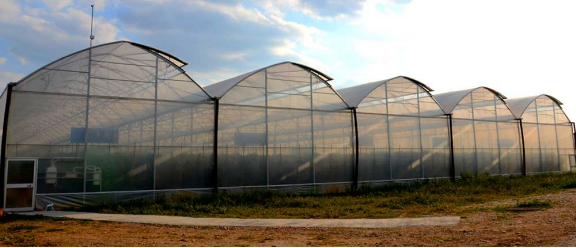
For greenhouses with favorable outdoor wind conditions, roof vents and side vents can provide effective natural air exchange.
In taller multi-span greenhouses, appropriately designed roof openings can help release accumulated warm air. Side openings allow replacement air to enter, while wind pressure and thermal buoyancy contribute to ventilation.
However, the effectiveness of this configuration depends on factors such as wind direction, vent opening area, greenhouse dimensions, and insect screens.
Where natural airflow is insufficient, supplemental exhaust fans can provide additional ventilation.
Internal circulation fans may also be used to improve air distribution and reduce stagnant areas within dense crop canopies.
Key Considerations
Evaporative cooling is generally less effective when outdoor relative humidity is high. Therefore, fan and pad cooling should not automatically be the first choice for every tropical greenhouse project.
Growers should evaluate local temperature and humidity patterns, seasonal wind conditions, and crop moisture requirements before choosing a configuration.
https://www.fzygreenhouses.com/gothic-multi-span-greenhouse
Hot and Dry Climates — Combining Ventilation with Evaporative Cooling
Hot and dry climates are found in many arid and semi-arid regions, including parts of the Middle East and North Africa.
Strong solar radiation and high daytime temperatures can cause greenhouse temperatures to rise significantly.
Although natural or mechanical ventilation can remove accumulated heat, ventilation alone generally cannot reduce indoor air temperatures below the outdoor air temperature.
Recommended Ventilation Approach
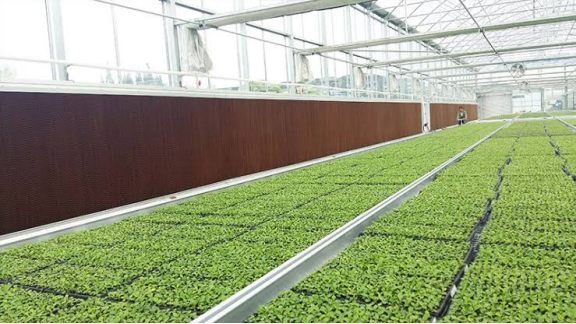
For commercial greenhouses requiring additional cooling, mechanical ventilation combined with a fan and pad cooling system can be an effective solution.
Exhaust fans draw hot outdoor air through wet cooling pads, allowing evaporation to lower the temperature of the incoming air.
Because dry air has greater capacity to absorb moisture, evaporative cooling offers greater potential in low-humidity conditions.
Shading systems can also reduce incoming solar radiation and help lower the greenhouse cooling load.
Key Considerations
The performance of a fan and pad system depends on outdoor temperature, humidity, airflow distribution, and equipment design.
In long greenhouses, temperature differences may develop along the airflow path from the cooling pads to the exhaust fans, making system layout particularly important.
Water availability and quality should be considered during project planning, as evaporative cooling systems require a reliable water supply and regular maintenance.
For commercial growers in hot and dry regions, the goal is to combine sufficient ventilation with an appropriate cooling method rather than relying on airflow alone.
https://www.fzygreenhouses.com/polytunnels-greenhouses662
Temperate Climates — Using Natural Ventilation with Supplemental Fans
Temperate climates generally experience seasonal temperature changes, with relatively mild conditions during parts of the year and occasional periods of summer heat.
For many commercial greenhouse projects in these regions, natural ventilation can provide suitable air exchange during favorable weather.
Recommended Ventilation Approach
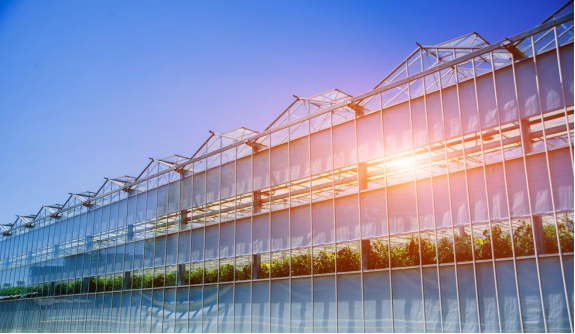
Roof vents and side vents can be used together to support airflow through the greenhouse.
During spring and autumn, natural ventilation may be sufficient to remove excess heat and manage indoor humidity.
However, during periods of high temperature, low wind speed, or increased crop moisture production, additional mechanical ventilation may be beneficial.
Supplemental exhaust fans can help maintain air exchange when natural ventilation is limited.
Automatic climate controls can adjust ventilation openings and fan operation in response to changing indoor and outdoor conditions.
Key Considerations
Seasonal changes should guide ventilation system design.
Growers should consider both summer cooling requirements and the need to limit unnecessary heat loss during colder months.
A combination of natural ventilation and supplemental mechanical ventilation can provide operational flexibility without requiring continuous fan operation.
https://www.fzygreenhouses.com/dutch-multi-span-greenhouse
Cold Climates — Balancing Ventilation and Heat Retention
In cold climates, greenhouse ventilation must balance moisture removal, temperature control, and energy efficiency.
Although outdoor temperatures may be low, greenhouses can still accumulate moisture through crop transpiration and irrigation.
When warm, humid greenhouse air contacts cold surfaces, condensation may form on greenhouse coverings and plant leaves.
Excessive moisture and prolonged leaf wetness can increase the risk of certain plant diseases.
Recommended Ventilation Approach
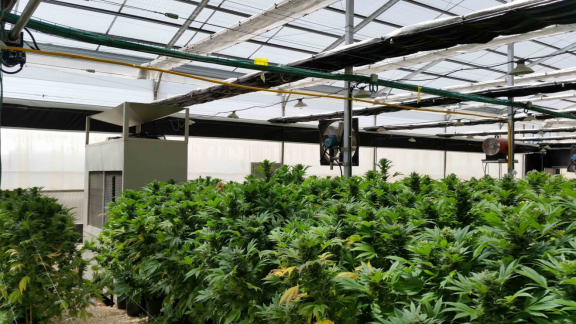
Controlled ventilation can remove moisture while limiting unnecessary heat loss.
Depending on the greenhouse design, growers may use adjustable roof vents, controlled air inlets, or low-rate mechanical ventilation.
Ventilation should be coordinated with heating systems so that incoming cold air does not cause excessive temperature fluctuations around the crops.
Internal circulation fans can help distribute warm air more evenly and reduce stagnant zones where moisture accumulates.
However, circulation fans do not replace the need for fresh-air exchange when moisture removal is required.
Key Considerations
Ventilation systems in cold climates should respond to both temperature and humidity rather than temperature alone.
Automatic controls can help coordinate ventilation and heating to maintain suitable growing conditions.
The objective is not to maximize airflow but to provide sufficient air exchange while protecting crops and limiting energy losses.
Climate-Based Greenhouse Ventilation System Comparison
|
Climate |
Main Challenge |
Suggested Ventilation Approach |
Additional Considerations |
|
Hot and Humid |
Heat and moisture accumulation |
Natural ventilation with supplemental fans where needed |
Humidity, airflow distribution, insect screens
|
|
Hot and Dry |
High temperatures and solar radiation |
Mechanical ventilation with evaporative cooling |
Water supply, shading, cooling efficiency
|
|
Temperate |
Seasonal temperature changes |
Natural ventilation with optional mechanical support |
Seasonal controls, outdoor wind conditions
|
|
Cold |
Condensation and heat loss |
Controlled ventilation coordinated with heating |
Air circulation, humidity monitoring, energy efficiency |
https://www.fzygreenhouses.com/greenhouse-systems
These configurations are general selection guidelines. Final ventilation designs should be based on local weather data, greenhouse dimensions, crop requirements, and project operating conditions.
3. How Crop Requirements Affect Greenhouse Ventilation Selection
Climate determines the environmental conditions surrounding a greenhouse, while crop requirements determine the conditions growers need to maintain inside it.
Different crops vary in temperature tolerance, transpiration, canopy density, and sensitivity to airflow.
As crops develop, changes in leaf area and planting density can also influence how heat and moisture accumulate within the greenhouse.
Therefore, ventilation systems should be selected and operated according to both crop type and growing conditions.
Tomatoes — Managing Temperature, Humidity, and Airflow
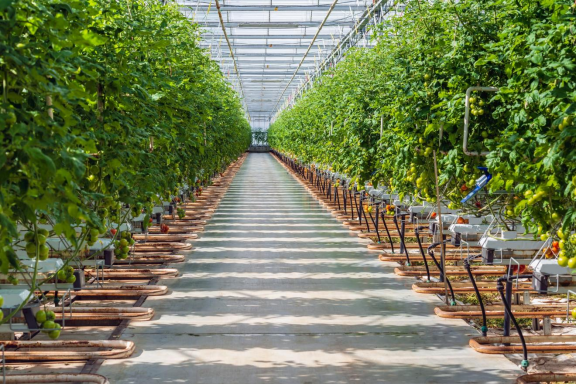
Tomatoes are widely cultivated in commercial greenhouses and require careful management of temperature and humidity throughout their growth cycle.
Excessive temperatures can interfere with flowering, pollination, and fruit development, while prolonged high humidity and condensation may increase the risk of certain diseases.
As tomato plants mature, dense foliage can restrict airflow within the crop canopy.
Ventilation Considerations
Greenhouse tomato production requires adequate air exchange to remove excess heat and moisture.
Roof and side ventilation may be suitable in favorable climates, while mechanical ventilation can provide additional airflow when natural ventilation is insufficient.
Circulation fans can help reduce stagnant air around dense foliage and improve temperature and humidity uniformity.
In hot and dry regions, evaporative cooling may also be considered to manage high daytime temperatures.
The appropriate system depends on the local climate, greenhouse design, crop density, and production requirements.
Cucumbers — Maintaining Suitable Humidity and Air Movement
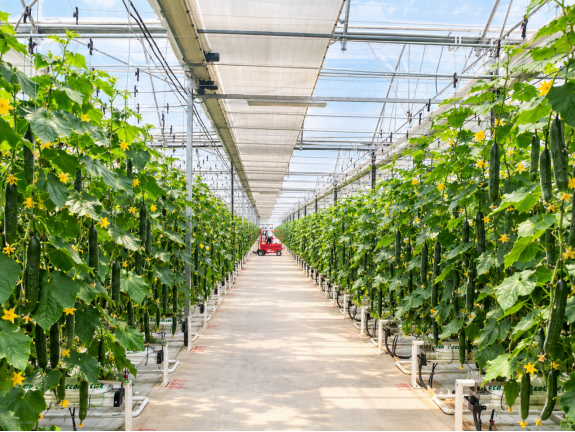
Cucumbers are another important crop in commercial greenhouse production.
Their relatively large leaves and vigorous growth can create dense canopies, particularly in high-density growing systems.
Crop transpiration releases moisture into the greenhouse air, while limited airflow within dense canopies can create localized areas of high humidity.
Without suitable ventilation and air circulation, moisture may accumulate around leaves, increasing the potential for condensation and disease development.
Ventilation Considerations
Cucumber greenhouses require a balance between moisture removal and appropriate air movement.
Natural ventilation through roof and side openings may provide sufficient air exchange under favorable weather conditions.
Supplemental exhaust fans can improve ventilation when natural airflow is inadequate, while circulation fans can help maintain more uniform conditions around the plants.
Airflow should be distributed appropriately rather than directed as strong, continuous drafts onto the crops.
For commercial cucumber cultivation, ventilation selection should consider local climate, canopy density, greenhouse structure, and the growing system being used.
Leafy Greens — Preventing Heat Stress and Excess Moisture
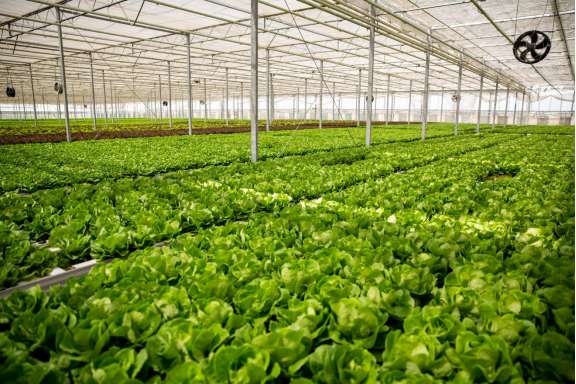
Leafy greens, including lettuce, are commonly grown in commercial greenhouses and controlled-environment production systems.
Many lettuce varieties perform best under relatively moderate temperatures and may experience reduced quality or growth problems during prolonged high-temperature conditions.
In dense planting arrangements, moisture can also accumulate around the leaves, especially when air movement is limited.
Ventilation Considerations
In mild climates, natural ventilation may provide sufficient temperature and humidity management for some leafy green production systems.
In warmer regions, mechanical ventilation or additional cooling may be required to manage heat stress.
For hydroponic production, growers should also consider moisture generated by crop transpiration and exposed water surfaces.
Circulation fans can help improve air distribution, but airflow should be gentle enough to avoid unnecessary plant stress.
Because leafy greens differ in their environmental requirements, ventilation settings should be adjusted according to crop variety, growth stage, and production conditions.
Comparison of ventilation requirements for different crops in greenhouses
|
Crop |
Main Environmental Concerns |
Ventilation Priorities |
|
Tomatoes |
Temperature, high humidity, condensation |
Heat removal, humidity control, canopy airflow |
|
Cucumbers |
Dense canopy, moisture accumulation |
Adequate air exchange and uniform circulation |
|
Leafy Greens |
Heat stress, excess moisture |
Temperature management and gentle air movement |
https://www.fzygreenhouses.com/case
Although these crops have different needs, they do not necessarily require entirely different greenhouse ventilation systems.
he same ventilation system may support different crops, provided its capacity, layout, and operating settings meet their specific growing requirements.
4. How Greenhouse Structure Influences Ventilation Performance
Even when climate and crop requirements are similar, greenhouse structure can significantly influence ventilation performance.
Greenhouse height, span width, length, roof design, and ventilation opening positions affect how air enters, moves through, and exits the growing space.
For commercial projects, ventilation equipment must therefore be matched to the greenhouse structure.
Gothic Greenhouses
https://www.fzygreenhouses.com/gothic-multispan-greenhouse
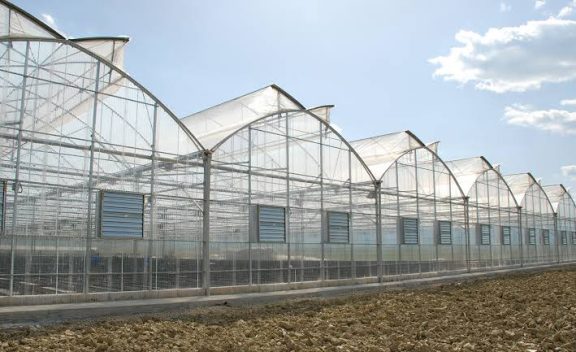
Gothic greenhouses feature a pointed-arch roof design and can be configured for different ventilation requirements.
Depending on the structure, they may include side ventilation, roof vents, or mechanical ventilation systems.
Roof openings can help release warm air accumulating near the upper part of the greenhouse, while side openings allow replacement air to enter.
The effectiveness of this arrangement depends on vent positioning, opening area, prevailing winds, and greenhouse dimensions.
For large commercial projects, ventilation layout should also account for potential airflow differences between individual growing areas.
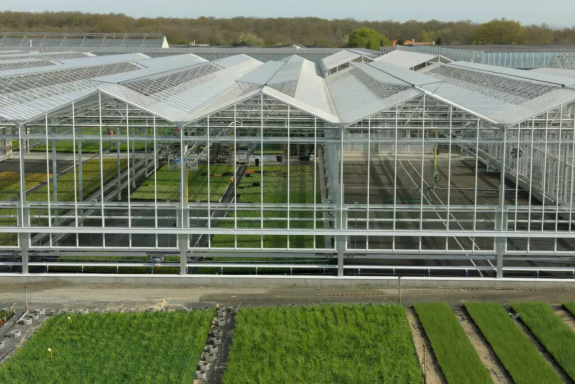
Glass Greenhouses
https://www.fzygreenhouses.com/glass-greenhouse
Glass greenhouses are frequently used for commercial horticulture projects requiring more integrated environmental management.
Depending on the greenhouse design, ventilation options may include roof vents, controlled air inlets, exhaust fans, and automated climate control systems.
Roof ventilation can provide natural air exchange under suitable outdoor conditions.
Mechanical ventilation may be incorporated when additional airflow or more controlled air exchange is required.
For projects with higher climate-control requirements, ventilation operation can be coordinated with heating, shading, cooling, and environmental monitoring systems.
However, the selection of ventilation equipment should still be based on the actual project conditions rather than greenhouse covering material alone.
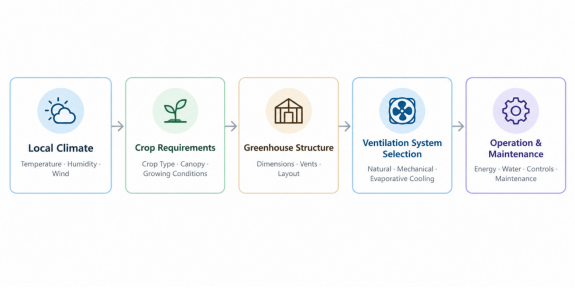
5. How to Select the Right Commercial Greenhouse Ventilation System
Choosing between natural ventilation, mechanical ventilation, and evaporative cooling requires evaluating the complete greenhouse project rather than focusing on a single piece of equipment.
Commercial growers can use the following steps to identify a suitable ventilation approach.
Step 1: Evaluate Local Climate Conditions
Review the project's seasonal temperatures, relative humidity, prevailing winds, solar radiation, and rainfall patterns.
Pay particular attention to the most challenging growing periods, such as hot summer afternoons or cold, humid winter nights.
These conditions help determine whether natural ventilation is likely to be sufficient or whether additional mechanical ventilation or cooling may be required.
Step 2: Identify Crop Requirements
Determine which crops will be grown and evaluate their temperature, humidity, and airflow requirements.
Consider planting density, expected canopy development, growing stages, and production methods.
Crop requirements help establish the environmental conditions that the ventilation system needs to maintain.
Step 3: Review Greenhouse Structure
Evaluate the greenhouse type, dimensions, roof height, ventilation openings, and internal layout.
Consider potential airflow restrictions created by insect screens, surrounding buildings, and dense crop canopies.
Ventilation openings and equipment should be positioned to encourage effective air exchange throughout the growing area.
Step 4: Compare Ventilation Options
Compare the suitability of natural ventilation, forced ventilation, and evaporative cooling under the project's specific conditions.
Natural ventilation may provide an energy-efficient solution where outdoor weather and greenhouse design allow adequate airflow.
Mechanical ventilation may be preferable when more predictable air exchange is required.
In hot and dry environments, fan and pad cooling may offer additional temperature reduction.
Some projects may benefit from combining natural ventilation with supplemental mechanical ventilation to accommodate changing weather conditions.
Step 5: Consider Operation and Maintenance
Evaluate equipment investment, operating energy consumption, water requirements, maintenance, and control options.
For example, mechanical ventilation requires electricity, while evaporative cooling also depends on water availability and quality.
Automatic controls may improve system operation by adjusting ventilation equipment according to changing conditions.
The most suitable ventilation system is not necessarily the most complex one, but the configuration that meets the project's growing and operational requirements.
Frequently Asked Questions
What is the best ventilation system for a commercial greenhouse?
There is no single ventilation system that works best for every commercial greenhouse. Natural ventilation may be suitable in mild climates with favorable wind conditions, while mechanical ventilation can provide more controlled air exchange. In hot and dry climates, evaporative cooling may be needed. The final choice depends on climate, crops, greenhouse structure, and operating requirements.
Is natural or forced ventilation better for greenhouses?
Both methods have advantages. Natural ventilation generally requires less energy to operate but depends on outdoor wind and temperature conditions. Forced ventilation uses fans to provide more predictable airflow, although it requires electricity. The better option depends on the greenhouse's ventilation requirements and local climate.
Does fan and pad cooling work in humid climates?
Fan and pad cooling can provide some cooling in humid climates, but its effectiveness decreases as outdoor humidity increases. This is because humid air has less capacity to absorb additional moisture through evaporation. Local temperature and humidity data should be evaluated before selecting the system.
Can the same ventilation system be used for tomatoes and cucumbers?
Yes. Tomatoes and cucumbers can use similar ventilation equipment, including roof vents, exhaust fans, and circulation fans. However, the operating settings and airflow distribution may need to differ because of variations in crop canopy structure, humidity requirements, and growing conditions.
Choosing the Right Ventilation Solution for Your Greenhouse Project
Selecting the right ventilation system for a commercial greenhouse requires a thorough understanding of local climate conditions, crop needs, and greenhouse structure.
Natural ventilation, mechanical ventilation, and evaporative cooling each have their advantages under different operating conditions. The most effective configuration should provide sufficient air exchange to support crop growth and development and meet the specific needs of your project.
FZY Greenhouses provides greenhouse structures and integrated ventilation, cooling, and climate control solutions for commercial growing projects. Our team can help evaluate your project's climate conditions, crop requirements, and greenhouse design to identify suitable ventilation and cooling configurations.
Planning a commercial greenhouse project?
Contact FZY Greenhouses to discuss greenhouse ventilation solutions suitable for your growing conditions.
Website: https://www.fzygreenhouses.com/