 EN

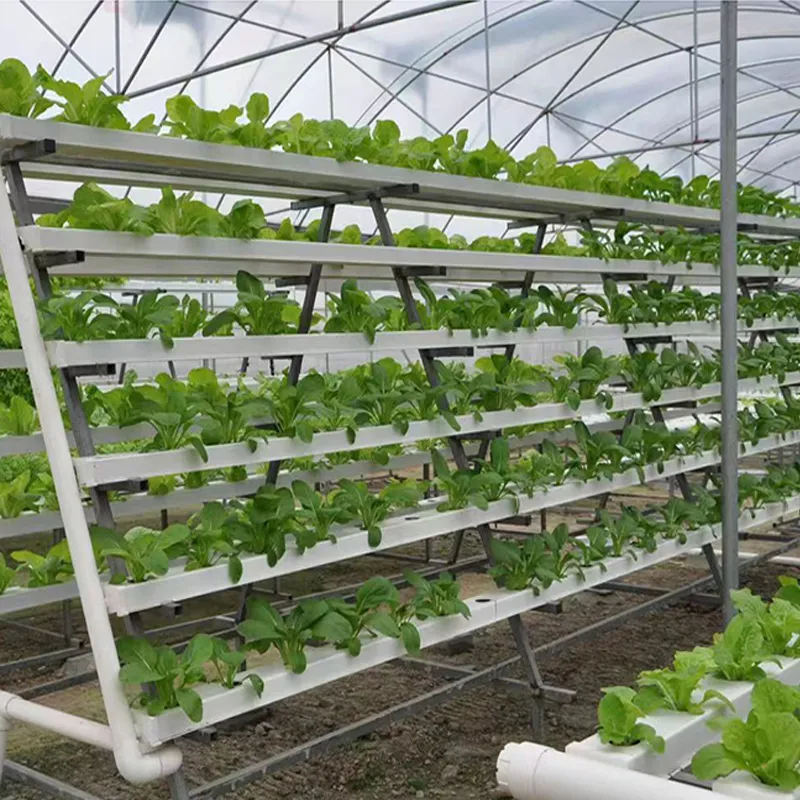
Do you need a greenhouse for hydroponics? No. Hydroponic plants can grow indoors, outdoors, or inside a greenhouse as long as they receive suitable light, water, oxygen, nutrients, and temperature conditions. However, if your project faces changing weather, extreme temperatures, or year-round production requirements, a greenhouse can provide better environmental protection and make commercial hydroponic production easier to manage.
Can You Grow Hydroponically Without a Greenhouse?
Yes. Hydroponics is a growing method, not a greenhouse requirement. Instead of using soil, plants receive water and dissolved nutrients through systems such as NFT channels, deep water culture tanks, or drip irrigation with a growing medium.
You can establish a hydroponic system in several environments:
-
Indoor growing areas: Suitable for small-scale production or facilities where temperature, lighting, and ventilation can be managed with artificial equipment.
-
Outdoor growing areas: Suitable for climates with favorable temperatures and sufficient natural light, provided the system is protected from excessive heat, heavy rain, strong wind, and other weather risks.
-
Protected growing spaces: A grow tent, shade structure, or simple covered area can offer partial protection without the investment required for a complete greenhouse.
-
Greenhouses: Suitable when growers need to reduce weather exposure, organize larger growing areas, or manage environmental conditions across longer production periods.
The best option depends on your local climate, crop requirements, available space, and production targets. For example, a small lettuce system in a mild climate may work outdoors, while commercial tomato or strawberry production in an area with large seasonal temperature changes may benefit from a greenhouse.
When Is a Greenhouse Worth It for Hydroponics?
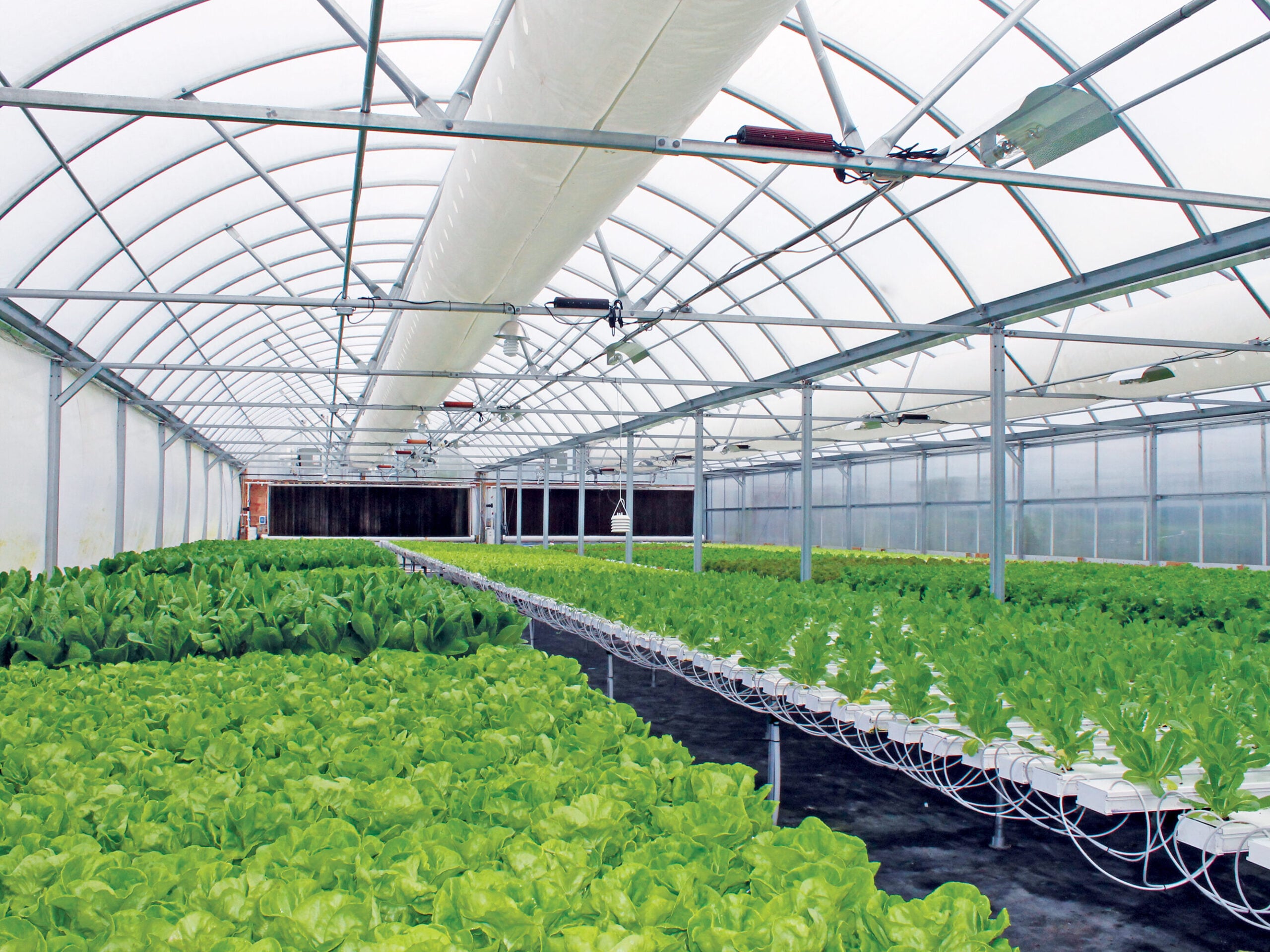
A greenhouse becomes more valuable when outdoor conditions make it difficult to maintain consistent growing conditions. It creates a physical barrier against weather and provides a structure where ventilation, shading, heating, and cooling equipment can be installed.
Consider a greenhouse if your project has one or more of these requirements:
-
Unstable outdoor temperatures: Temperature fluctuations can affect plant growth and nutrient solution conditions. A greenhouse helps reduce direct exposure, although heating or cooling may still be necessary.
-
Heavy rain or strong wind: A protected structure reduces direct weather exposure to plants, channels, and other hydroponic equipment.
-
Extended growing seasons: A greenhouse can support production beyond the most favorable outdoor growing months when suitable climate-control equipment is available.
-
Commercial production: A dedicated structure makes it easier to arrange growing channels, reservoirs, irrigation lines, walkways, and equipment in an organized layout.
-
Sensitive or high-value crops: Fruiting vegetables, strawberries, and some herbs may benefit from more consistent environmental management, depending on the variety and local conditions.
A greenhouse is not automatically the best investment for every hydroponic project. If your climate is already suitable and your system is small, the additional construction and operating costs may not provide enough value. Compare the cost of a greenhouse with the cost of protecting and maintaining an outdoor or indoor system before making a decision.
What Are the Benefits and Limitations of Greenhouse Hydroponics?
Combining hydroponics with a greenhouse offers several practical advantages, but it also introduces additional investment and management requirements.
| Factor | Benefits | Limitations to Consider |
|---|---|---|
| Weather protection | Reduces direct exposure to wind, rain, and some external pests | The structure still needs to suit local wind, snow, and weather conditions |
| Temperature management | Provides a space for heating, ventilation, and cooling equipment | Extreme temperatures may still require energy-intensive control |
| Light management | Uses natural sunlight and can accommodate supplemental lighting | Covering materials, shading, and structural design affect light transmission |
| Water and nutrients | Supports organized irrigation and nutrient delivery | Water quality, pH, EC, and nutrient balance require regular monitoring |
| Production space | Allows organized growing channels, benches, and crop support | Poor layout can restrict airflow, access, and plant spacing |
| Production planning | Can support longer growing periods and more consistent scheduling | Results depend on crop selection, climate control, and operating capacity |
| Investment | Provides infrastructure for expanding production | Construction, equipment, energy, and maintenance increase initial and ongoing costs |
Environmental Protection Does Not Mean Automatic Climate Control
A greenhouse reduces direct exposure to outdoor conditions, but it does not maintain ideal growing conditions by itself. Solar radiation can raise indoor temperatures, while insufficient ventilation can increase humidity. In colder regions, an unheated greenhouse may still experience low temperatures that affect both plants and nutrient solutions.
The structure, covering material, ventilation openings, and climate-control equipment must therefore be planned together. A greenhouse in a hot climate may need effective ventilation and shading, while a project in a cold region may prioritize insulation and heating.
Water and Disease Management Still Matter
Hydroponic systems can deliver water and nutrients efficiently, especially when nutrient solution is recovered and recirculated. However, recirculation also requires careful monitoring. If a waterborne pathogen enters a shared nutrient solution, it may spread through connected growing channels.
Regular cleaning, water-quality checks, suitable filtration, and system maintenance are important. A greenhouse protects crops from some external risks, but it does not eliminate disease or equipment failure.
Which Hydroponic Systems Work Best in a Greenhouse?
The right hydroponic system depends on the crops you plan to grow, their root requirements, available space, and the level of management your operation can support.
| Hydroponic System | How It Works | Suitable Crops | Main Planning Considerations |
|---|---|---|---|
| NFT (Nutrient Film Technique) | A shallow stream of nutrient solution flows through channels and passes over plant roots | Lettuce, leafy greens, and herbs | Channel slope, water flow, root space, and pump reliability |
| DWC (Deep Water Culture) | Plant roots hang in an aerated nutrient solution | Lettuce and other compact leafy crops | Dissolved oxygen, water temperature, reservoir capacity, and sanitation |
| Drip Irrigation with Substrate | Nutrient solution is delivered through emitters to plants supported by coco coir or other growing media | Tomatoes, cucumbers, peppers, and strawberries | Irrigation scheduling, drainage, substrate selection, and nutrient management |
| Ebb and Flow | Growing beds are periodically flooded with nutrient solution, which then drains back into a reservoir | Herbs, leafy greens, and nursery plants | Flooding frequency, drainage, reservoir design, and growing-medium suitability |
Match the System to the Crop
NFT systems are often practical for leafy greens because channels can be arranged in rows or vertical configurations. However, channel dimensions and plant spacing must account for mature root growth and airflow.
DWC systems provide direct access to oxygenated nutrient solution. Their main planning considerations include reservoir volume, water temperature, and reliable aeration.
For larger fruiting crops such as tomatoes and cucumbers, drip irrigation with a suitable substrate is often easier to adapt to individual plant spacing, root volume, and support requirements. These crops also need adequate headroom, trellising, and access for pruning and harvesting.
You can explore NFT hydroponic systems and related growing configurations when planning a greenhouse layout.
What Does a Hydroponic Greenhouse Need?
A successful hydroponic greenhouse requires more than a growing structure and nutrient channels. The growing environment, water delivery system, and equipment layout must work together.
1. Temperature and Ventilation
Temperature affects plant development, root activity, and nutrient solution conditions. The suitable range depends on the crop and growth stage, so one temperature setting should not be applied to every hydroponic greenhouse.
Natural ventilation can remove excess heat and support air exchange when outdoor conditions are suitable. Roof vents, side vents, exhaust fans, and circulation fans may be combined according to greenhouse size and climate.
In hot regions, ventilation may need to work with evaporative cooling or shading. In colder areas, heating and thermal insulation may be more important.
2. Humidity and Air Circulation
High humidity combined with poor air movement can create favorable conditions for fungal diseases. However, excessive ventilation in dry conditions may increase plant water stress.
Air circulation should be planned around crop density, greenhouse dimensions, and the moisture generated by the growing system. Fans, ventilation openings, and humidity-control equipment can help reduce uneven conditions.
3. Light and Shading
Plants need sufficient light for photosynthesis, but the required intensity and daily light exposure vary by crop. Greenhouse covering materials influence light transmission and diffusion, while shading systems help manage excessive solar radiation.
Supplemental LED lighting may be considered when natural light is insufficient, particularly in regions with short winter days or for indoor production. Its operating cost should be included in the project budget.
4. Water Quality, Nutrients, and Oxygen
Water quality is fundamental to hydroponic production. Growers should monitor pH, electrical conductivity (EC), nutrient concentration, and water temperature according to crop requirements.
Roots also need oxygen. DWC systems rely on aeration, while other systems depend on appropriate water flow and root-zone design. Pumps, filters, reservoirs, pipes, and drainage channels should be accessible for inspection and cleaning.
5. Space and Equipment Layout
A commercial hydroponic greenhouse should provide enough room for plants, growing channels, reservoirs, pumps, nutrient tanks, and maintenance access.
Plan the layout before construction. Consider mature plant size, crop spacing, harvesting routes, equipment access, and future expansion. For taller crops, allow sufficient height for trellising and plant maintenance.
How Do You Choose the Right Greenhouse for Hydroponics?
Choosing a greenhouse for hydroponics starts with the production plan, not simply the greenhouse shape or covering material.
1. Assess your local climate.
Identify seasonal temperature ranges, sunlight availability, rainfall, wind, and humidity. These conditions determine whether your project needs stronger ventilation, shading, heating, cooling, or additional insulation.
2. Define your crops and growing system.
Leafy greens grown in NFT channels have different space and support requirements from tomatoes grown in substrate-based drip systems. Select the hydroponic system first, then plan the greenhouse dimensions and equipment around it.
3. Determine the production scale.
A small operation may use a single-span structure with a relatively simple layout. Larger commercial projects may benefit from a multi-span film greenhouse because connected growing areas can accommodate organized production zones and integrated equipment.
4. Select suitable covering materials and structural options.
Film, polycarbonate, and glass have different characteristics in light transmission, insulation, durability, and cost. The right choice depends on local climate, project budget, and production requirements rather than a universal ranking.
5. Plan the supporting systems.
Consider ventilation, cooling, shading, heating, irrigation, fertigation, and environmental monitoring as part of the greenhouse design. These systems should be coordinated rather than added separately after construction.
For commercial projects, reviewing greenhouse systems alongside the growing structure can help you plan a more practical configuration.
Frequently Asked Questions
Can hydroponics be done outdoors without a greenhouse?
Yes. Outdoor hydroponics works when light, temperature, water quality, and nutrient conditions are suitable. Protection may be needed against extreme weather.
Is a greenhouse necessary for NFT hydroponics?
No. NFT channels can operate indoors or outdoors. A greenhouse is useful when weather protection and more stable growing conditions are important.
Can you grow tomatoes hydroponically without a greenhouse?
Yes. Tomatoes can grow in outdoor hydroponic systems, but they need suitable temperatures, strong support, sufficient light, and reliable irrigation.
Does a hydroponic greenhouse need heating?
Not always. Heating depends on local winter temperatures, crop requirements, and the desired production season.
Does hydroponics in a greenhouse use less water?
Recirculating systems can reduce water loss by collecting and reusing nutrient solution. Actual savings depend on system design, leakage, evaporation, and management practices.
Can different crops share one hydroponic greenhouse?
Yes, but crops with different temperature, humidity, light, and nutrient requirements may need separate growing zones or different production schedules.
What is the biggest risk in a hydroponic greenhouse?
A major risk is a failure in water or nutrient delivery. Pump interruptions, poor oxygenation, or contaminated recirculating water can affect multiple plants, so monitoring and backup planning are important.
Final Thoughts
You do not need a greenhouse to grow hydroponically, but the right structure can make production more manageable when weather, crop requirements, or commercial scale demand greater environmental control. Start with your crops, local climate, and hydroponic system, then select the greenhouse structure and supporting equipment accordingly.
FZY provides greenhouse solutions for hydroponics for projects with different growing layouts and production requirements. Contact FZY at [email protected] to discuss your project needs.
Table of Contents
- Can You Grow Hydroponically Without a Greenhouse?
- When Is a Greenhouse Worth It for Hydroponics?
- What Are the Benefits and Limitations of Greenhouse Hydroponics?
- Which Hydroponic Systems Work Best in a Greenhouse?
- What Does a Hydroponic Greenhouse Need?
- How Do You Choose the Right Greenhouse for Hydroponics?
-
Frequently Asked Questions
- Can hydroponics be done outdoors without a greenhouse?
- Is a greenhouse necessary for NFT hydroponics?
- Can you grow tomatoes hydroponically without a greenhouse?
- Does a hydroponic greenhouse need heating?
- Does hydroponics in a greenhouse use less water?
- Can different crops share one hydroponic greenhouse?
- What is the biggest risk in a hydroponic greenhouse?
- Final Thoughts