 EN


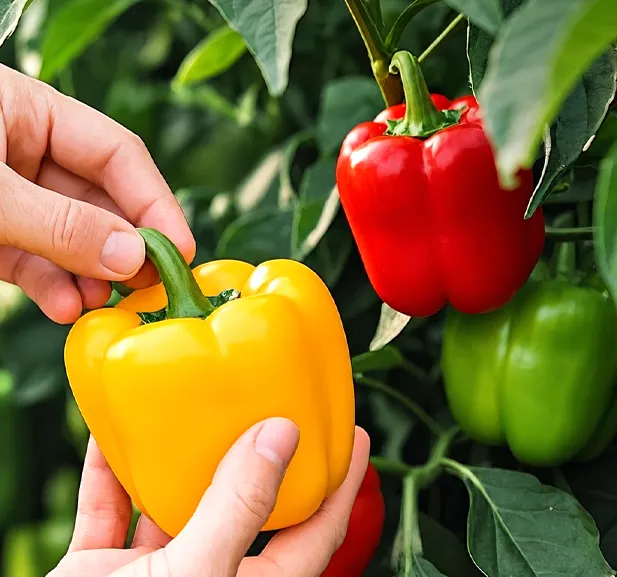
The best plants to grow in a greenhouse depend on your climate, growing space, production goals, and ability to manage temperature, light, and humidity. Tomatoes, cucumbers, peppers, lettuce, strawberries, herbs, and flowers are among the common choices for greenhouse cultivation. For commercial growers, however, choosing suitable crops is only the first step. You also need a greenhouse structure and growing systems that match each plant's requirements.
What Makes a Plant Suitable for Greenhouse Growing?
A greenhouse creates a more controlled growing environment than an open field. It can protect plants from heavy rain, wind, frost, and some pests while helping growers extend the production season. However, not every plant benefits from the same greenhouse conditions.
Before selecting crops, consider five important factors:
-
Temperature: Warm-season crops such as tomatoes, cucumbers, peppers, and eggplants need suitable temperatures for flowering and fruit development. Leafy greens generally perform better under cooler growing conditions.
-
Light: Fruiting crops often need sufficient sunlight for flowering and fruit production, while some leafy vegetables and ornamental plants tolerate lower light levels.
-
Humidity and airflow: High humidity combined with poor air circulation can increase the risk of fungal diseases. Ventilation and air circulation are important for maintaining a suitable growing environment.
-
Growing space: Tall or climbing crops need vertical space and support structures. Compact leafy vegetables can be grown in beds, channels, or other space-efficient systems.
-
Water and nutrients: Different crops have different irrigation and nutrient requirements. The growing method, soil or substrate, and crop development stage all affect water and fertilizer management.
You should also consider the local climate and production season. An unheated greenhouse may be sufficient for extending the growing season in a mild region, while year-round production in colder areas may require heating and additional environmental controls.
What Vegetables Grow Best in a Greenhouse?
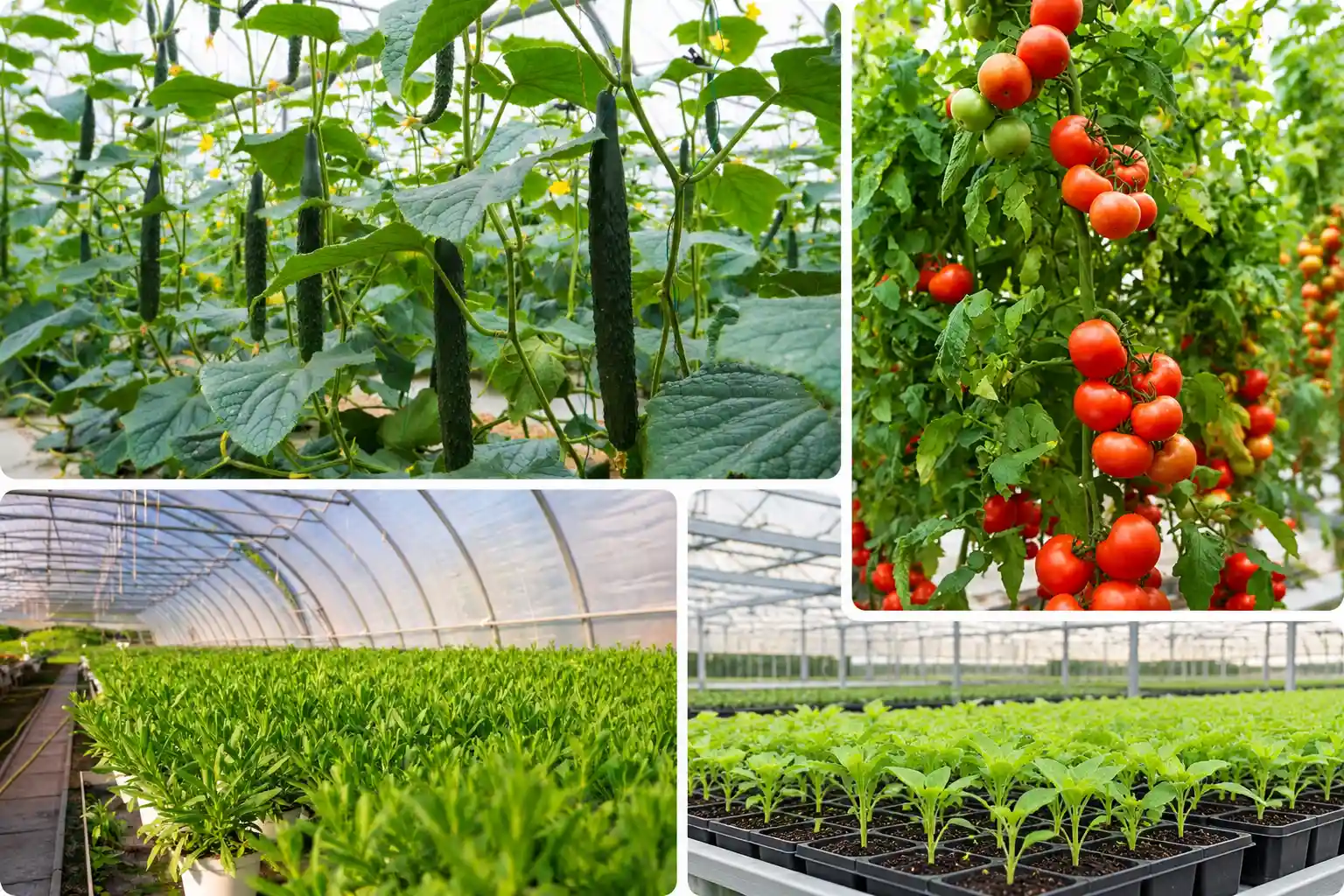
Vegetables are among the most common greenhouse crops because protected cultivation can extend growing seasons and provide more control over growing conditions. The best choices depend on temperature requirements, plant size, harvesting methods, and production objectives.
Fruiting Vegetables
Fruiting vegetables are widely grown in commercial greenhouses. They include tomatoes, cucumbers, peppers, and eggplants.
-
Tomatoes: Greenhouse tomatoes benefit from adequate light, consistent irrigation, good airflow, and suitable temperatures. Indeterminate varieties often require vertical training systems, pruning, and regular support as plants grow taller.
-
Cucumbers: Cucumbers grow well in warm conditions and are commonly trained vertically using trellises or support wires. Proper ventilation and irrigation help manage humidity around dense foliage.
-
Peppers: Sweet peppers and hot peppers need sufficient light, suitable temperatures, and consistent water and nutrient supplies. Their growing environment should support flowering and fruit development.
-
Eggplants: Eggplants prefer warm conditions and adequate sunlight. They also need enough space for branching and fruit development.
These crops are suitable for different commercial production models, from soil-based cultivation to substrate growing and hydroponics.
For large-scale tomato production, explore commercial tomato greenhouse solutions. Cucumber growers can also review cucumber greenhouse solutions to understand how ventilation, shading, irrigation, and fertigation systems can support crop management.
Leafy Greens and Cool-Season Vegetables
Leafy vegetables are another practical choice, particularly when growers want compact plants and regular harvesting.
Common options include:
-
Lettuce: Available in several varieties and suitable for soil-based or hydroponic cultivation. It is commonly used in commercial greenhouse and indoor growing operations.
-
Spinach: A cool-season leafy vegetable that can be grown in suitable protected environments with adequate moisture and light.
-
Kale: A leafy crop that generally tolerates cooler conditions and can be harvested over an extended period.
-
Mustard greens: These are suitable for protected cultivation when temperature, irrigation, and growing space are properly managed.
Leafy greens often have smaller plant structures than climbing fruiting vegetables, allowing growers to consider different bench layouts and planting densities. However, planting density should be determined by the variety, airflow, light availability, and harvesting method.
What Fruits Can You Grow in a Greenhouse?
Greenhouses can support a range of fruit crops, particularly those that benefit from protection against unfavorable weather or a longer growing season.
Strawberries
Strawberries are popular in commercial protected cultivation. They can be grown in soil, containers, or substrate systems, including elevated growing arrangements.
Important considerations include:
-
Suitable light and temperature conditions
-
Consistent irrigation and nutrient supply
-
Adequate drainage around the root zone
-
Pollination during flowering
-
Sufficient spacing for canopy development and harvesting
Elevated growing systems can make fruit picking and routine maintenance more accessible. For commercial projects, greenhouse layout should also allow workers to move efficiently between growing rows.
Melons
Melons, including cantaloupes, can be cultivated in greenhouses where growers want to manage temperature and protect fruit from unfavorable outdoor conditions.
Because melon plants spread or climb depending on the variety and training method, you need to plan sufficient growing space and support. Pollination and fruit support may also require additional attention.
Other Greenhouse Fruit Crops
Depending on local climate, market demand, and greenhouse design, growers may also consider raspberries, blackberries, citrus plants, and other specialty fruits.
Not every fruit crop is suitable for every commercial greenhouse. Before investing, check the crop's temperature requirements, growing cycle, pollination needs, expected plant size, and local market opportunities.
Which Herbs and Flowers Thrive in Greenhouses?
Greenhouses are also suitable for herb production, ornamental plants, and commercial floriculture. These crops can serve different markets, including fresh food suppliers, nurseries, florists, and landscaping businesses.
Greenhouse Herbs
Common greenhouse herbs include:
-
Basil: A warm-season herb that needs sufficient light and regular harvesting.
-
Mint: Adaptable to different growing environments but should be managed carefully because it spreads readily.
-
Rosemary: Prefers good light and well-drained growing conditions.
-
Thyme: Generally needs adequate sunlight and moderate watering.
-
Parsley and cilantro: Can be cultivated in protected environments with suitable temperature and moisture management.
Herbs can be grown in soil, containers, or selected hydroponic systems. The best method depends on the crop, harvesting requirements, and production scale.
Greenhouse Flowers and Ornamental Plants
Common options include orchids, geraniums, begonias, petunias, and other flowering or foliage plants.
Commercial flower production requires more than a suitable temperature. Light intensity, photoperiod, humidity, irrigation, and flowering schedules can all influence plant development and product quality.
For example, some flowering plants need specific light conditions to initiate or regulate flowering, while foliage plants may require different shading and humidity management. Therefore, greenhouse equipment should be selected according to the varieties being cultivated.
Can You Grow Plants Hydroponically in a Greenhouse?
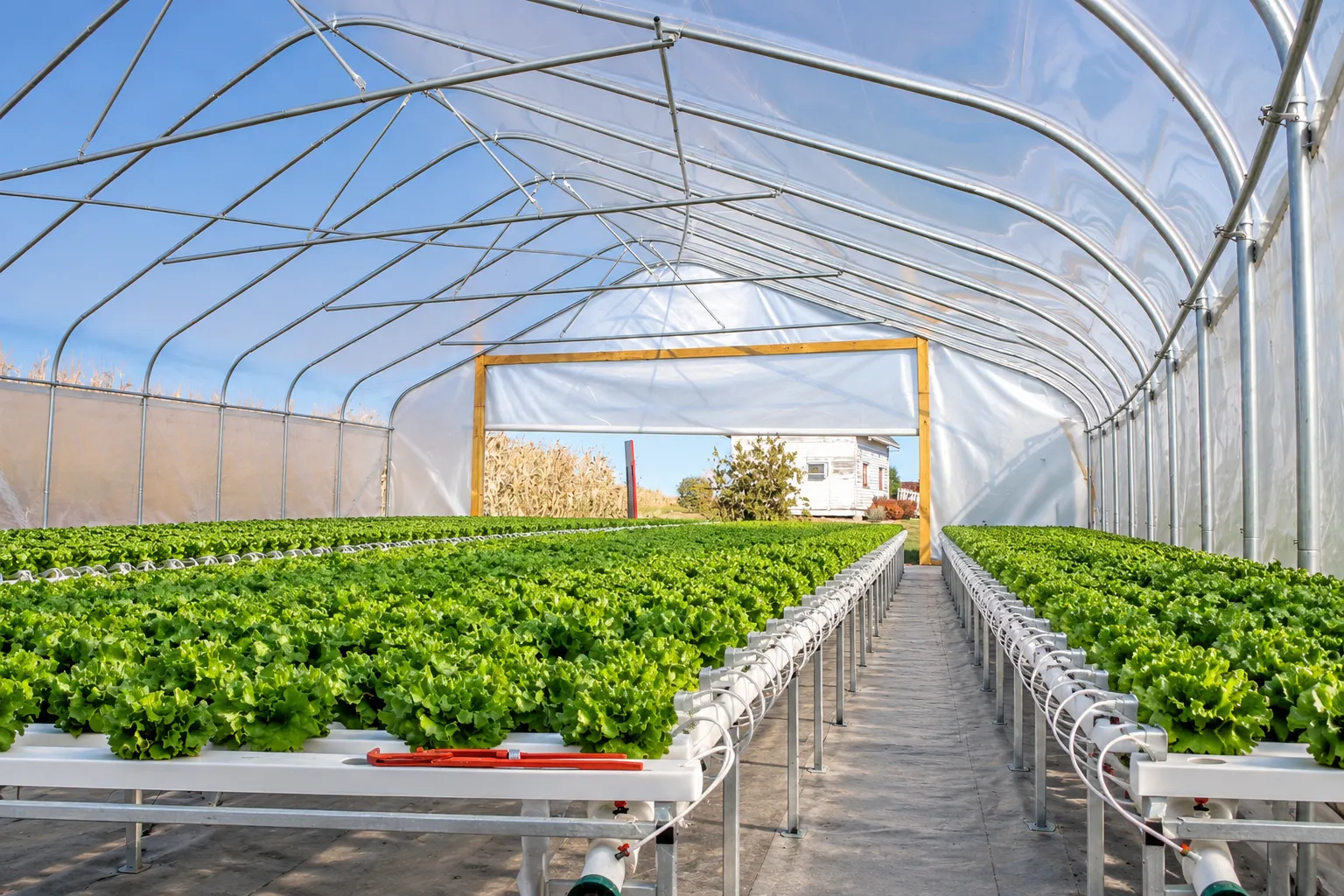
Yes. Many vegetables, herbs, and fruits can be grown hydroponically in a greenhouse. Common choices include lettuce, basil, tomatoes, cucumbers, and strawberries.
Hydroponics supplies water and nutrients directly to plant roots without relying on field soil. It can be used in commercial production when growers need controlled nutrient delivery, organized growing layouts, and efficient use of available space.
Different crops may require different hydroponic systems:
| Crop | Common growing methods | Main considerations |
|---|---|---|
| Lettuce | NFT, DWC | Root-zone oxygen, water temperature, nutrient management |
| Basil and other herbs | NFT, DWC, substrate systems | Harvesting frequency, spacing, light |
| Tomatoes | Drip irrigation with substrate growing | Plant support, fertigation, drainage |
| Cucumbers | Drip irrigation with substrate growing | Vertical training, water and nutrient supply |
| Strawberries | Substrate systems, elevated growing channels | Drainage, irrigation, pollination |
The system should match the crop's root structure, growth habit, water requirements, and harvesting method. A system designed for leafy greens should not automatically be assumed suitable for every fruiting crop.
If you are planning a commercial soilless cultivation project, explore FZY's hydroponic greenhouse solutions.
How Do You Match Greenhouse Conditions to Different Plants?
Choosing suitable plants is not enough. You also need to provide an environment that supports their growth throughout the production cycle.
| Growing factor | Fruiting vegetables | Leafy greens | Fruits and berries | Flowers and herbs |
|---|---|---|---|---|
| Temperature | Generally warm conditions | Often cooler conditions | Depends on species and variety | Varies by plant type |
| Light | Sufficient light for flowering and fruiting | Suitable light without excessive heat stress | Depends on flowering and fruit development | May require specific light intensity or photoperiod |
| Humidity | Requires airflow to manage moisture | Avoid excessive humidity and prolonged leaf wetness | Depends on crop and disease sensitivity | Varies by species |
| Ventilation | Important for temperature and humidity management | Helps maintain airflow around dense planting areas | Supports environmental stability | Should match plant sensitivity |
| Irrigation | Regular water and nutrient delivery | Consistent moisture | Crop-specific irrigation and drainage | Depends on root and water requirements |
| Growing space | Often needs vertical support | Can use compact beds or channels | May require trellising or elevated systems | Depends on plant size and production method |
Temperature and Humidity Management
Temperature affects germination, vegetative growth, flowering, and fruit development. Excessive heat can stress plants and interfere with flowering, while unsuitable low temperatures may slow growth.
Humidity also needs attention. Dense foliage and limited airflow can create conditions that favor fungal diseases. Roof vents, side vents, circulation fans, and cooling equipment may be combined according to greenhouse size and local climate.
Light and Shading
Light availability influences photosynthesis and crop development. Transparent covering materials allow natural sunlight to enter, while shading systems can help manage excessive solar radiation during hot periods.
The required light environment varies by crop and growth stage. A greenhouse designed for high-light fruiting vegetables may need a different shading strategy from one used for shade-tolerant ornamental plants.
Irrigation and Nutrient Management
Water requirements vary with crop type, plant size, growing medium, and climate. Drip irrigation is commonly used for fruiting vegetables and substrate cultivation, while hydroponic systems deliver nutrient solutions through dedicated channels or growing containers.
For commercial projects, irrigation and fertigation should be planned together with drainage, water quality, and the expected production scale.
Which Greenhouse Crops Are Best for Commercial Production?
The best commercial greenhouse crop is not necessarily the easiest plant to grow. Your choice should reflect market demand, production costs, available labor, climate, and the level of environmental control required.
| Commercial crop | Main production considerations | Greenhouse planning priorities |
|---|---|---|
| Tomatoes | Long production cycles, pruning, training, harvesting | Adequate height, support systems, ventilation, fertigation |
| Cucumbers | Rapid growth, vertical training, frequent harvesting | Trellising, airflow, irrigation, humidity management |
| Peppers | Flowering and fruit development, temperature management | Light, ventilation, irrigation, environmental control |
| Lettuce | Shorter crop cycles, planting density, regular harvesting | Growing benches, hydroponic channels, irrigation |
| Strawberries | Pollination, fruit quality, harvesting access | Elevated systems, drainage, irrigation, climate management |
| Flowers | Variety-specific flowering and quality requirements | Light management, shading, ventilation, irrigation |
| Herbs | Frequent harvesting, product freshness, crop spacing | Irrigation, planting layout, light and temperature control |
Before choosing a crop, evaluate the following business factors:
-
Market demand: Identify which crops have reliable buyers in your target market and whether demand is seasonal or year-round.
-
Production cycle: Compare growing time, harvesting frequency, and the time required to prepare the greenhouse for the next crop.
-
Labor requirements: Consider pruning, training, pollination, harvesting, sorting, and packing.
-
Environmental requirements: Determine whether the crop needs heating, cooling, shading, supplemental lighting, or more precise climate management.
-
Investment and operating costs: Include the greenhouse structure, growing systems, energy, water, labor, maintenance, and replacement parts.
A crop with a short production cycle may allow frequent harvesting, but profitability still depends on local selling prices, input costs, yield quality, and market access. There is no universally most profitable greenhouse plant.
How Do You Choose the Right Greenhouse for Your Crops?
Once you have selected your target crops, the next step is choosing a greenhouse structure and equipment package that can support their growing requirements.
Match the Structure to Crop Size and Production Scale
Tall crops such as indeterminate tomatoes need enough internal height for plant training and harvesting operations. Climbing cucumbers also require space for vertical support.
For larger commercial farms, a multi-span film greenhouse can provide connected growing areas for vegetables, flowers, seedlings, berries, and hydroponic crops. Smaller or independent growing areas may be better suited to separate greenhouse units, depending on the site layout and production plan.
Select Covering Materials According to Growing Conditions
The covering material influences light transmission, insulation, durability, and project cost.
Common options include:
-
PE or PO film for many agricultural film greenhouse projects.
-
Polycarbonate sheets where rigid panel covering is required.
-
Glass for greenhouse projects designed around glass covering and suitable structural requirements.
The right choice depends on local climate, crop light requirements, structural design, and the intended service life.
Plan the Required Greenhouse Systems
Different crops require different combinations of equipment. Depending on the project, you may need:
-
Ventilation systems for air exchange and humidity management.
-
Cooling systems for hot climates or high-temperature periods.
-
Shading systems to manage excessive solar radiation.
-
Heating systems for cold-season production.
-
Irrigation and fertigation systems for water and nutrient delivery.
-
Hydroponic systems for soilless cultivation.
-
Environmental monitoring and control systems for managing growing conditions.
A greenhouse should not be equipped with every available system by default. Equipment selection should follow the crop, site conditions, production season, and budget.
FZY develops commercial crop greenhouse solutions for different growing requirements, including vegetables, leafy greens, herbs, and flowers. The structure and supporting systems can be planned around the target crop and local conditions.
Frequently Asked Questions
Can you grow different vegetables in the same greenhouse?
Yes, but crops should have compatible temperature, humidity, light, and irrigation requirements. Separate growing zones may be necessary for crops with different environmental needs.
Can a greenhouse grow vegetables all year round?
Yes, if the structure and equipment can maintain suitable conditions throughout the year. Heating, cooling, lighting, and energy costs should be evaluated for the local climate.
What is the easiest vegetable to grow in a greenhouse?
Lettuce is often a practical starting point because it has a compact growth habit and can be cultivated in soil or hydroponic systems. Actual difficulty depends on the variety and growing conditions.
Do greenhouse tomatoes need pollination?
Yes. Pollination is necessary for fruit development. Greenhouse growers may use natural pollinators, mechanical vibration, or other suitable pollination methods depending on the production system.
Can root vegetables grow in a greenhouse?
Yes. Carrots, radishes, and beets can be grown in suitable beds or containers. They need sufficient root depth, suitable growing media, and proper drainage.
Do all greenhouse plants need full sunlight?
No. Light requirements vary by species and growth stage. Some leafy greens and ornamental plants tolerate partial shade, while many fruiting vegetables need stronger light.
Is hydroponics suitable for every greenhouse crop?
No. Many vegetables, herbs, and fruits can be grown hydroponically, but the system must match the crop's root structure, nutrient requirements, and growth habit.
Final Thoughts
Tomatoes, cucumbers, peppers, leafy greens, strawberries, herbs, and flowers are all worth considering for greenhouse cultivation. The right choice depends on your local climate, market demand, production scale, and ability to manage growing conditions. Before investing in a greenhouse, match the structure, covering, ventilation, irrigation, and climate-control systems to your target crops. Explore FZY's greenhouse solutions or contact FZY at [email protected] to discuss your project requirements.
Table of Contents
- What Makes a Plant Suitable for Greenhouse Growing?
- What Vegetables Grow Best in a Greenhouse?
- What Fruits Can You Grow in a Greenhouse?
- Which Herbs and Flowers Thrive in Greenhouses?
- Can You Grow Plants Hydroponically in a Greenhouse?
- How Do You Match Greenhouse Conditions to Different Plants?
- Which Greenhouse Crops Are Best for Commercial Production?
- How Do You Choose the Right Greenhouse for Your Crops?
-
Frequently Asked Questions
- Can you grow different vegetables in the same greenhouse?
- Can a greenhouse grow vegetables all year round?
- What is the easiest vegetable to grow in a greenhouse?
- Do greenhouse tomatoes need pollination?
- Can root vegetables grow in a greenhouse?
- Do all greenhouse plants need full sunlight?
- Is hydroponics suitable for every greenhouse crop?
- Final Thoughts