 EN

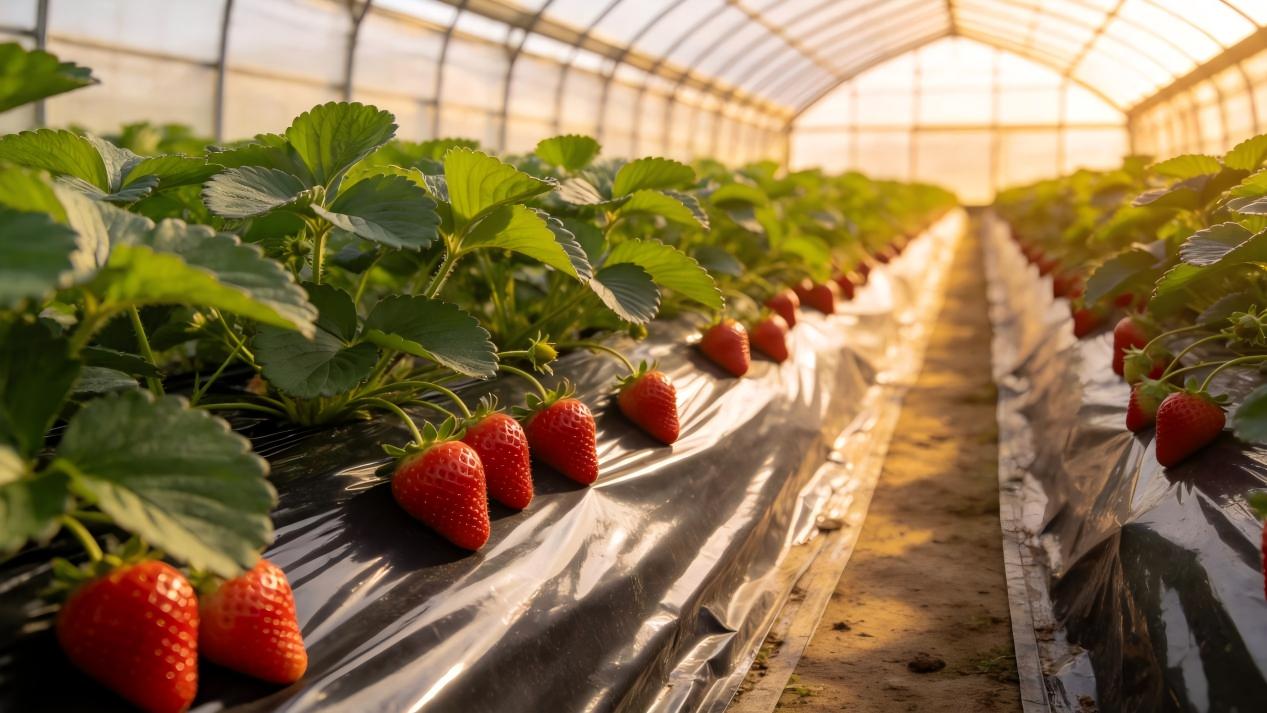
Excessively high temperatures in strawberry greenhouses during summer can affect flower bud differentiation, pollination, fruit enlargement, and final fruit quality. To control the temperature, many greenhouses use fans, cooling pads, misting systems, or cooling equipment.
Although these systems can effectively reduce the temperature, longer operating hours also increase electricity consumption and production costs. In addition to relying on active cooling equipment, you can choose polycarbonate panels or greenhouse film with suitable optical and thermal insulation properties during the greenhouse construction stage. These materials can reduce heat accumulation caused by solar radiation, thereby slowing the rate at which the greenhouse heats up and reducing the operating load on the equipment.
1. Why Does the Temperature in a Greenhouse Easily Become Too High?
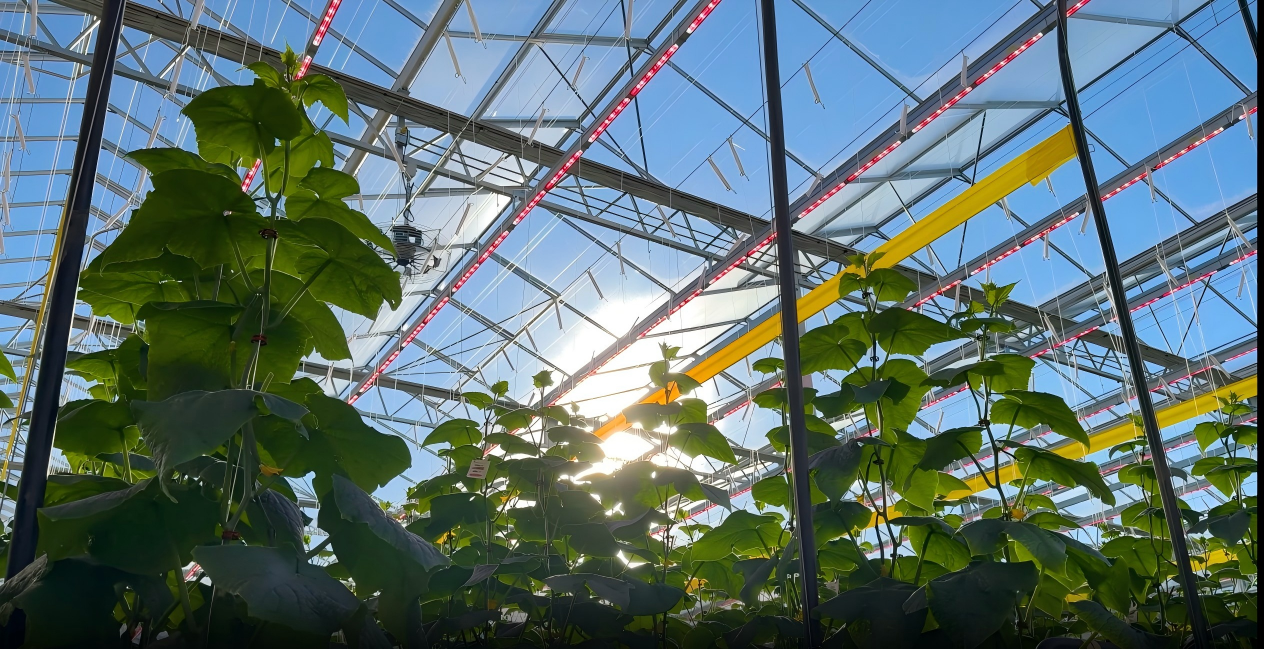
First, we need to know that after solar radiation enters the greenhouse, part of it is absorbed by the plants, soil, growing troughs, and equipment, and is converted into heat. Because the air movement and heat removal speed inside the greenhouse are limited, heat continues to accumulate, eventually causing the indoor temperature to rise.
Therefore, high greenhouse temperatures are not only caused by hot weather. They are also related to how much solar energy the greenhouse itself allows to enter and whether the heat can be removed in time. Although the covering materials are located around the outside of the greenhouse, they determine the amount and manner of solar radiation entering the greenhouse, and therefore also affect the amount of heat that the subsequent cooling equipment needs to handle.
2. What Cooling-Related Properties Should You Focus on in Greenhouse Covering Materials?
If your goal is to reduce the greenhouse temperature and shorten the operating time of equipment such as fans and cooling pads, you should not focus only on the thickness, price, or product name when choosing polycarbonate panels or greenhouse film. Instead, you should pay particular attention to the following properties:
1、Solar light transmittance;
2、Light-diffusing performance;
3、Solar reflectance;
4、Near-infrared thermal radiation control;
5、Thermal insulation performance;
6、Compatibility with ventilation and external shading systems.
Excessively high light transmittance may allow more solar radiation to enter the greenhouse, while excessively low light transmittance may affect strawberry photosynthesis. Therefore, the material needs to achieve a balance between effective light and temperature control.
Light-diffusing performance can scatter part of the direct sunlight and reduce the concentration of strong light on the surfaces of leaves and fruit. Reflective performance can reflect part of the solar radiation back outside the greenhouse. Near-infrared control mainly targets solar radiation that is more likely to be converted into heat.
3. How Can Polycarbonate Panels Help Reduce the Greenhouse Heat Load?
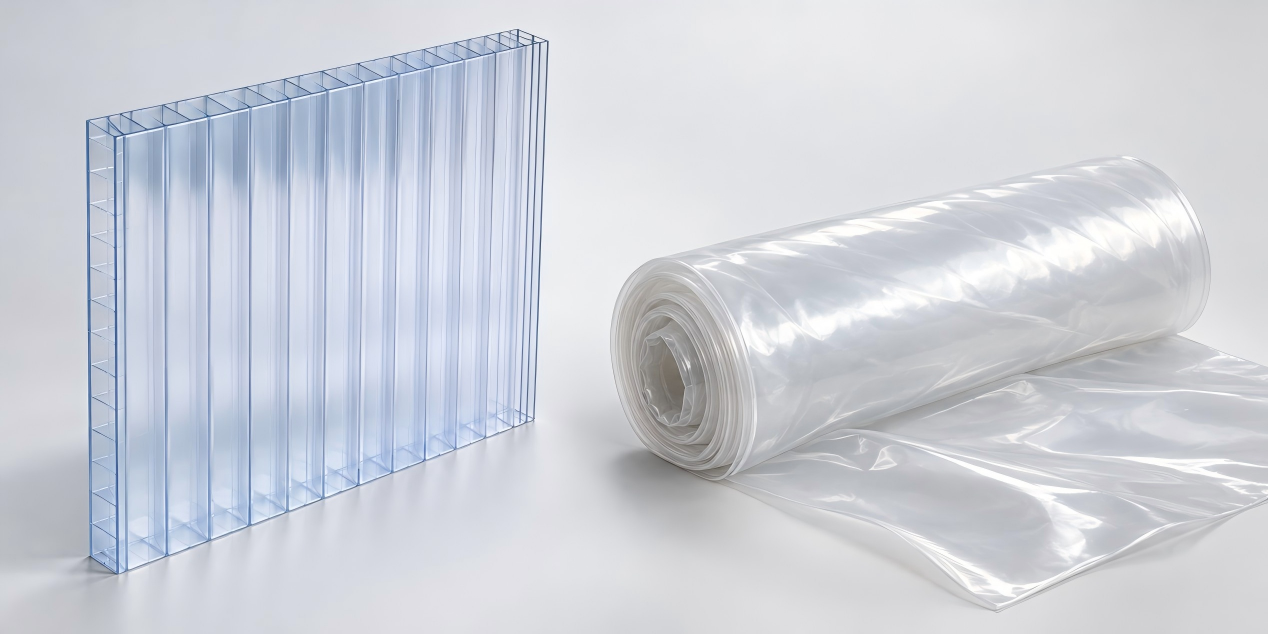
Polycarbonate panels mainly affect greenhouse temperatures through their panel structure, light transmittance, light-diffusing performance, and thermal insulation.
If your project is located in a region with hot summers and strong solar radiation, you should pay particular attention to:
1、Light transmittance that matches local light conditions;
2、Light-diffusing performance that can improve the distribution of direct sunlight;
3、Near-infrared thermal radiation control;
4、The thermal insulation provided by the hollow structure;
5、Compatibility with roof ventilation and external shading systems.
It is important to note that the differences between polycarbonate panels and greenhouse film do not necessarily appear as summer cooling effects. For example, a comparative test of greenhouses covered with polycarbonate panels and double-layer polyethylene film showed that, under nighttime heating conditions, the total heat energy consumption of the polycarbonate greenhouse was approximately 27.89% lower than that of the greenhouse covered with double-layer polyethylene film. This indicates that the thermal insulation advantage of polycarbonate panels is more likely to be reflected in reducing heat exchange and improving winter heat retention. It should not be directly understood to mean that polycarbonate panels will always result in lower summer temperatures than greenhouse film.
4. How Can Greenhouse Film Help Reduce Summer Temperatures?
Greenhouse films can vary significantly in function, so you should not focus only on thickness and price when choosing a film. If your project focuses on summer cooling and reducing electricity consumption, you should pay particular attention to the following types of film.
1. Diffused-Light Film
Diffused-light film can scatter part of the direct sunlight, allowing light to enter the strawberry canopy more evenly.
In one greenhouse trial, diffused-light films with haze levels of approximately 20% and 29% were used. The results showed that the diffused films improved the vertical and horizontal distribution of light within the crop canopy and reduced leaf temperature. The trial recorded a leaf-to-air temperature difference of approximately 2.64째C at some measurement points, compared with approximately 4.08째C under another covering condition. This shows that the value of diffused-light film is not limited to reducing indoor air temperature. It can also help reduce localized heat stress on leaf and fruit surfaces.
2. Reflective or Shading Film
Reflective film is suitable for regions with strong sunlight and significantly high summer temperatures.
In a greenhouse comparison conducted in an arid region, reflective film reduced the indoor air temperature by approximately 3째C at midday compared with conventional PE film.
3. Near-Infrared-Blocking Film
The main purpose of near-infrared-blocking film is not simply to reduce visible light, but to reduce the amount of near-infrared radiation that is more likely to be converted into heat from entering the greenhouse.
The results of a greenhouse study on near-infrared-control film showed that near-infrared-control PE film reduced the greenhouse air temperature by up to approximately 2째C and provided better control of the summer heat load compared with conventional covering film.
In another greenhouse energy-consumption simulation, assuming that the covering material could reflect all near-infrared radiation, the greenhouse air temperature at midday in summer decreased by approximately 2째C, while cooling demand decreased by up to 50%. However, this result was obtained under specific model conditions. Actual performance is still affected by the greenhouse structure, ventilation, shading, and crop canopy.
4. Thermal-Insulating Film
Thermal-insulating film is mainly used to reduce heat loss from the greenhouse at night and can also help improve day-to-night temperature fluctuations.
It is more suitable for projects that need to balance winter heat retention and summer operating costs. However, if your main concern is high summer temperatures, you should not focus only on the thermal-insulation performance of the film. You should also consider its solar light transmittance, light-diffusing performance, and near-infrared control.
5. How Can Covering Materials Help Reduce Equipment Electricity Consumption?
Covering materials can reduce part of the heat load at the source by limiting the amount of heat entering the greenhouse.
Their working logic is:
Reduce the amount of solar radiation entering → reduce indoor heat accumulation → slow the rate at which the greenhouse heats up → lower the peak temperature → reduce the operating load of cooling equipment.
The data above show that covering materials can indeed affect the cooling load. However, this should not be understood to mean that all projects will achieve the same results. Greenhouse area, ventilation efficiency, external shading, outdoor temperature, solar radiation, and strawberry planting density will all affect the final results.
If you want to accurately evaluate the electricity-saving effect, it is recommended that you also monitor:
- Indoor and outdoor greenhouse temperatures;
- The highest temperature at midday;
- Solar radiation intensity;
- Operating time of fans and cooling pads;
- Power of the cooling equipment;
6. How Should You Choose Covering Materials Based on the Project Climate?
For regions with hot summers and strong solar radiation, you should focus on the light-diffusing, reflective, and near-infrared-control performance of the covering materials, and use them together with external shading and roof ventilation systems.
For regions with insufficient light that still require cooling in summer, excessive shading should be avoided. Materials with relatively high effective light transmittance and good light-diffusing performance can be considered as a priority.
For strawberry greenhouses operating throughout the year, both summer cooling and winter heat retention need to be evaluated. Multi-wall polycarbonate panels are more suitable for projects that focus on structural stability and heat exchange control. Multilayer functional films are more suitable for projects that need to adjust covering performance according to the season, control the initial investment, or facilitate later replacement.
For strawberry greenhouse operators, covering materials are related not only to construction costs, but also to subsequent temperature control, cooling equipment operating time, and long-term electricity expenses. Suitable materials cannot completely replace active cooling equipment, but they can reduce heat entering the greenhouse, slow the rate at which the greenhouse heats up, and reduce the operating load of the equipment, helping you build a more energy-efficient and stable strawberry greenhouse.
Based on the climate conditions of different regions, strawberry cultivation requirements, and greenhouse operating methods, FZY greenhouse can comprehensively evaluate how the covering materials, ventilation systems, external shading, and cooling equipment work together, and provide greenhouse solutions that are more suitable for long-term operation.
Table of Contents
- 1. Why Does the Temperature in a Greenhouse Easily Become Too High?
- 2. What Cooling-Related Properties Should You Focus on in Greenhouse Covering Materials?
- 3. How Can Polycarbonate Panels Help Reduce the Greenhouse Heat Load?
- 4. How Can Greenhouse Film Help Reduce Summer Temperatures?
- 5. How Can Covering Materials Help Reduce Equipment Electricity Consumption?
- 6. How Should You Choose Covering Materials Based on the Project Climate?