 EN


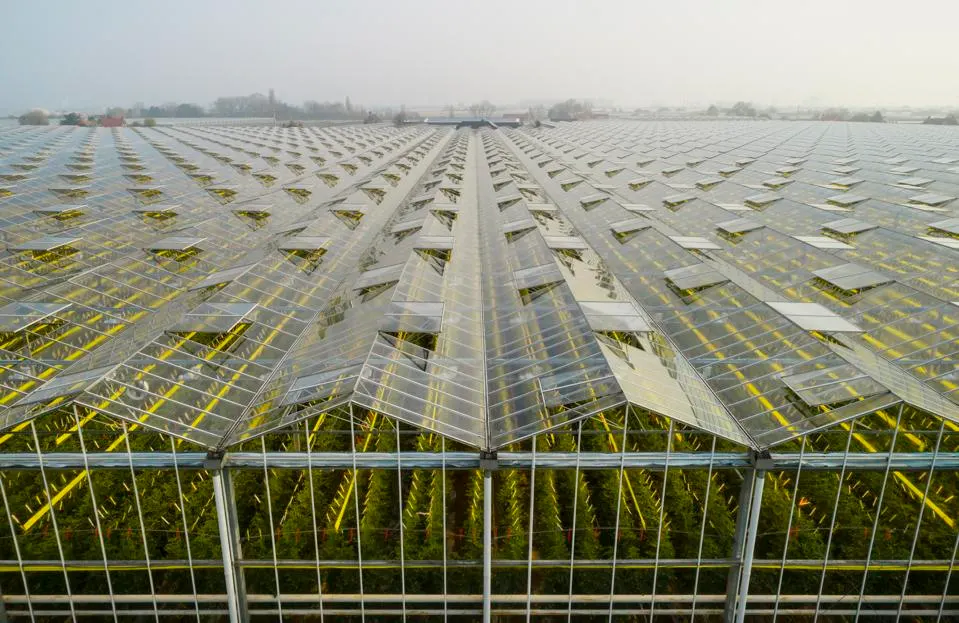
There is no single fixed ventilation rate for all greenhouses. For mechanical ventilation, an initial estimate can be made using the greenhouse's effective volume and the target air change rate, then refined according to local climate, crop conditions, solar heat gain, air-inlet conditions, and system resistance. Natural ventilation is mainly affected by vent area, wind speed and direction, temperature differences, and insect-screen resistance; fan-sizing calculations cannot be applied directly.
1. What Determines a Greenhouse's Ventilation Requirement?
- Greenhouse dimensions: length, width, average height, and effective internal volume.
- Climate conditions: design outdoor temperature, humidity, solar radiation, wind speed, and wind direction.
- Crop conditions: crop type, growth stage, canopy height, planting density, and transpiration rate.
- Greenhouse structure: roof and side openings, covering materials, shading systems, and greenhouse layout.
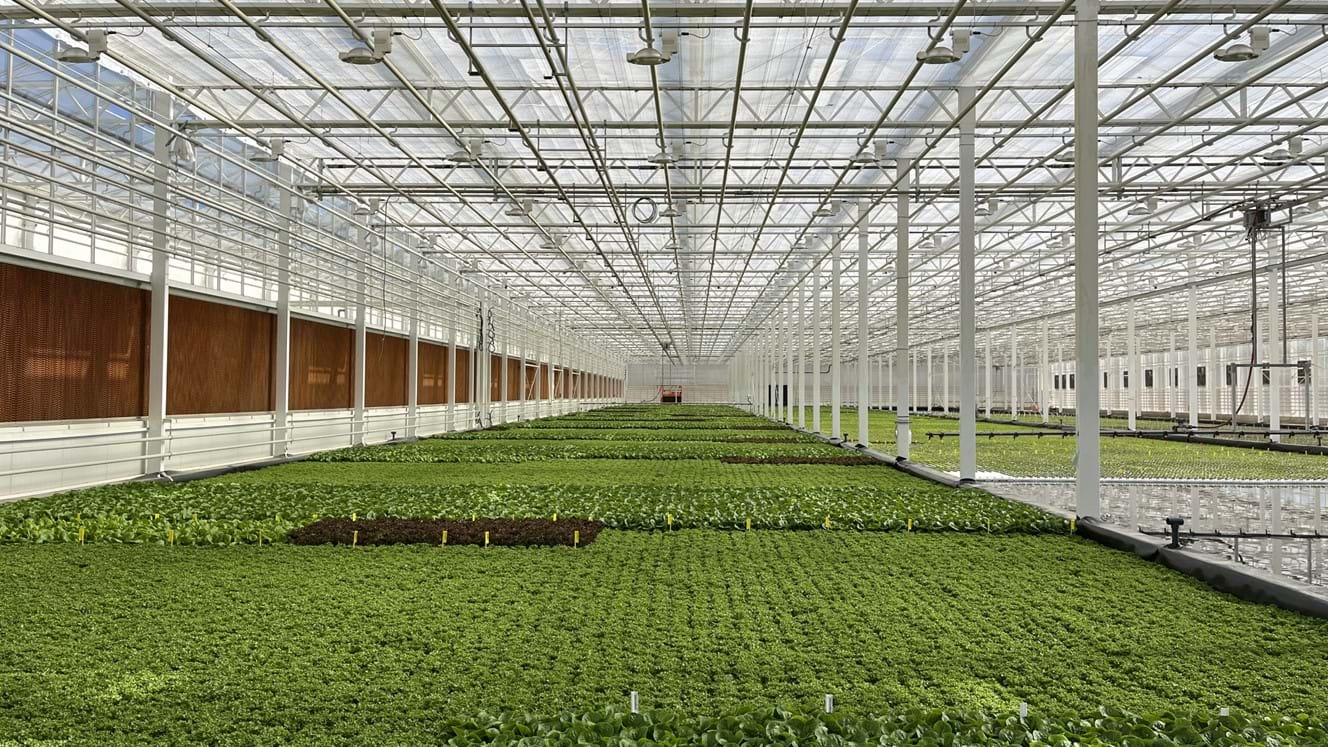
- Airflow resistance: insect screens, cooling pads, louvers, fan guards, and crop canopies all affect actual airflow.
- Control objectives: operating strategies differ for heat removal in summer, air exchange during transitional seasons, and dehumidification in winter.
2. How to Make an Initial Estimate of Mechanical Ventilation
The air-change method based on greenhouse volume is suitable for preliminary estimates during the early project stage:
Effective greenhouse volume V = Greenhouse floor area A × Average height H
Theoretical ventilation airflow Q = Effective greenhouse volume V × Target air changes per hour N
|
Symbol |
Meaning |
Unit |
|
A |
Greenhouse floor area |
m² |
|
H |
Average height |
m |
|
V |
Effective greenhouse volume |
m³ |
|
N |
Target air changes per hour |
air changes/h |
|
Q |
Theoretical ventilation airflow |
m³/h |
Calculation Example
For a greenhouse with a floor area of 1,000 m² and an average height of 4 m, the effective volume is 4,000 m³. For demonstration purposes, assume a rate of 40 air changes per hour:
Q = 1,000 × 4 × 40 = 160,000 m³/h
The system therefore needs to deliver approximately 160,000 m³/h of effective airflow under the design operating conditions. Note that 40 air changes per hour is used only to demonstrate the calculation; it is not a universal standard for all greenhouses. The actual air change rate should be determined according to the season, design outdoor temperature, target indoor temperature, solar radiation, crop load, and the selected shading or evaporative-cooling configuration.
3. Why Shouldn't Fans Be Selected by Their Maximum Rated Airflow Alone?
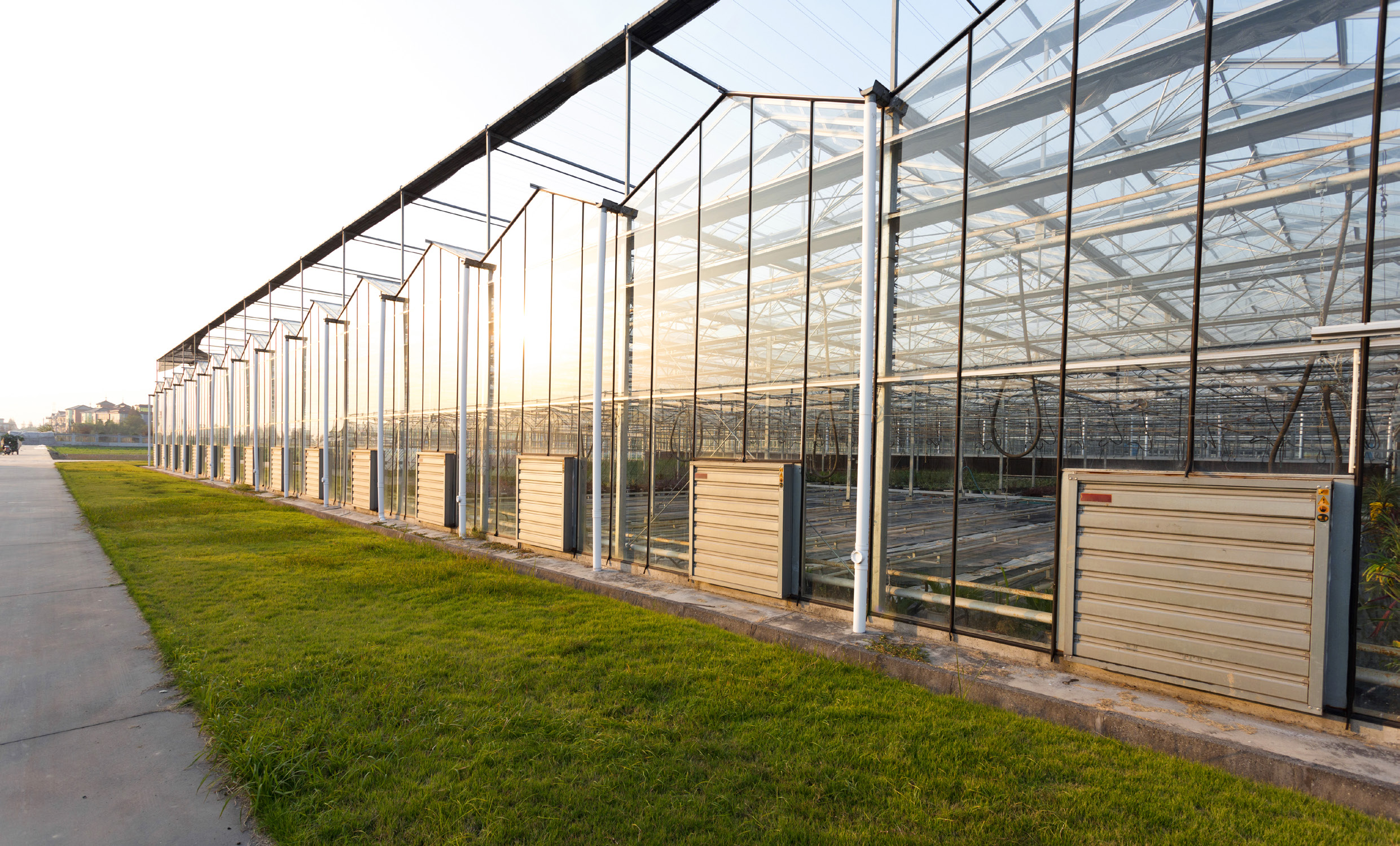
The maximum airflow stated in a product specification is usually not the same as the effective airflow after installation. Insect screens, cooling pads, louvers, fan guards, air inlets, and air ducts create resistance. The fan's actual operating point should therefore be determined from its performance curve at the design static pressure. When multiple fans are used, add their effective airflow rates at the same design operating condition rather than simply adding their maximum airflow ratings at zero static pressure.
|
Check Item |
Impact on Actual Airflow |
|
Air inlets |
Insufficient inlet area increases negative pressure and resistance, reducing airflow. Inlet location also affects whether air can pass evenly through the crop canopy. |
|
Insect screens and cooling pads |
Dust accumulation, mesh aperture, and material resistance increase pressure drop and should be included in system calculations and maintenance plans. |
|
Fan performance |
Check airflow, power consumption, and efficiency at the design static pressure, not just impeller diameter or maximum rated airflow. |
|
Altitude and climate |
Changes in air density at high elevations and high ambient temperatures may affect fan performance and evaporative-cooling performance. |
|
Staged control |
Multiple fans should be switched on and off in stages to respond to seasonal and day/night load variations and reduce unnecessary energy consumption. |
4. How to Choose Between Natural and Mechanical Ventilation
|
Method |
Main Design Criteria |
Applications and Limitations |
|
Natural ventilation |
Effective roof and side vent areas, temperature difference, wind speed and direction, and insect-screen resistance |
Energy consumption is low, but performance is affected by weather, greenhouse structure, and surrounding obstructions. |
|
Exhaust fan ventilation |
Target effective airflow, design static pressure, air inlets, and airflow paths |
Air exchange is actively controllable, but a power supply is required and the air inlets must be properly matched to the exhaust capacity. |
|
Fan-and-pad cooling |
Effective airflow, cooling pad area, and outdoor dry-bulb and wet-bulb conditions |
More effective in hot, dry regions; cooling capacity is limited in humid environments. |
|
Combined system |
Season, crop, shading, and automatic-control strategy |
Suitable for commercial greenhouses, allowing natural and mechanical ventilation to be used according to the actual load. |
5. What Information Is Needed for Preliminary Fan and System Selection?
- Project location and the temperature, humidity, wind speed, wind direction, and solar radiation during the design period;
- Greenhouse type, length, width, average height, covering materials, and insect screens;
- Target crops, growth stages, planting density, and acceptable temperature range;
- Effective roof and side vent areas, as well as the locations of air inlets and exhaust fans;
- Existing systems, such as shading, cooling pads, fogging, and circulation fans;
- Local voltage, available electrical capacity, operating hours, and automatic-control requirements.
6. Conclusion
The air-change method provides a quick preliminary estimate of the airflow required for mechanical ventilation, but it cannot replace engineering verification. The final design must check the effective air-inlet area, system static pressure, fan operating point, airflow uniformity, and local design climate. For naturally ventilated projects, particular attention should be paid to vent openings, wind pressure, and the stack effect. Mechanical ventilation or evaporative cooling can be added where necessary.
Table of Contents
- 1. What Determines a Greenhouse's Ventilation Requirement?
- 2. How to Make an Initial Estimate of Mechanical Ventilation
- Calculation Example
- 3. Why Shouldn't Fans Be Selected by Their Maximum Rated Airflow Alone?
- 4. How to Choose Between Natural and Mechanical Ventilation
- 5. What Information Is Needed for Preliminary Fan and System Selection?
- 6. Conclusion