 EN

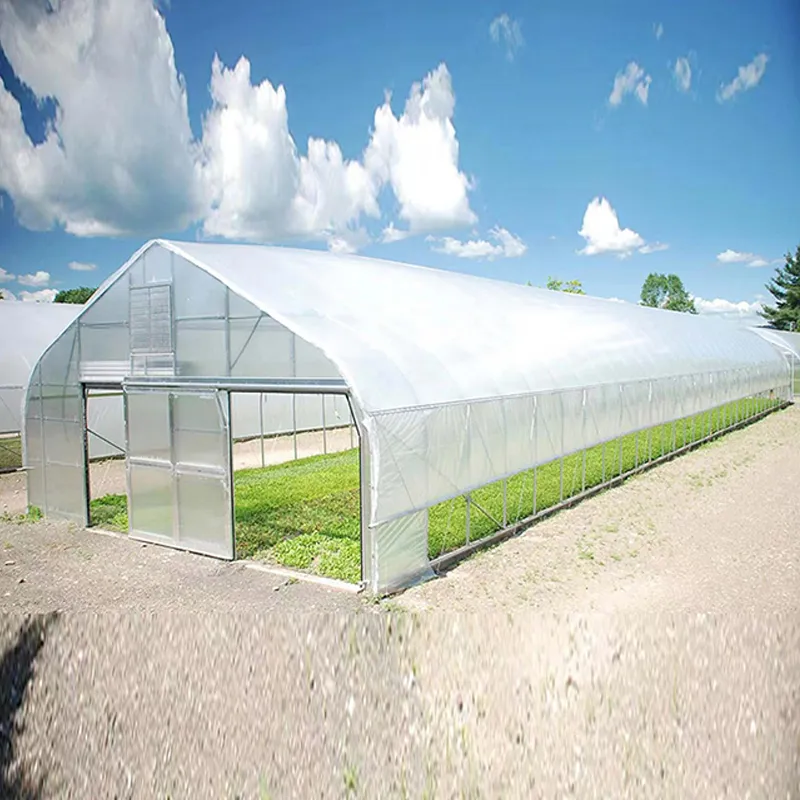
Choosing between a single-span and multi-span greenhouse affects more than the initial construction budget. It determines how you use available land, organize crop areas, manage ventilation, and plan future expansion. A single-span structure may suit independent growing zones or smaller projects, while a multi-span greenhouse can support larger, connected production areas. Understanding these differences helps you select a structure that matches your site, crops, and operating plans.
What Is the Difference Between Single-Span and Multi-Span Greenhouses?
A greenhouse is a framed structure designed to protect plants from unfavorable weather and provide a more controllable growing environment. Modern greenhouses commonly use glass, plastic film, or rigid plastic panels as covering materials. Temperature, humidity, light, and airflow can be managed through natural ventilation and optional climate-control equipment.
Greenhouse heating may use solar energy or artificial systems such as hot-water and steam heating. Ventilation helps prevent excessive heat accumulation, with roof vents, side openings, and end-wall openings supporting air exchange. The required indoor temperature depends on the crops being grown. Greenhouses may be operated as cool, warm, or tropical growing environments, each maintaining different temperature conditions, particularly at night.
The main difference between single-span and multi-span greenhouses is how their growing bays are arranged and connected.
Single-Span Greenhouse: An Independent Growing Structure
A single-span greenhouse has one continuous roof span supported by its own structural frame. It generally operates as an independent growing unit, with its own sidewalls and ventilation openings.
Common roof configurations include round-arch, Gothic-arch, and gable designs. The choice depends on structural requirements, drainage, available covering materials, and local weather conditions.
A single-span structure can be suitable for:
-
Small and medium-sized vegetable farms
-
Seedling propagation and plant nurseries
-
Flower production and seasonal cultivation
-
Research plots or demonstration projects
-
Farms that need separate growing environments for different crops
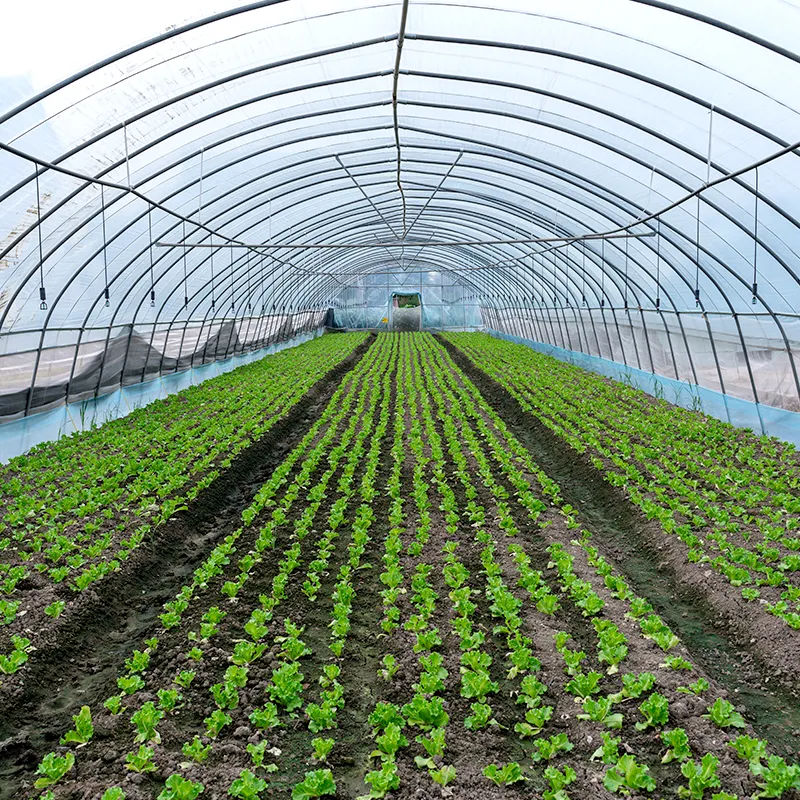
For example, FZY's Single-Span Tunnel Greenhouse uses a galvanized steel or zinc-aluminum-magnesium steel frame, agricultural film covering, and adjustable roll-up side ventilation. Its configuration can be adapted for different crops, land conditions, and project budgets.
Multi-Span Greenhouse: A Connected Growing Structure
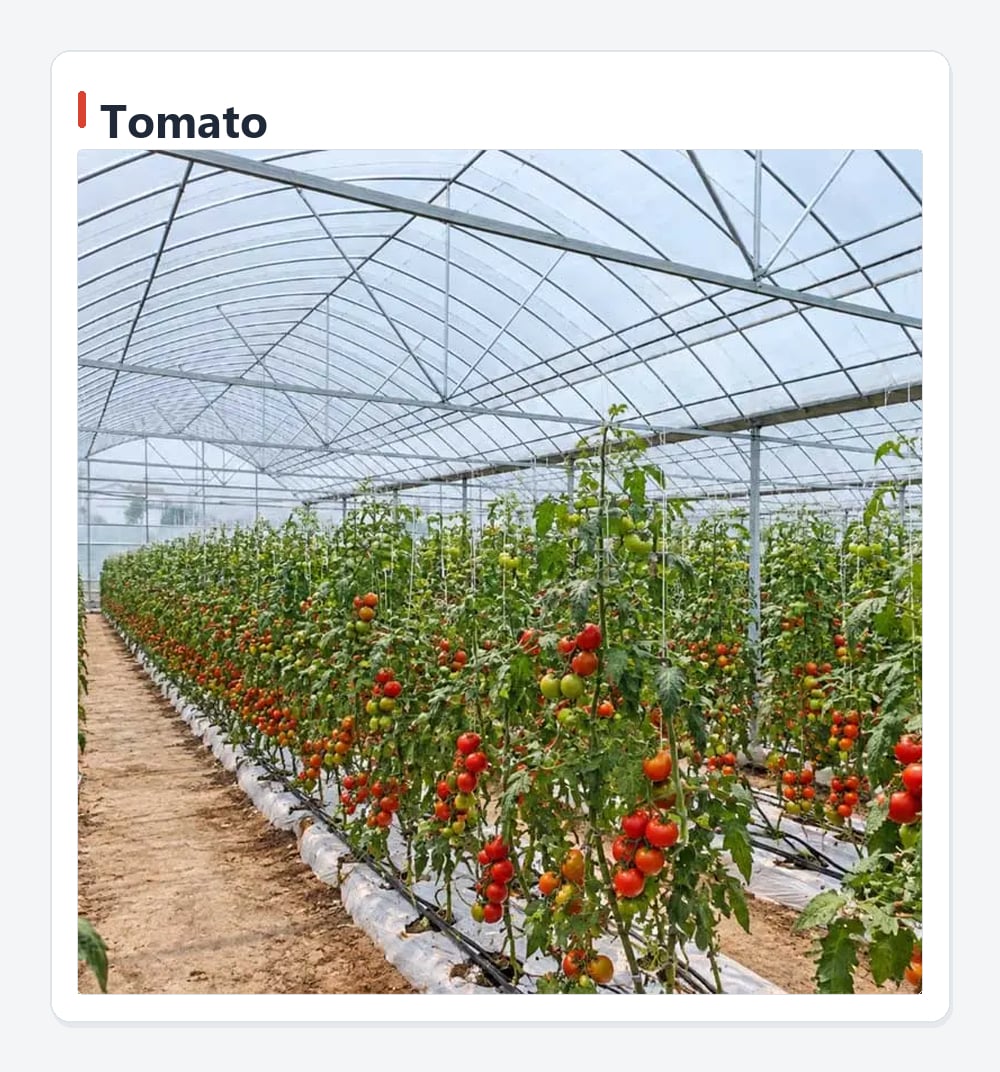
A multi-span greenhouse connects two or more growing spans into one larger structure. Adjacent bays commonly share supporting components and gutters, creating a continuous growing area with fewer external walls than several separate structures.
Many multi-span designs use gable or A-frame roof profiles. Venlo, Gothic, round-arch, and sawtooth configurations are also used, depending on the project design.
Connecting spans can reduce duplicated exterior structures and create a more integrated space for irrigation, climate control, crop handling, and automation. Fewer exposed walls may also reduce heat loss compared with multiple separate structures, although actual energy performance depends on the covering, insulation, air leakage, heating system, and local climate.
Multi-span greenhouses are commonly considered for:
-
Commercial flower cultivation
-
Hydroponic vegetable production
-
Large nurseries and propagation facilities
-
Agricultural projects requiring centralized equipment and crop management
It is important to distinguish span arrangement from roof design. Single-span and multi-span describe the number and connection of growing spans, while Gothic, Venlo, gable, and sawtooth describe structural or roof configurations.
Single-Span vs Multi-Span Greenhouse: Key Differences
Both structures can support commercial crop production, but they differ in layout, construction, environmental management, and expansion.
| Comparison factor | Single-Span Greenhouse | Multi-Span Greenhouse |
|---|---|---|
| Structure | One independent growing span | Multiple connected growing spans |
| Growing area | Separate units with individual boundaries | Larger, continuous growing area |
| Exterior walls | Each unit has its own external walls | Connected bays share structural boundaries |
| Initial project scale | Often practical for smaller or phased projects | Often suited to larger integrated projects |
| Land layout | Requires space between separate units for access and maintenance | Makes more continuous use of the site possible |
| Crop management | Easier to separate growing zones | More centralized management across connected bays |
| Ventilation | Side, roof, or end-wall openings depending on design | May combine roof vents, side vents, fans, and cooling equipment |
| Heating | Heating can be arranged for individual units | Centralized or zoned heating may be considered |
| Automation | Can be installed according to each unit's needs | Often easier to integrate across a larger production area |
| Expansion | Additional independent units can be added if the site allows | Expansion depends on the original layout and structural design |
| Maintenance | Components can be serviced by individual unit | Shared gutters and connected systems require coordinated maintenance |
Neither structure is automatically better in every category. The right comparison is based on the usable growing area, total installed cost, environmental requirements, and expected production scale.
Which Greenhouse Structure Offers Better Project Economics?
The more economical option depends on the project size and the costs included in the quotation. Comparing only the price of the steel frame or the cost per square meter can lead to an incomplete decision.
Initial Construction and Installation Costs
A single-span greenhouse can be a practical choice when you need a relatively small growing area or want to build in stages. Its independent layout may simplify planning and allow different units to be installed at different times.
However, building several separate single-span greenhouses can require repeated sidewalls, foundations, access space, and individual equipment connections. These additional components should be included when estimating the total project cost.
A multi-span greenhouse may require more coordination during structural design and installation. However, connected bays can share certain structural components and support more centralized equipment arrangements.
When comparing quotations, review the complete cost breakdown:
-
Main frame, columns, bracing, and corrosion protection
-
Foundations, anchoring, and ground preparation
-
Covering materials and installation accessories
-
Gutters, drainage, and rainwater management
-
Ventilation, shading, heating, and cooling systems
-
Irrigation, fertigation, and environmental controls
-
Transportation, installation, commissioning, and technical support
For a fair comparison, calculate the total installed cost against the usable growing area rather than comparing the frame price alone.
Land Utilization and Usable Growing Area
A single-span layout gives you more flexibility to position separate structures around irregular land boundaries or divide the site into independent growing zones. However, gaps between greenhouses may be needed for maintenance, drainage, equipment access, and construction.
A multi-span layout connects growing bays and can reduce the space occupied by repeated exterior walls and gaps between separate units. This may provide a larger continuous production area on a site with limited land.
The usable growing area is not the same as the total greenhouse footprint. Internal walkways, service areas, equipment zones, drainage channels, and emergency access routes also take up space.
Before selecting a structure, prepare a site layout showing both the greenhouse footprint and the area available for actual cultivation.
How Do Climate Control and Ventilation Differ?
Both greenhouse types can use natural ventilation and mechanical climate-control equipment. The main difference is how these systems are distributed and managed across the growing area.
A single-span greenhouse can use roll-up sidewalls, roof vents, or end-wall openings, depending on its design. Independent units also allow growers to manage ventilation and temperature separately when crops have different environmental requirements.
A multi-span greenhouse may combine roof ventilation, side ventilation, circulation fans, exhaust fans, and cooling systems. Because the growing area is connected, the ventilation layout needs to account for airflow across multiple bays rather than treating each bay as an isolated unit.
The following factors should be evaluated:
-
Climate: Hot and humid locations may require mechanical cooling in addition to natural ventilation.
-
Greenhouse dimensions: Larger connected spaces need a ventilation layout designed for the full structure.
-
Crop requirements: Temperature, humidity, and airflow targets vary by crop and growth stage.
-
Covering materials: Light transmission and insulation properties affect the indoor environment.
-
Control strategy: Manual operation may suit simpler projects, while larger facilities may benefit from automated controls.
For projects that need more controlled airflow, review the available Greenhouse Ventilation System and Greenhouse Cooling System configurations.
A multi-span greenhouse does not automatically consume less energy. Fewer external walls can reduce some heat-transfer losses, but actual heating and cooling demand also depends on the greenhouse volume, covering material, insulation, air leakage, equipment efficiency, operating temperature, and outdoor conditions.
What Structural and Site Conditions Should You Consider?
The greenhouse structure must match the conditions at the installation site. A design that works well in a mild climate may need different framing, anchoring, covering, or drainage arrangements in an area with strong winds, heavy snow, or high rainfall.
Before choosing a structure, assess the following:
| Project condition | What to check |
|---|---|
| Wind exposure | Local design wind speed, frame strength, bracing, and anchoring |
| Snow conditions | Roof shape, structural spacing, member capacity, and snow accumulation |
| Soil and foundations | Ground bearing conditions, drainage, and foundation requirements |
| Rainfall | Roof drainage, gutter capacity, downpipes, and site runoff |
| Covering material | PE or PO film, polycarbonate panels, or glass according to project needs |
| Corrosion exposure | Frame material, galvanizing, protective treatment, and maintenance |
| Future expansion | Available land, access routes, connection points, and structural layout |
For a single-span project, the frame configuration, span width, bay spacing, and anchoring system should be selected according to the site conditions.
For a multi-span project, buyers should pay particular attention to shared gutters, drainage capacity, connected structural members, and the performance of the entire greenhouse under local loads.
Wind resistance and snow-load capacity should be confirmed through project-specific structural design. Do not assume that a particular greenhouse type is suitable for every climate simply because of its roof shape or span arrangement.
Which Greenhouse Structure Fits Your Commercial Application?
Your crop, production scale, land layout, and operating method should guide the final decision.
| Commercial application | Structure to consider | Main reason |
|---|---|---|
| Small vegetable farm | Single-span | Independent layout and flexible installation |
| Seedling nursery | Single-span or multi-span | Depends on propagation capacity and environmental zoning |
| Mixed-crop production | Single-span | Separate units can support different growing conditions |
| Large-scale tomato production | Multi-span | Continuous growing space and integrated management |
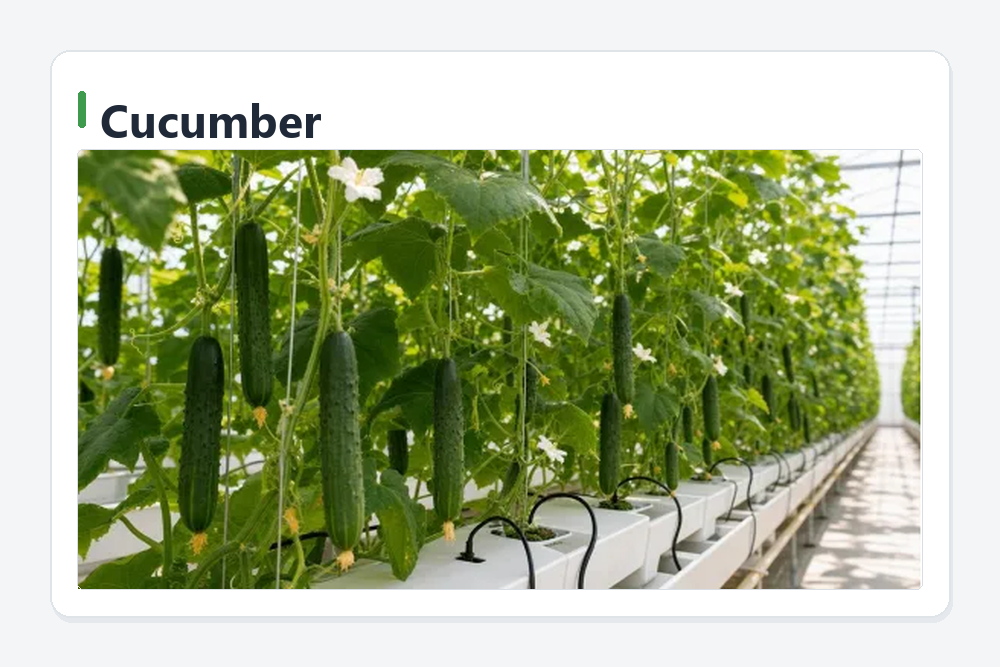
| Commercial cucumber production | Multi-span | Suitable for larger connected cultivation areas |
| Flower production | Either structure | Depends on crop volume and climate-control requirements |
| Large hydroponic project | Multi-span | Can accommodate integrated irrigation and production systems |
| Research and demonstration plots | Single-span or multi-span | Depends on whether separate experimental zones are needed |
When Should You Choose a Single-Span Greenhouse?
Consider a single-span greenhouse when your project needs independent growing units, flexible site planning, or phased construction. It can also be useful when you want to separate crops or manage different growing conditions without operating one large connected space.
FZY's Single-Span Tunnel Greenhouse offers customizable dimensions and covering options for vegetable production, seedling propagation, nursery plants, flowers, and seasonal cultivation.
| Configuration item | Available options |
|---|---|
| Span width | 6 m / 8 m / 9.6 m / 10 m / 12 m, customizable |
| Bay spacing | 4 m / 5 m, customizable |
| Gutter height | 2.5–5 m, customizable |
| Frame material | Hot-dip galvanized steel or zinc-aluminum-magnesium steel |
| Covering | UV PE film, PO film, double-layer film, PC sheet, insect net, shade net |
| Ventilation | Roll-up side ventilation, end ventilation, insect-net ventilation |
| Optional systems | Irrigation, fertigation, shading, heating, cooling, crop support, environmental control |
Final dimensions and materials should be confirmed against the project location, crop, and structural requirements.
When Should You Choose a Multi-Span Greenhouse?
Consider a multi-span greenhouse when you need a large, connected growing area and want to coordinate irrigation, ventilation, climate control, and crop handling across multiple bays.
It may be a better fit for commercial farms with high production targets, large hydroponic operations, or projects that require centralized equipment and workflow planning.
The final design should still account for the site layout, drainage, structural loads, ventilation capacity, and future expansion requirements. A large connected structure is not necessarily the most practical option if the available land, crop plan, or operating resources do not support it.
What Should You Prepare Before Requesting a Greenhouse Quotation?
A useful greenhouse quotation depends on more than the requested length and width. Suppliers need enough project information to evaluate the structure, covering, ventilation, and optional systems.
Prepare the following details before requesting a proposal:
-
Project location: Country, region, and local wind, snow, rainfall, and temperature conditions.
-
Available land: Site dimensions, ground conditions, access routes, and drainage.
-
Crop type: Main crops, growing season, planting density, and expected production scale.
-
Greenhouse dimensions: Required span width, length, height, and number of bays.
-
Growing method: Soil cultivation, raised beds, substrate growing, or hydroponics.
-
Covering preference: PE film, PO film, double-layer film, polycarbonate, or glass.
-
Environmental systems: Ventilation, shading, heating, cooling, and climate monitoring.
-
Project budget and schedule: Target investment, installation period, and possible expansion plans.
If you plan to use hydroponics, also specify the growing system and irrigation requirements. FZY offers different Hydroponic Systems, which can be considered alongside the greenhouse layout.
Providing these details helps suppliers assess the required structure and equipment instead of preparing a quotation based only on approximate dimensions.
Frequently Asked Questions
Can a single-span greenhouse be used for commercial farming?
Yes. It can support commercial vegetables, flowers, seedlings, and nursery production. The suitable scale depends on the available land, crop plan, and equipment configuration.
Is a multi-span greenhouse always more cost-effective?
No. It may improve space utilization on larger sites, but the initial investment and installation requirements must be evaluated against the actual production area and operating costs.
Can different crops grow in one multi-span greenhouse?
Yes, but crop zoning and environmental control need careful planning. Crops with significantly different temperature or humidity requirements may need separate controlled zones.
Can single-span greenhouses be expanded later?
Additional units can often be installed if the site has enough space. Access, drainage, utilities, and the future layout should be considered during the initial planning stage.
Which covering material is suitable for a single-span greenhouse?
PE and PO films are common options for film greenhouses. Polycarbonate and glass may suit projects with different durability, insulation, or light-transmission requirements.
Does a multi-span greenhouse need mechanical ventilation?
Not always. Natural ventilation may be sufficient under suitable climate and design conditions. Larger structures or hot, humid locations may require fans or mechanical cooling.
What information determines the span width?
Span width depends on the crop layout, equipment, structural design, available land, and local climate loads. The final width should be confirmed during project planning.
Final Thoughts
A single-span greenhouse is worth considering when you need independent growing units, flexible site planning, or phased investment. A multi-span greenhouse is often more suitable for large, connected production areas with integrated systems. Before choosing, compare usable growing area, total installed cost, climate-control requirements, and local structural conditions. Explore FZY's Single-Span Greenhouse to review its available configurations.
Table of Contents
- What Is the Difference Between Single-Span and Multi-Span Greenhouses?
- Single-Span vs Multi-Span Greenhouse: Key Differences
- Which Greenhouse Structure Offers Better Project Economics?
- How Do Climate Control and Ventilation Differ?
- What Structural and Site Conditions Should You Consider?
- Which Greenhouse Structure Fits Your Commercial Application?
- What Should You Prepare Before Requesting a Greenhouse Quotation?
-
Frequently Asked Questions
- Can a single-span greenhouse be used for commercial farming?
- Is a multi-span greenhouse always more cost-effective?
- Can different crops grow in one multi-span greenhouse?
- Can single-span greenhouses be expanded later?
- Which covering material is suitable for a single-span greenhouse?
- Does a multi-span greenhouse need mechanical ventilation?
- What information determines the span width?
- Final Thoughts